
New Delhi
Tryst with the Taliban
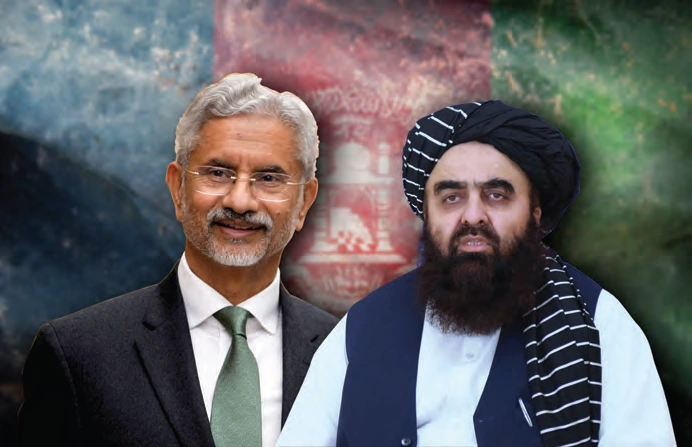
Despite the Taliban’s past hostility towards India, the Indian government led by Prime Minister Narendra Modi has shown a willingness to engage with the new Afghan rulers.

In recent months, there has been growing speculation in South Asia’s geopolitical corridors regarding the evolving relationship between India and the Taliban-led Afghanistan. This shift in India’s foreign policy, particularly under Prime Minister Narendra Modi, has raised eyebrows in Pakistan. As a country with deep historical, strategic, and cultural ties to Afghanistan, Pakistan is uniquely positioned to assess the implications of this development. The notion of India, traditionally seen as a supporter of the anti-Taliban Northern Alliance, now engaging with the Taliban poses several challenges and opportunities for Pakistan.
The roots of the current geopolitical dynamics in South Asia, particularly concerning India, Pakistan, and Afghanistan, can be traced back to the Partition of British India in 1947. The division created two nations, India and Pakistan, with both countries inheriting a complex and often contentious relationship. Afghanistan, a neighboring state, became a significant factor in this India-Pakistan rivalry due to its strategic location and role as a buffer state.
During the Cold War, Afghanistan became a battleground for global superpowers. The Soviet invasion of Afghanistan in 1979 and the subsequent Afghan resistance, supported by the United States, Pakistan, and other Western allies, shaped the region’s geopolitics. Pakistan played a pivotal role in supporting the Mujahideen, the Islamist fighters opposing the Soviet forces, which eventually gave rise to the Taliban in the 1990s.
India, on the other hand, aligned itself with the Soviet-backed Afghan government and later with the Northern Alliance, a coalition of anti-Taliban forces. This alignment was part of India’s broader strategy to counter Pakistan’s influence in Afghanistan. The Taliban’s rise to power in 1996, therefore, was a significant setback for India, which viewed the Taliban as a proxy of Pakistan’s military and intelligence establishment.
The post-9/11 era brought new dynamics, with the U.S.-led invasion toppling the Taliban regime in 2001. India seized the opportunity to re-establish its presence in Afghanistan, investing in development projects and supporting the new government in Kabul. Pakistan, however, continued to maintain complex relations with the Taliban, viewing the group as a counterbalance to Indian influence in Afghanistan.
Fast-forward to 2021. The U.S. withdrawal from Afghanistan and the subsequent Taliban takeover presented both challenges and opportunities for Pakistan. The Taliban’s return to power was seen as a strategic victory for Pakistan, reinforcing its influence in Kabul. However, the evolving relationship between India and the Taliban has complicated Pakistan’s strategic calculations.
India’s outreach to the Taliban, though cautious, has been notable. Despite the Taliban’s past hostility towards India, the Modi government has shown a willingness to engage with the new Afghan rulers, driven by pragmatic considerations. This marks a significant shift from India’s earlier stance of supporting anti-Taliban forces. For Pakistan, this shift is concerning for several reasons:
Strategic Encirclement
Pakistan has long feared being encircled by India through its alliances with Afghanistan and Iran. An India-Taliban rapprochement could exacerbate these fears, potentially limiting Pakistan’s influence in Afghanistan and the broader region.
Security Concerns
Pakistan’s security establishment has traditionally viewed the Taliban as a potential tool to counter Indian influence in Afghanistan. However, if the Taliban were to establish closer ties with India, this would undermine Pakistan’s strategic leverage and could embolden anti-Pakistan elements within Afghanistan.
By strengthening its ties with the Taliban, enhancing regional diplomacy, and pursuing economic and security initiatives, Pakistan can work to counterbalance India’s influence in Afghanistan.
Economic Competition
Afghanistan’s economic potential, particularly in terms of trade routes and mineral resources, is of significant interest to both India and Pakistan. A closer India-Taliban relationship could give India an economic edge in Afghanistan, further marginalizing Pakistan’s economic interests.
Diplomatic Isolation
Pakistan has often relied on its role in Afghanistan to bolster its international standing, particularly with the United States and China. If India succeeds in establishing a working relationship with the Taliban, it could undermine Pakistan’s diplomatic position, especially if New Delhi manages to position itself as a key interlocutor between the Taliban and the international community.
The prospect of a closer India-Taliban relationship poses several potential repercussions for Pakistan, both in the short and long term.
Diminished Influence in Afghanistan
Pakistan’s influence in Afghanistan, long seen as a key element of its strategic depth doctrine, could be significantly reduced if India manages to build a cooperative relationship with the Taliban. This would undermine Pakistan’s ability to shape events in Afghanistan, particularly in terms of countering Indian influence.
Increased Security Risks
A diminished influence in Afghanistan could lead to increased security risks for Pakistan, particularly if the Taliban were to distance themselves from Islamabad in favor of New Delhi. This could result in a resurgence of cross-border militancy, with groups like the Tehrik-i-Taliban Pakistan (TTP) potentially finding new sanctuaries in Afghanistan.
Economic Setbacks
Economically, Pakistan could face setbacks if India succeeds in integrating Afghanistan into its regional connectivity projects, such as the International North-South Transport Corridor (INSTC) and the Chabahar Port initiative. This would reduce Pakistan’s economic influence in Afghanistan and weaken its position as a regional trade hub.
Diplomatic Marginalization
On the diplomatic front, Pakistan could find itself increasingly marginalized if India manages to position itself as a key player in Afghanistan’s future. This could complicate Pakistan’s efforts to secure international support for its own initiatives, particularly in the context of its relations with the United States, China, and other regional powers.
Faced with these challenges, Pakistan has several potential avenues for response. These responses will likely be shaped by diplomatic, military, and economic strategies to safeguard Pakistan’s interests in Afghanistan and the broader region.
Strengthening Ties with the Taliban
Pakistan could intensify its engagement with the Taliban, leveraging its long-standing relationships to ensure that Afghanistan does not become a springboard for Indian influence. This could involve offering economic and diplomatic support to the Taliban regime while also encouraging the group to maintain a neutral stance in its dealings with India.
Regional Diplomacy
Pakistan could seek to counterbalance India’s influence in Afghanistan by strengthening its ties with other regional players, such as China, Russia, and Iran. By building a coalition of like-minded states, Pakistan could work to ensure that Afghanistan remains within its sphere of influence while also limiting India’s ability to operate freely in the region.
Economic Initiatives
On the economic front, Pakistan could focus on enhancing its own connectivity projects, such as the China-Pakistan Economic Corridor (CPEC), to ensure that it remains a key player in regional trade. By integrating Afghanistan into these initiatives, Pakistan could offer the Taliban economic incentives to maintain a pro-Islamabad stance.
Security Cooperation
Pakistan could also enhance its security cooperation with the Taliban, particularly in countering cross-border militancy. By offering the Taliban support in combating groups like the Islamic State Khorasan Province (ISKP), Pakistan could strengthen its security ties with Kabul while also ensuring that the Taliban does not align itself with anti-Pakistan elements.
Engaging the International Community
Finally, Pakistan could engage the international community, particularly the United States and China, to ensure that its concerns regarding India’s role in Afghanistan are addressed. By positioning itself as a responsible stakeholder in Afghanistan’s future, Pakistan could secure international support for its own initiatives while also limiting India’s ability to operate unilaterally in the region.
By strengthening its ties with the Taliban, enhancing regional diplomacy, and pursuing economic and security initiatives, Pakistan can work to counterbalance India’s influence in Afghanistan and ensure that it remains a key player in South Asia’s geopolitical future. Ultimately, Pakistan’s ability to adapt to these new realities will determine its success in navigating this complex and ever-changing geopolitical landscape.![]()
Gunvor to Acquire Total Pakistan
The Bank of Punjab Hosts Professor Stefan Dercon
Former Indian batsman dies at 71
Indus Motor Company Extends its partnership with Arshad Nadeem
Residents of Venice welcome new tourist limits
Trump questions Kamala’s identity
Nestlé for Healthier Kids (N4HK) Room Inaugurated
Konnect by HBL Crowns Valorant Champions
Charity Dinner raises funds for vulnerable segments


The writer is a historian and a critical analyst. He can be reached at
Muhammad Arslan Qadeer’s article, *”Tryst with the Taliban,”* presents a comprehensive and incisive exploration of the shifting geopolitical landscape in South Asia, particularly in light of India’s evolving engagement with the Taliban-led government in Afghanistan. The author demonstrates an impressive command of historical and strategic analysis, situating the current developments within the broader context of the region’s complex political history.
Qadeer’s work is distinguished by its methodical approach, tracing the roots of contemporary geopolitical dynamics back to the Partition of British India in 1947. By doing so, the article effectively illuminates the long-standing rivalries and alliances that have shaped the interactions between India, Pakistan, and Afghanistan. The detailed recounting of events from the Cold War era, particularly the Soviet invasion of Afghanistan and the rise of the Taliban, serves as a strong foundation for understanding the present-day implications of India’s foreign policy shift.
The author’s analysis is particularly notable for its balanced consideration of the strategic dilemmas faced by Pakistan in response to India’s outreach to the Taliban. Qadeer skillfully articulates the potential risks to Pakistan’s influence in Afghanistan, including the possibility of strategic encirclement, increased security threats, and economic competition. His discussion of these challenges is both nuanced and well-supported, reflecting a deep understanding of the geopolitical stakes involved.
Furthermore, Qadeer’s exploration of Pakistan’s potential responses to this evolving situation is grounded in a realistic assessment of the country’s strategic options. The suggestions to strengthen ties with the Taliban, enhance regional diplomacy, and pursue economic initiatives such as the China-Pakistan Economic Corridor (CPEC) are presented with a clear awareness of the complex interplay of regional and global interests. This strategic foresight adds a valuable dimension to the article, offering readers not only a diagnosis of the current challenges but also a thoughtful consideration of possible solutions.
In conclusion, *”Tryst with the Taliban”* stands as a rigorous and insightful contribution to the discourse on South Asia’s geopolitical future. Muhammad Arslan Qadeer’s thorough research, coupled with his adept analysis, makes this article a significant academic resource for understanding the intricate dynamics of the India-Pakistan-Afghanistan triad. The author’s ability to contextualize contemporary developments within a broader historical framework is particularly commendable, marking this work as essential reading for scholars and policymakers alike.