


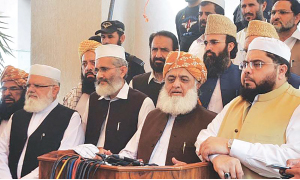
Pakistan’s status as an Islamic ideological state is deeply rooted in history and is linked closely both with the praetorian ambitions of the Pakistani military and the Pakistani elite’s worldview. For the foreseeable future, Islam will remain a significant factor in the country’s politics. Islamic parties in Pakistan have been a potent force to reckon with and can be counted among the elite groups that influence political processes and decision-making in Pakistan. These Islamic parties have a tremendous amount of street power, even though they have not done well in terms of votes in general elections over the years.
They have established a definite place for themselves among the various elite groups that determine political processes and decision-making in the country, which include the military, bureaucratic, Punjabi, and business elite. They exercised influence not only during the years of the Afghan jihad but also continue to play a role in present-day politics. It was quite puzzling for the scholars of political Islam to see such a wide gap between historically deep Islamic political activism and the poor electoral performance of the religious groups.
In the first place, the religious parties were never popular with the people as a political alternative to conventional political parties. For the first quarter of a century, after Pakistan’s independence, most of these parties confined themselves to preaching Islam, establishing religious institutions, and thought of Islamizing society at the grass-roots level as the central elements of their ideal.
It was during the Ayub Khan era (1958-1969) that they embraced political ambitions. They have a significant influence on the politics of the country and have a tremendous amount of street power, despite the fact that they have never been able to do well in terms of votes in elections. The Jamaat-i-Islami (JI), the Jamiat-ul-Ulema-i-Islam (JUI), and the Jamiat-ul-Ulema-i-Pakistan (JUP) have never got more than six seats in all (combined) in the National Assembly.
Yet these parties are at the forefront on issues like the establishment of Shariat Courts and legislation on subjects like ushr, zakat, or blasphemy. The founding father and thinker behind the Jamaat-i-Islami, Abul Aala Maududi propounded theses of “Islamic state”, “Islamic ideology” and an “Islamic political system” quite similar to the political themes of the Ikhwan ul Muslimeen (Muslim Brotherhood) of Egypt. Actually, Maududi with clarity of his thought, articulation, and prolific writings has left a great mark on the Islamic movements operating beyond Pakistan.
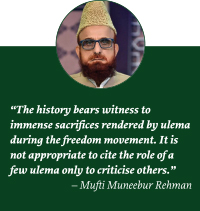 State patronage of religious parties has resulted in competition among different religious groups for power, which has increasingly turned violent. With the Pakistani state adopting a clear Sunni predisposition in its laws and policies, the rivalry between Shias and Sunnis and even among different Sunni groups became further entrenched.


The writer is a legal practitioner and columnist. He tweets @legal_bias and can be reached at shahrukhmehboob4@gmail.com
Leave a Reply