



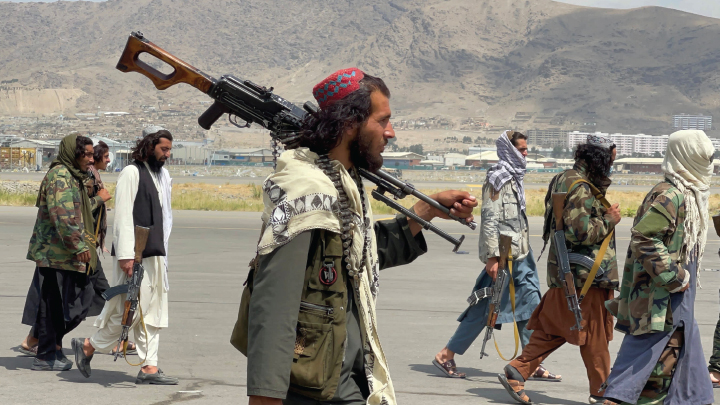
In August 2021, the US and its allied military forces hurriedly withdrew from Afghanistan after twenty years of occupation. It is interesting and surprising to note how quickly the Taliban re-emerged, ultimately taking control of Kabul, followed by control of Panjshir. Many observers have noted why the US failed in Afghanistan despite its direct presence there for two decades.
There have been critical observations on how the Taliban had immediately formed an interim government. Given the existing and evolving conditions in Afghanistan that bring more challenges, many argue that the Western powers failed to maintain peace and stability, sustain good governance, reduce corruption, retain stable military forces, and build the kind of infrastructure needed for the long-term development of Afghanistan. With the absence of these rudimentary elements of a state’s mechanism, a country can quickly falter and enter a chaotic situation, leading towards state failure.
There can be deleterious implications for Afghanistan in general and its neighbouring countries like Pakistan in particular. Nevertheless, the Biden administration argues that the US achieved its objectives while apparently shifting the blame on its failure in Afghanistan on other stakeholders, such as Pakistan that has suffered the most. Since Pakistan has the longest border with Afghanistan of about 2670km, it automatically becomes a key stakeholder. The US seems to put legislative, political and diplomatic pressure both on the Afghan government and Pakistan. Apparently, many assume that Pakistan is becoming a scapegoat once again after the US departure from the region. On the other hand, the US also appears to be interested in playing a constructive role while engaging with the Afghan government despite its withdrawal.
As one reads closely the evolving and unpredictable situation in Afghanistan, it is important to note that it has remained a battleground for big power struggle for centuries, confronting various combinations of leading powers to control this land. Many powers came and left but failed to hold permanent control of Afghan territory for a variety of reasons despite their rich resources and military capabilities. History shows that there has never been permanent control of foreign powers over Afghanistan.
Even though it is a landlocked country, Afghanistan carries geopolitical and geo-strategic significance bordering the Central Asian Republics, Russia, Iran, China, and Pakistan. Three of these are nuclear weapons states while Iran aspires to soon acquire nuclear capability. The geopolitical and geo-strategic significance of Afghanistan connecting with CARs reflects the conceptual understanding of the “heartland” theory, depicting that those who control this part of the world could perhaps control the world.
That being said, the situation in Afghanistan is still evolving. It is hard to predict what will happen next, how and why. It is too early to draw logical and reliable conclusions and offer policy recommendations. Despite taking complete control of Afghanistan, the Taliban interim government apparently does not represent the inclusivity, which was desired and which could include the presence of women and equal representation from other ethnic groups.


The writer is a professor of International Relations at the Balochistan University of Information Technology, Engineering, and Management Sciences, Quetta. He can be reached at zafarwafa1977@gmail.com
Leave a Reply