



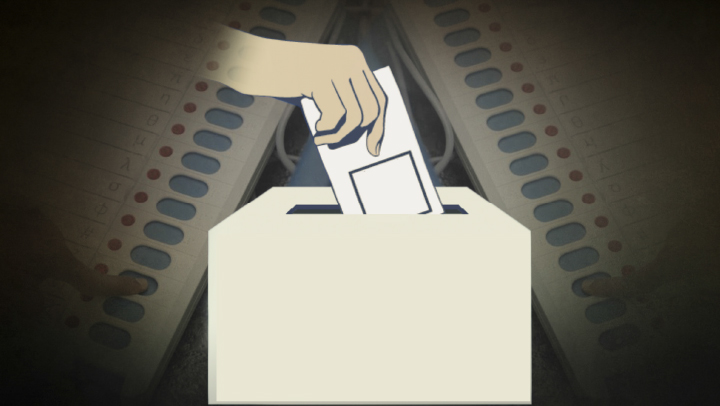
Post-colonial and developing countries have been battling a governance crisis with incalculable socio-economic and political repercussions. Democracy - a colonial remnant - is nascent and benign in most of the developing parts of the world. Elections - the soul of democratic culture - has remained marred by controversy ever since decolonisation was unleashed in the immediate aftermath of World War Two. However, with technological proliferation in all domains of life, democratic countries across the world have been vying to reform the electoral process to make it more transparent. In the wake of this, Pakistan too has been carrying out the much-needed electoral reforms to do away with rigging and controversies that surround most elections. Rather than being a move with unanimous assent and acceptance, the EVM (Electronic Voting Machine) has created a storm in the political landscape.
Amidst the ruckus and cacophony of the Opposition, the PTI government bulldozed through various legislations, including an Election Amendment Bill in a joint sitting of the Parliament on November 17, 2021. The amendment to Election Act 2017 warrants use of Electronic Voting Machines (EVM) for the forthcoming general elections scheduled in 2023 and the right to vote for oversees Pakistanis.
The PTI government is hell-bent on introducing electronic voting machines in the forthcoming general elections. Why? Firstly, it would enhance the ruling party’s vote since most expatriate Pakistanis support the PTI. Moreover, the ruling party is anxious to take the credit for the long-awaited electoral reforms. The Opposition has no sympathy for EVMs. They expect rigging through novel electoral technology and question the impartiality of the EVMs.
It has been an open secret that electables, feudal and tribal influence in Sindh, Balochistan, Punjab and even in KPK is so strong that the EVM wouldn’t attain its result of transparent and unquestionable elections. Contestants invest millions, if not billions, in the election since election is but a lucrative business investment with invaluable dividends-both in the terms of assets and influence. Henceforth, the electables wouldn’t risk their exorbitant amounts. Since most of the election officials managing voting results are but locals, the candidates in power for decades get the so called “favourite” electoral officials posted on their jurisdictions to manipulate the outcomes. In case any official tries to defy the influence, they are at first bribed, threatened and even in some cases illegally confined so that future elections can be held in a more unbiased setting. The northern districts of Sindh, most of Balochistan and Punjab are notorious in this regard. Perhaps election rigging has the most debilitating consequences for the democratic process. But will EVMs do away with this menace?
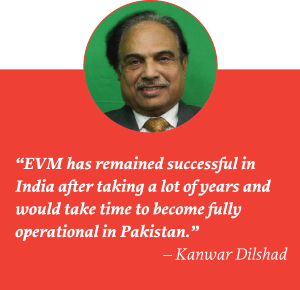 The worrying aspect is the public voice and voluntary choice in the election process. Owing to the low socio-economic fabric and educational standards, in most of rural Sindh, Balochistan and some of Punjab, votes are bought by the influential candidates for hefty sums. Given that most people in these regions aren’t conscious about their rights and the worth of their vote, they are soft targets for politically influential people and groups. To this end, first they earn the support of tribal and feudal lords with the mass vote bank of farmers and blind followers. These lords are awarded luxury vehicles and jobs for their children in return for votes. In a few cases, money is paid to whole households and neighbourhoods, and their original CNICs are taken to ensure they vote whom they have been paid for. People sell their votes on the false promises of transformers, solar plates, roads and other amenities, not realising that these services are their rights guaranteed in the Constitution. Henceforth, whoever makes it to the power echelon does not necessarily mean popular public support. What remedy does EVM offer in this regard?


The writer is based in Kandhkot, Sindh. He can be reached at alihassanb.34@gmail.com
Leave a Reply