


The Solution
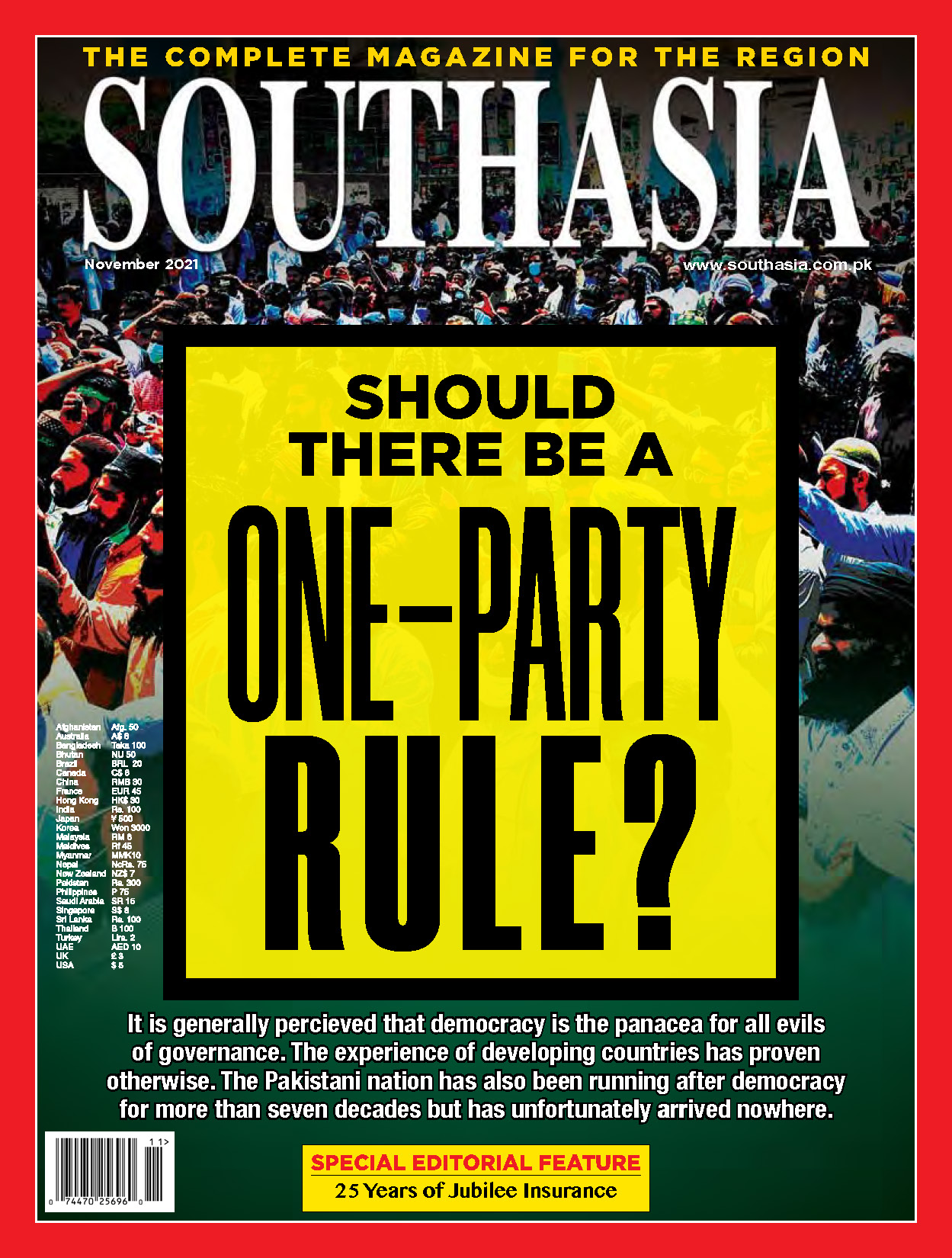 The idea of a one-party system is interesting as it has been quite succesful in China. In his interview, Justice (R) Wajihuddin Ahmed says that Pakistan already has had a de facto one-party system in place, and it is more prominent during military regimes. He also emphasises that democracy demands an electorate to have a certain level of political awareness and be able to exercise their electoral rights but this is not the case in Pakistan owing to a confluence of factors.
The governance system in Pakistan has time and again failed and one-party rule seems to be the only solution that can put the nation on track. The one-party system has been in China for decades and it has proved to be successful both for the country and the people. Pakistan also needs to take a step forward and abandon multi-party democracy for some time and pursue a single-minded agenda for the betterment of the country.
Taha Anwar,
Karachi, Pakistan
Respecting Players
 Undoubtedly, the recent T20 World Cup has been a source of immense relief during the otherwise trying times people are facing. Cricket fans went through a rollercoaster ride of emotions during the series. It is, however, unfortunate that when oir team loses, people start criticising it. Social media is flooded with spiteful memes, while some players are threatened.
Such behaviour affects the performance of players and also creates a negative image of the country. When a nation doesn’t respect its players, other hostile groups see it as an opportunity to mock them.
One must understand that the craze for cricket – or any other sport – should never cross its limits. Success and failure are part of the game. The dignity and security of the players should not be compromised under any circumstances.
Sidra Iqbal,
Lahore, Pakistan
Child Labour
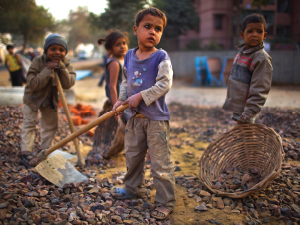 Childhood is the most wonderful time of a person’s life. However, it is tragic for some children because, although governments have \ banned child labour, the trend continues to exist in society.
Lack of awareness and poverty are the main causes of the problem. Rather than sending their children to school, poor parents send them to work as they want their financial assistance. However, this practice has a negative influence on their physiological, psychological and emotional health.
Governments in South Asia should take some practical actions to prevent child labour and raise public awareness. Also, they should effectively apply regulations and fine employers.
Raj Khosla,
Kanpur, India
The New Taliban
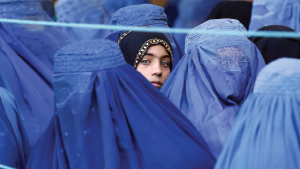 In the article ‘The New Taliban’, Dr Farah Naz talks about the new and improvised version of the Taliban. While there are evident differences between the Taliban 20 years back and the Taliban this time, the Western, leaders and media outlets has raised concerns whether the Taliban would succeed in governing Afghanistan or they would again behave in an immature manner as they still aim to eliminate Western influences from the country. Though the current Taliban are making efforts to dispel their previous image, it is still not sure as to how things would unfold. Perhaps some balanced decisions by the Taliban might clear the confusion.
Anil Senanayeke,
Kandy, Sri Lanka
Female Education
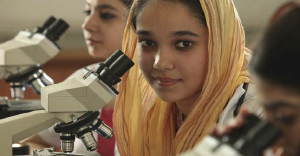 Education improves the overall growth of an individual and enhances their prospects. Though women inherit exceptional qualities, the proportion of women in education is unfortunately low in Pakistan. Girls in rural areas still do not have access to education at all and so they are forced into labour or married at young ages. Getting an education is still viewed as a modem phenomenon in many parts of the country. What people fail to understand is that education is as necessary for women as men because it enhances knowledge and understanding and raises one’s awareness of rights and individuality.
All developed countries have encouraged and endorsed education for women which is why many of these societies are progressive today. Education for women must be promoted with the same vigour in Pakistan for they are better planners. As a society, everyone must make a conscious effort to improve the educational prospects of women. The government must undertake initiatives and policies to ensure that girls across the country have access to education.
Saineen Pannyar,
Jacobabad, Pakistan
Food Accessibility
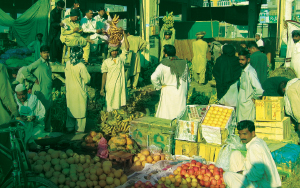 This is with reference to the article ‘Reasons for Food Insecurity’ by Shakeel Ahmed Shah highlighting why Pakistan suffers from food insecurity despite being a high producer of food crops.
While findings have pointed out that it is not the availability of food that is the issue but rather the economic problems related to the accessibility of food. Many researchers have argued that increased inflation and decreased purchasing power are the main causes of prevalent food insecurity. Though the per capita income of Pakistan has increased, the increase in food prices has outnumbered it, making it hard for people to purchase even the basic items.
Also, the socio-economic structure of society where ownership of the land and the food is in the hands of the few further adds to the problem. Agricultural economists should do some more research to discover other factors contributing to food insecurity.
Bilal Nasir,
Islamabad, Pakistan
Connected Roots
 This is with reference to the article ‘Identity Links’ written by Muhammad Zahid Rifat about Pakistan’s link with its past in the form of ancient sites and historical structures.
Not many people are aware about the importance the country has due to its ancient linkage that provides Pakistan a distinct identity. It seems to be a well-kept secret from the outside world that Pakistan is a treasure house of ancient heritage spanning scores of centuries.
Pakistan is an Islamic country but the cultural heritage and historical monuments of all other religions and faiths are duly preserved and protected in the country making it an important pilgrimage destination for the followers of Buddhism and many other faiths.
Maryam Sohail,
Hyderabad, Pakistan
Leave a Reply