


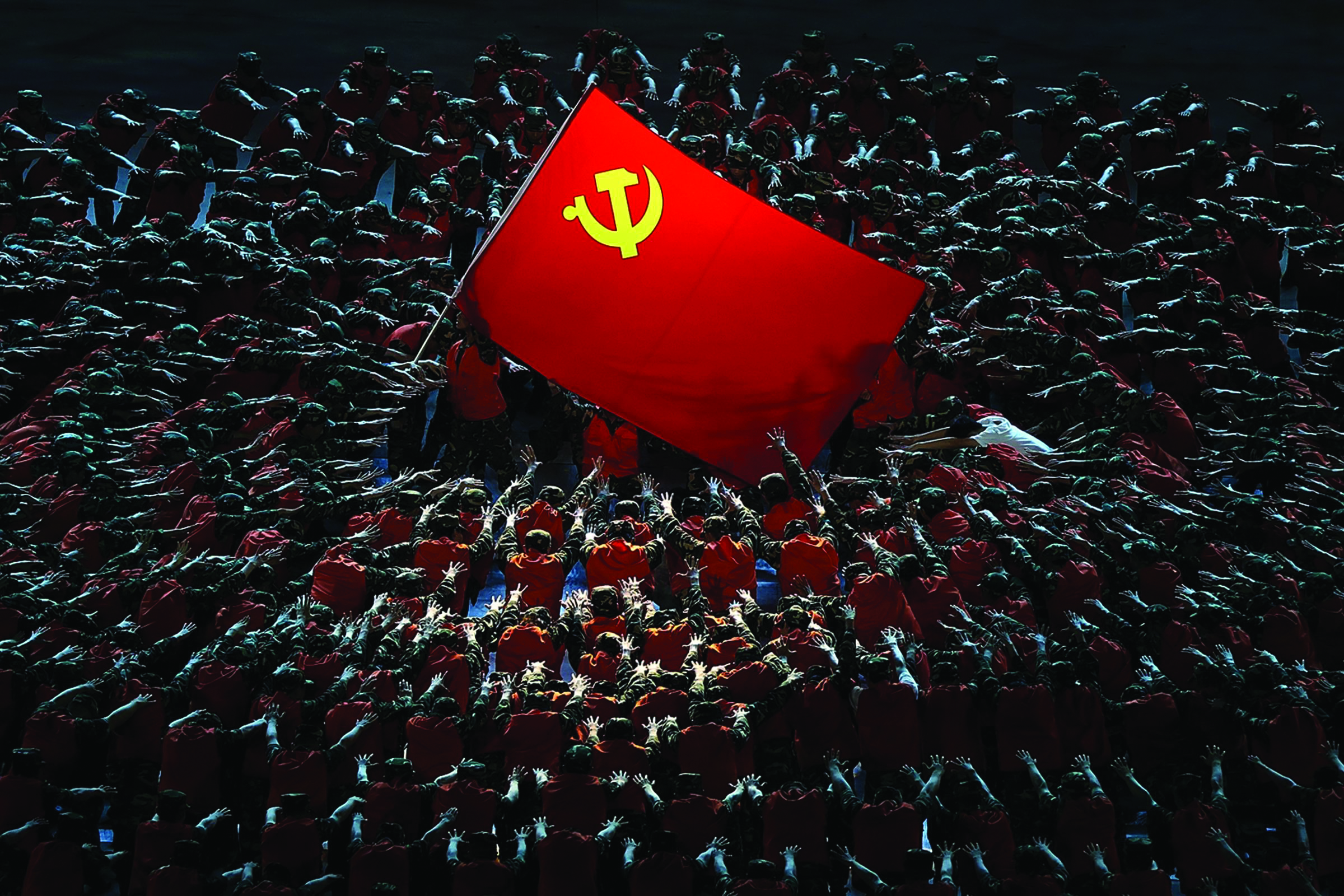
 The Chinese Communist Party (CCP) was founded one hundred years ago in July 1921. The Russian Revolution in 1917 gave ideological foundations to different mass political parties, including the CCP. China had faced occupation and aggression of Japan, which was being supported by the US. Simultaneously, the people of the country were thrown into the hell of opium through British India; opium was being exported from Malwa, India to China. Besides fighting against external aggression, the CCP, under the leadership of Mao Zedong, had to wage war against the then Nationalist Government of the Kuomintang Party. Interestingly, in the wake of the cold war between the US and the former Soviet Union, the CCP was supported by the Communist Party of the Soviet Union (CPSU). The CPSU, especially under the leadership of Joseph Stalin, supported the CCP in terms of ideological training as well as material support. This support proved very crucial and ultimately the CCP succeeded in getting hold of the reins of the country in October 1949.
It is a very interesting part of world history that China gained independence two years after Pakistan came into being in 1947.Still, if we compare these two countries, clear differences in all respects are vividly evident. The revolutionary government under Mao Zedong did not focus on arms and ammunition like Pakistan and India are focusing on since 1947. They initiated plans for the well-being of their people. The CCP government focused on poverty reduction and replacing the old cultural traditions with modern ones. Mao Zedong and his government had the vision to transform an opium-addicted China into an economically strong country and he could only do that with the hard efforts of his government. However, the Chinese leadership faced severe upheavals as well when an ideological clash occurred between the CCP and the CPSU.
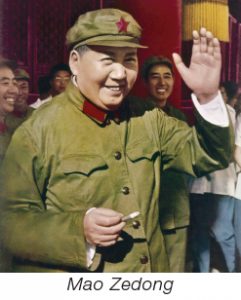 The clash in 1960 was a dark moment for the revolutionary movement. The origin of the conflict was laid after the demise of Stalin when Nikita Khrushchev adopted the policy of “Peaceful Co-existence” with the capitalist West. Khrushchev also denounced Stalin’s policies and named them as a ‘personality cult’. He announced that there would be no place for personality cults in the CPSU. Yet, his policy of peaceful co-existence was highly criticized by Mao, who pointed out that this denounced the true essence of communism propagated by Lenin and Stalin, and he also maintained that the new CPSU leadership was extending a hand of friendship towards the capitalist and liberal forces. Although due to such clashes, the Communist movement was divided worldwide, but after the death of Mao Zedong, the CCP also introduced new reforms and opened up China for the rest of the world.
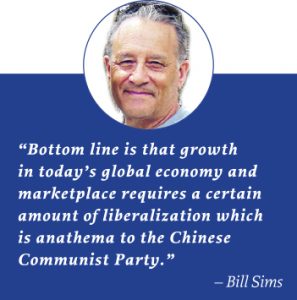 Deng Xiaoping was the mastermind behind the new reforms in 1978. This, on the one hand, opened China for other countries and, at the same, it opened a new debate that whether the CCP could be considered a Communist Party or not? Until recently, the Communist movement was divided on pro-Moscow and pro-Beijing lines, so those who supported the Chinese model of Socialism were called “Socialists according to Chinese characteristics” because they supported the new policies of the CCP. The Left on the other side, did not acknowledge the reforms. Even today, the debate is on among the Left circles. After the 1978 Reforms, the nature and policies of the CCP changed, which further changed after current President Xi Jinping came to power in 2012.


The writer has a Ph.D in World History from the College of Liberal Arts, Shanghai University, and teaches at the National Institute of Pakistan Studies (NIPS), Quaid-i-Azam University, Islamabad. He can be reached at qasim_shu2016@yahoo.com
Well done! That’s something unheard of for me.