
Region
Senate Shenanigans
Winning the Senate was important for the PTI and, in the end, it managed to do just that. However, it remains to be seen how the Party will use this advantage for better legislation.

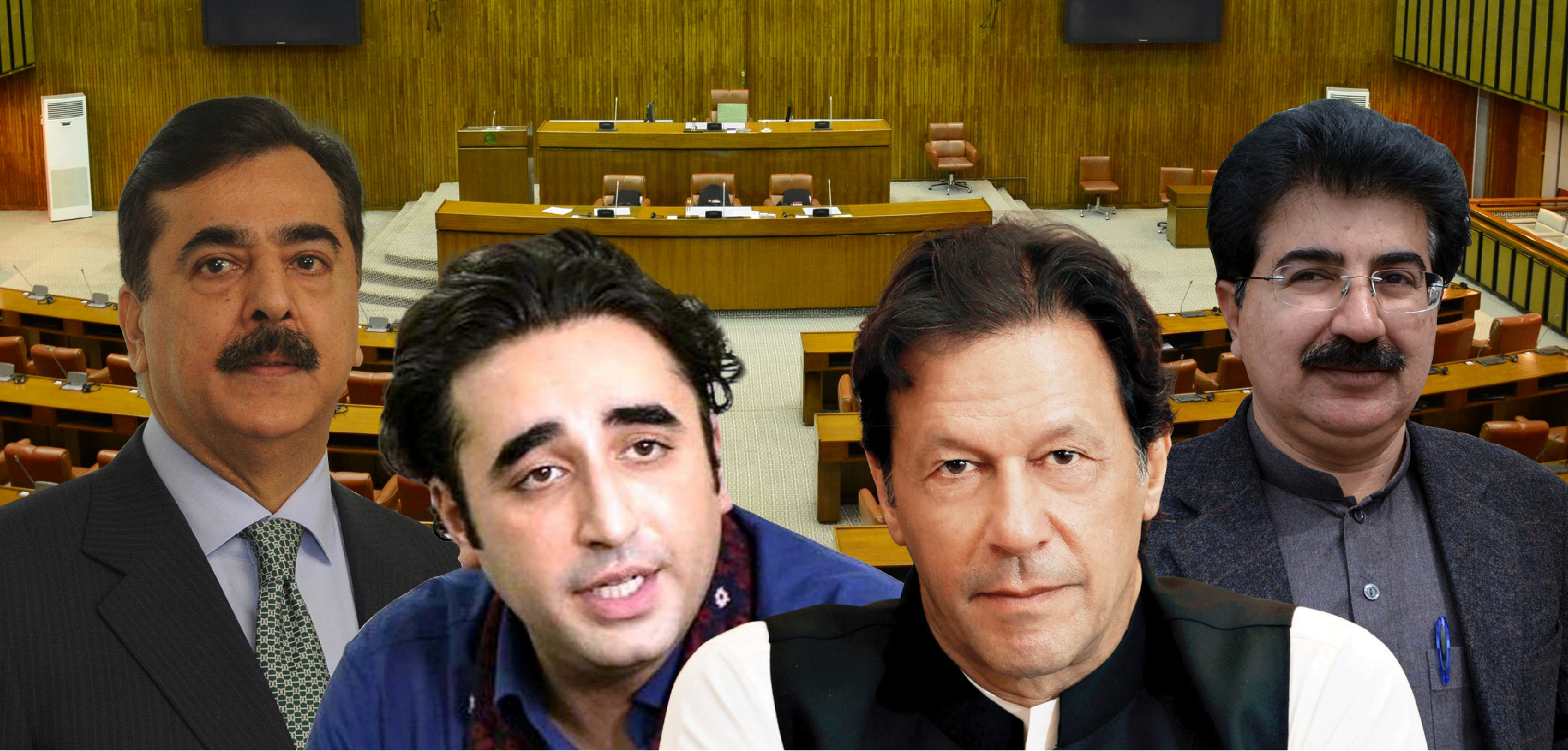
The defeat in the Senate elections of PTI’s Abdul Hafeez Shaikh against Syed Yousuf Raza Gilani, a former prime minister and speaker, despite PTI’s clear majority in the National Assembly, seemed to have unnerved Imran Khan, while also upsetting the whole PTI leadership. Encouraged by this victory, the PDM should have done all within its powers to replace Senate Chairman Sadiq Sanjrani with Yousuf Raza Gilani, since Sanjrani had reneged on his promise to join the Peoples Party, as claimed by Bilawal. However, due perhaps to non-cooperation from the PML-N, Sanjrani managed to defeat Gilani by 48 votes to 42, with one vote rejected for double-stamping and another seven for misplaced stamping. The opposition’s defeat in the election for Deputy Chairman Senate by 54 votes to 44 frurther weakened its case.
Surely, PTI’s doubts about the loyalty of some of its members made it seek open balloting for the Senate election. Lacking two-thirds majority for constitutional amendments, PTI tried various measures, including an ordinance which just fizzled out, as well as a Presidential reference, seeking the Supreme Court’s opinion on the issue. However, with a four to one majority, the Supreme Court expressed its opinion that the Senate elections will continue to be held through secret ballot, as required under Article 226 of the Constitution, while also stating that the secrecy of the ballot papers was not final, as already decided by the court in the Niaz Ahmed case.
The Supreme Court also stated, “The Election Commission is required to take all available measures including utilizing technologies to fulfill its solemn constitutional duty to ensure that the election is ‘conducted honestly, justly, fairly and in accordance with law and that corrupt practices are guarded against”.
The PTI government interpreted this as permission for bar-coding of the ballot papers which , while keeping the vote partially secret, would nevertheless enable the ECP to identify and punish the culprits, if wrongdoing were to be established.
Shocked by Hafeez Shaikh’s defeat, Imran Khan accused 16 PTI lawmakers of selling their votes, and sought a confidence vote in the National Assembly.
As for Yousuf Raza Gilani, he was disqualified by the Supreme Court for refusing to obey its order to write a letter about $60 million of Pakistan’s money lying in a Swiss bank account. However, he rated loyalty to Asif Zardari way above that to the country and the nation, though this cost him his prime ministership. This time around, he was awarded a ticket to the Senate, with perhaps a promise to make him its Chairman. There is also the question of his mishandling of the necklace donated by Mrs. Erdogan for Pakistan’s earthquake victims. The nation also saw on television his son giving ‘useful’ advice about how to handle senate votes, including ways to discard them. This is significant because the number of rejected votes exceeded the margin of Gilani’s victory. Naturally, PTI challenged Yousuf Raza Gilani’s election but was asked by ECP to come up with solid proof of wrongdoing.
All this put a question mark on the morality of the PDM which jointly proposed Gilani’s candidature, got him elected, perhaps by using dubious means and wanted him to chair the Upper House of Parliament. But then, with rare exceptions, morality bears little relevance to politics in Pakistan. Even outside politics, morality seems to have become a rare commodity, bearing little relevance in day-to-day dealings.
The defeat of Hafeez Shaikh in the Senate was indeed a big setback for the government which cannot claim to have its defeat completely undone by its victory on other fronts. Moreover, as things stand, corruption, mis-governance and inflation continue unabated, and Usman Buzdar remains glued to his seat. Imran’s wife, Bushra Bibi recently remarked that behind every successful man, there is his wife who, in this case, used to be known as a faith-healer, which is what actually brought the two together. Moreover, during an interview, Imran Khan had admitted discussing everything with her, including politics. The combination of an ex-cricketer under the spell of a faith-healer, and the two running the show together, does not augur well for the country because we do not even know what factors feature in their decision-making process. Could these possibly be that since the names Imran and Usman end with the same Urdu alphabets, and comprise 5 alphabets, of which four are common, all other factors lose significance while assessing his performance?
Excessiveness, needless arrogance, a quarrelsome nature and unwillingness coupled with the incapacity to learn and failure to use the available talent make a lethal combination. One understands that efforts are being made to form a new political party. If this is true, then the process must be speeded up by picking competent persons of integrity from various parties, with Pervaiz Elahi in the lead this time. ![]()
The writer is a freelance contributor with interest in regional, South Asian and international affairs. He can be reached at hashmi_srh@hotmail.com |
|
Cover Story
|
|
News Buzz
|
Update |


Leave a Reply