Among the many reasons of the shifting of the capital, one that is repeated the most is that the location of Islamabad is safe from invading enemies as it is surrounded by the Margalla Hills and the other is that it is close to the army headquarters in Rawalpindi.
What are the problems of Karachi? Did any political party ever sincerely try to resolve these problems?
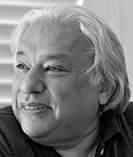
'Karachi and the rest-of-Sindh conflict began when the capital of Sindh was shifted to Hyderabad in 1948. It will begin again if Karachi becomes a federal territory. In the short-term, it may be possible to get away by placing Karachi under the center but in the long-run it will have to be undone because the future of the city is intrinsically linked to the rest of Sindh in ecological, energy, food security, water and an increasing trade and population transfer from the rural to urban areas. Also, it is important to note that being under Federal Territory does not mean improved living conditions. Islamabad sewage is not treated, its water supply is contaminated, its natural drainage system is clogged, its master plan is being violated (also by the Prime Minister), it has no housing or transport for the poor and nor are there any plans for it - and it is 140th of Karachi's size; it is also the center of power.'
Arif Hasan,
Town Planner
The Jamat-e-Islami did build some parks. Mayor Mustafa Kamal of the MQM built flyovers, underpasses and signal-free corridors. But what was missing was providing the absolute basic necessities that a common man requires in a mega city on a day-to-day basis: water supply, housing, cleanliness, transport, parks, playgrounds, schools, hospitals, sewerage system, solid waste disposal, a crime-free environment and job opportunities
The controversial quota issue ranks high in the discriminatory attitude towards the Urdu-speaking majority population of the city. Now te city’s demographics are rapidly changing; each day brings in more Sindhi, Punjabi and Pushto-speaking people from the rest of the country. After the KPK, there are more Pushto-speaking people living in Karachi than anywhere else in the country.
The city may have had various names in the past like the City of Lights, Gateway to Central Asia, Glory of the East, etc. But more recently it has been referred to as the Orphan of Pakistan. No political party owns the city, and no individual or organization has honestly worked for the betterment of Karachi’s citizens.
How is this orphan still surviving? It’s a complex riddle to which no one has a definite answer, except that may be it is God who is somewhat pleased with the common man living in Karachi and his day-to-day struggles. Perhaps it’s also because of the moderate climate that the city experiences all year round. No extremes - summers are hot during the day, but usually a cool breeze starts blowing an hour before the sun sets, and provides much-needed respite to the city dwellers. Another view is that Karachi is like that abused mother who openly welcomes every child into her arms and promises to look after her offspring, no matter what class, creed or race they belong to.
What is a federal territory? This is an area under the direct jurisdiction of the government at the centre. There is only one federal territory in Pakistan – Islamabad. Depending on the situation, any part of the country can be declared a federal territory under Article 149(4) of the Constitution of Pakistan. The Article says: “The executive authority of the Federation shall extend to the giving of directions to a Province as to the manner in which the executive authority thereof is to be exercised for the purpose of preventing any grave menace to the peace or tranquility or economic life of Pakistan or any part thereof.”
The current Federal Law Minister, Dr Farogh Naseem, is on record having said that a strategic committee on Karachi was going to recommend to Prime Minister Imran Khan that he invoke Article 149 for the uplift of Karachi. Dr Naseem also said that the enforcement of Article 149 of the Constitution will only empower and strengthen the local government systems in place across various provinces and is not a matter to be considered controversial in any way.
In layman terms, this would place Karachi under direct federal government rule, with the local government’s assistance. This would allow the federal government to have total administrative control of the city.
Under Article 149, the Sindh government would be relieved from the responsibility of providing law and order, garbage collection and disposal, drinking water, disposal of untreated sewage which is dumped into the sea, healthcare management, primary and secondary education, etc. These functions will fall in the federal government’s domain with the local government’s assistance.
Consequently if Karachi becomes Pakistan’s second federal territory, the system would bring in more federal jobs, more infrastructure funds, better policing, and, most importantly, an end to the quota system.
People speaking many different languages would willingly support such a move. On the other hand, the Sindhi-speaking ruling elite could possibly resist the suggestion. But the big picture of 30 million people not being provided basic necessities of life for decades, beckons such a move.
For the past several decades, the indifferent attitude of Sindh’s ruling elite has driven frustrated people to wake up. Now people are compelled to raise their voices against the incompetent system. This is what prompted the National Disaster Management Authority (NDMA) to come to Karachi. This was in the aftermath of the devastating rains that hit Karachi in July.
The Attorney General of Pakistan has recently said that the federal government has no intentions to interfere in the affairs of the Sindh government, but keeping in view the worsening situation of the provincial metropolis, the center should consider the available constitutional and legal options to fix the city.
According to some political analysts, the powerful people in the country, as a last resort, have come to terms with the city’s mainstream parties, such as the PPP, PTI and MQM, and are willing to take joint measures for the betterment of Karachi. Members from these parties were asked by high level authorities to sit together and find a solution to city’s problems.
But if these stakeholders still remain unconcerned regarding public interest and continue the trend of political infighting and quarrels over resources, the option to make Karachi a part of the federation might ultimately be exercised. Article 149 could possibly solve most of the long-standing problems by giving Karachi its due share according to its revenue generation. Apparently, this could be considered a controversial move but eventually, it might be the best option that may help improve the hardships faced by the citizens of Karachi. 




Leave a Reply