



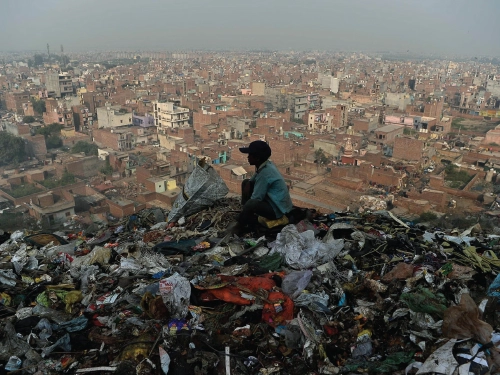
In the twenty-first century, prosperity appears to be spreading across continents, yet wealth is concentrating at a pace that unsettles economists and political thinkers alike. According to the World Inequality Lab in its latest World Inequality Report 2026, the richest 10 percent of the global population now control nearly three-quarters of the world’s personal wealth, while the bottom half owns only a tiny fraction. The top 1 percent alone capture a disproportionately large share of newly created wealth each year. These figures underline a stark reality: although global GDP has multiplied many times over and extreme poverty has declined in several regions, the distribution of prosperity remains profoundly uneven.
To grasp the depth of this divide, it is essential to place today’s disparities in historical perspective. The 2026 report emphasizes that extreme inequality is not a recent development but a persistent feature of the global economy. Since around 1820, the wealthiest 10 percent have consistently accounted for more than half of total world income, while the poorest 50 percent have never received more than about 15 percent. Even as industrial revolutions transformed production and trade expanded across continents, the fundamental distribution of income remained skewed.
There were moments of partial correction, particularly between the 1920s and the 1980s, when progressive taxation, labor protections, and welfare expansion increased the income share of the global middle class. Yet those gains have since weakened. Today, the poorest half of the world receives a smaller share of global income than it did two centuries ago, demonstrating how deeply entrenched inequality has been across generations.
Regional patterns further illustrate how historical legacies shape modern outcomes. In South Africa, one of the most unequal societies globally, the legacy of apartheid continues to influence land ownership, employment, and access to quality education. A narrow elite controls a dominant share of wealth, while millions remain economically marginalized. Across Latin America, countries such as Brazil and Mexico reveal similar divides rooted in colonial land concentration and entrenched political patronage systems. Wealth is often clustered in metropolitan centers, while rural and marginalized communities face structural disadvantages.
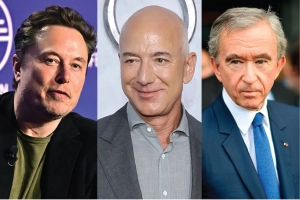
In the United States, inequality has intensified markedly since the late twentieth century. The top 1 percent hold more wealth than the bottom 90 percent combined. Billionaires such as Jeff Bezos, Elon Musk, and Bernard Arnault represent a new economic era in which individual fortunes rival the GDP of smaller nations. Their wealth is largely tied to equity ownership in technology firms, global brands, and financial markets, assets that appreciate rapidly and generate compounding returns. Meanwhile, wage growth for many workers has lagged behind asset inflation, and access to healthcare, housing, and higher education has become increasingly expensive.
 Even countries known for relatively egalitarian systems are not immune. Sweden and Norway have long relied on progressive taxation and robust welfare states to moderate income inequality. Yet wealth concentration has grown there as well, particularly through inherited assets and capital gains. In emerging economies such as China and India, rapid growth has lifted hundreds of millions out of poverty, narrowing gaps between countries. However, internal disparities—between urban and rural areas, skilled and informal workers—have widened. The global picture, as highlighted in the 2026 report, is therefore paradoxical: inequality between nations may decline, but inequality within nations often intensifies.


The writer is an Islamabad-based journalist, political analyst, and social activist, and can be reached at anumelahiofficial@gmail.com
Leave a Reply