



Growing up in Pakistan, I did not treat the calling of the performing arts with high regard. I thought it had the stigma of impiety and immodesty. Not only my parents but the community at large instilled a particular set of values in me and most of them did not favour women. The world stood like a giant pyramid in that model, reflecting a hierarchy that defined and regulated our society. Equality was not a part of it. Each profession was scored against a confusing matrix of religion, finance, education and authority. Hence, one career choice was always considered superior to the other and rated better than yet another one. Doctors stood higher than engineers, who were praised more than the lawyers, who themselves superseded the bankers and so on. CSS officers always seized the top spot; after all, power attracts money, prestige and fame, all at the same time.
The smaller segments of the pyramid had its own hierarchy. In the cohort of doctors, for example, surgeons bagged more points than the physicians, general surgery remained a notch higher than urology but fell below orthopaedics. Actors, regardless of their popularity, recorded unfavourable grades and female performers, whatever the medium, were almost always found in the lowest pit.
In the industry, male writers, directors, producers and actors could still survive but women performers never had a chance. They had to face a lot of humiliation, a process that would not stop even after their achieving national recognition, getting the Pride of Performance or international awards.
Let me add a nuance before proceeding further: The pattern in Lahore and Karachi represented a culture of performing that could be disregarded at one extreme, or the other. It was more tolerant in Karachi, since it had more urban and diverse values than Lahore. Generally, women from the largest city belonged to middleclass, educated families. They were backed by the community and supported by their families because they were sitting at a level above than the women in Punjab who were regarded at the bottom and earned the least respect.
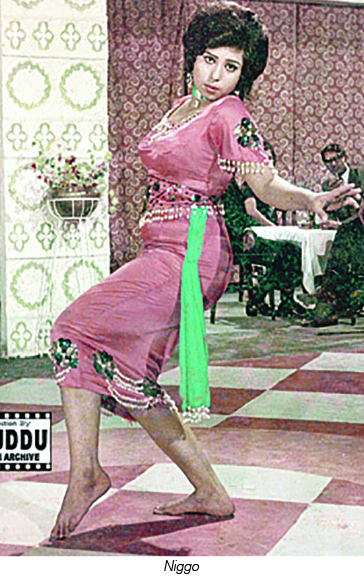
You just thought of them as eye candies in the cultural heart of Pakistan. They were good to be seen in films, TV and on the stage, showing off their curves, much like objects of pleasure, but not as real people whom you could be befriendand build relationships with. You were taught to stay away from them as if you would catch a disease of indecency and immorality just by association. Your own set of morality was endangered under their shining life. Stories of prostitution kept surfacing, their affairs appearing as gossip in magazines and their promiscuity swirled as the talk of the town. The discussion of arts was left to their camera appearances. The discussion usually revolved around their bodies and the carnal desires of men.


The writer is a US-based freelance columnist. He can be reached at skamranhashmi@ |
|
Cover Story
|
|
One-on-One
|
|
News Buzz
|
Update |
Leave a Reply