


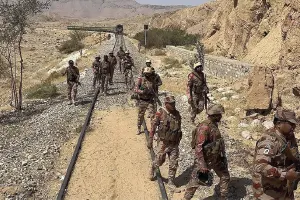
 Pakistan stands at a difficult point once again, where the return of violence threatens the country’s already fragile economy. After years of progress in reducing terrorist attacks, a troubling new wave of militancy is rising. The fall of Kabul in 2021 gave breathing space to extremist groups, particularly the Tehreek-e-Taliban Pakistan (TTP), which has since escalated attacks across several parts of the country. The frequency, boldness, and scope of these attacks indicate a growing confidence. Baloch insurgents and ISIS-affiliated outfits have also increased operations, targeting law enforcement, infrastructure, and foreign nationals. These developments come at a time when Pakistan’s economy is already struggling under the weight of inflation, political instability, and external debt. Any further erosion of internal security risks tipping the economy into a deeper crisis.
The cost of terrorism is not new for Pakistan. Between 2001 and 2021, over 70,000 lives were lost to militant violence. These weren’t just numbers—they were teachers, students, vendors, security personnel, doctors. The nation endured bombings in schools and markets, attacks on worshippers and soldiers alike. Military operations like Zarb-e-Azb and Radd-ul-Fasaad brought relative calm, creating space for cautious economic activity and a tentative sense of stability. Investments, especially through the China-Pakistan Economic Corridor (CPEC), started to trickle in. But now, that progress is under threat once more. Insecurity is rising, and the fragile peace built over the years risks falling apart.
There’s a direct link between security and economic well-being. When bombs go off, businesses shut down. When investors feel unsafe, capital dries up. The latest resurgence in terrorism has already begun to affect foreign investment, particularly from China. Chinese nationals working on CPEC projects have been targeted multiple times, leading to delays and work stoppages. The trust deficit this creates is not easy to repair. China has been one of Pakistan’s few consistent economic partners. If Chinese confidence wavers, it will likely affect future collaboration on infrastructure development and across trade, technology, and energy sectors. The damage, then, is not just financial—it’s reputational.
Security concerns also influence how public money is spent. In Pakistan, around 2% (per government sources) or 4% (per independent economic monitors like PIDE and SIPRI) of GDP already goes to defense spending. As violence escalates, pressure grows to allocate even more resources to security operations. But this comes at a steep cost. Social sector spending—on education, healthcare, and welfare—gets further squeezed. When schools crumble, hospitals lack medicines, and job creation stalls, people lose hope. Extremist groups thrive in such conditions. More guns cannot fix what broken governance creates. Without jobs, justice, and dignity, it becomes easier for fringe ideologies to take root. So, the state ends up fighting symptoms, not causes.


Based in Gilgit-Baltistan, the writer is a development practitioner and can be reached at shakeelahmedshah@yahoo.com
Leave a Reply