
Carry Trade Destination
The future demands that Pakistan should emerge as a growth engine in the region.

A 200 million population, abundant natural resources, fertile land and a sea port that is the most viable route into Asia, are the correct elements for a country to prosper economically. Unfortunately, over the last 30 years, issues such as insincere leadership, corruption, export stagnation, security concerns and energy deficit have stopped Pakistan from embarking on such a journey. From where Pakistan stands now, driving it out of a 30-year debacle from an economic development standpoint requires careful maneuvering of economic policies, which need to be in line with the changing global macro trends. These should be the basis of the foundation of the country’s direction in its forward march.
The developed world has reached stagnation in economic growth and it is time for more capital to flow into the region. Pakistan needs to be prepared for a period of changing trade alliances. If past blunders are set aside and the country’s leadership understands and works towards what the future holds, it can become an Asian Tiger by 2030. Whether Pakistan will actualize and capitalize on this corridor of opportunity is a question that cannot be answered with conviction at this stage.
To understand the complications that occur in answering the question, it is to be seen how Pakistan’s economy is placed at the moment vis-a-vis. certain basic indicators. The country’s current account deficit is a negative 1,548 million USD per month, the balance of trade is a negative 310,000 million USD per month, the GDP growth rate is currently above 5 percent, inflation is 12.55 and the GDP-to-debt ratio is around the 70 percent mark. Foreign direct investment averages around 150 million USD, after decline to a negative 200 million at the start of 2019. Given the amount of debt the country is accumulating on a month-on-month basis, these numbers indicate fragility and a need for rapid economic development.
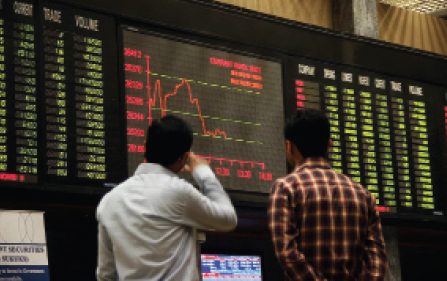
What needs to be determined is whether the government’s policies and steps are in line with what is required at this stage. As part of its efforts to attract capital, starting 2018, the State Bank of Pakistan began to raise interest rates at an unprecedented pace and took the benchmark to 14.5%. Economic theory says that such contraction-oriented policy measures should be executed in a heating economy with rapid growth to control demand-led inflation, which is not the case in the current circumstances since The inflation witnessed is mainly due to the excessive currency printing done to meet the current account deficit. This has resulted in devaluation of the purchasing power of the Pakistani rupee.
Such an insight gives birth to a thought-provoking question: why would the State Bank opt for such a measure? The answer is that the country is being developed for ‘carry trade.’ Carry trade is defined as the flow of capital from an economy with low interest rates to a higher interest region, when the central bank lending rates have touched their peak and a decline in that trajectory is about to be initiated to book capital gains on the amount invested. This was confirmed by the influx of 200 million into bond funds recently and a decrease in the policy rate by the State Bank followed.
Whether this measure was in line with Pakistan’s growth objective was a question that needed to be asked. The inflow of money would exit the country when the capital gains were booked, initiating a selloff in PKR and resulting in further devaluation of the currency, making the economy vulnerable to currency risk. This would contribute to compromising investor confidence. At the same time, where economic activity slows, capital investment is discouraged. Given the amount of debt being accumulated on monthly basis, this could be a step that could have adverse effects if simultaneous growth efforts are not made before the State Bank begins decreasing these interest rates. The capital gain on the inflow into bonds reach a peak and the money that enters begins to leave a situation that very easily leads to further deterioration. An example is Argentina. It is not a compulsion that Pakistan should face the same consequences as Argentina, but this is most certainly a scenario that cannot be overlooked when creating carry trade circumstances in a country where the economic indicators suggest fragility.

To avoid the adverse effects of carry trade, capital in Pakistan will need a reason to start within Pakistan’s borders. It must be seen whether there is a better return, as in the case of India, a country that developed strong growth foundations. Given where Pakistan stands, the question is whether steps are being taken to lay down the foundations of growth and the country is shaping itself according to the changing trading alliances and blocs. The future demands Pakistan to place itself as a growth engine in the region. It must ask itself whether it is headed in the opposite direction and is being used as a trade route without reaping the accompanying benefits. To emphasize on the sensitivity of where Pakistan stands, it would be appropriate to conclude with a recent development in Africa. China is now all set to control Kenya’s strategic port as the country has defaulted on its loan payments. Pakistan considers CPEC and China as its saviours., As a nation, will Pakistan utilize the opportunity it has been given?![]()
The writer is a fundamental and technical analyst on gold and dollar, with an academic background in international business, He can be reached at sikander.taimoor@gmail.com |
|
Cover Story
|
|
Interview
|
|
Around Town
|
|
Tribute
|
Update
|


Leave a Reply