



Memories
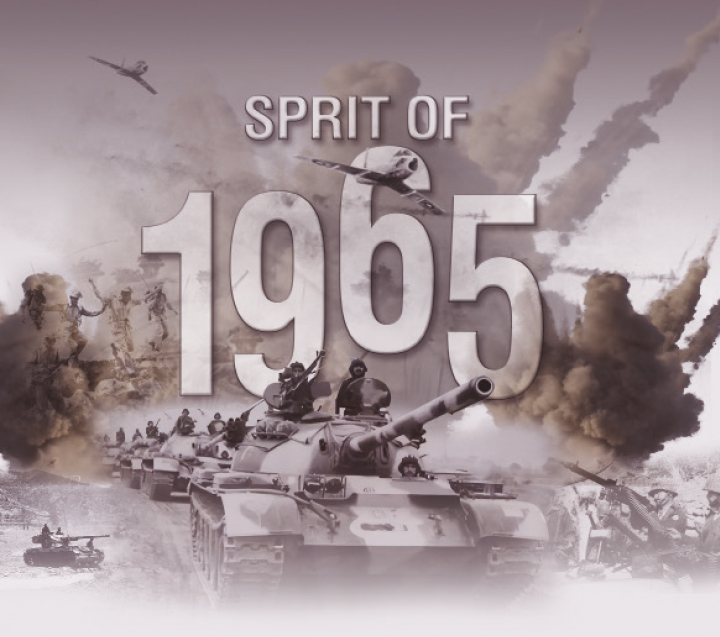
Never has the Pakistani nation been as united as it was during the 1965 war.
The year was 1965. I had returned a day earlier from Quetta to resume classes at college, which were starting from September 6. I was a second year pre-medical student a F.C. College in Lahore and used to live with my uncle in Model Town as my parents and family were in Quetta.
On the morning of September 6, I reached the college campus before 6.30 am, as this was the time when classes started. As I walked from the bus stop on Ferozepur Road to my class in the college’s Physics Building, I noticed that the campus was practically deserted. I stopped and asked a mali (gardener) working in a flower bed. He looked up, gave me a surprised stare and said in Punjabi, “Don’t you know? India has attacked Pakistan, war has been declared and the college is closed.”
I was shaken. This was really unexpected. I plodded back to the bus stop and boarded the only bus going back to Model Town. The bus was stopped in the middle of the road near Walton. All the passengers were asked to quickly disembark and hide in a dry nallah (drain) running along the road. An eerie siren sounded close by. Soon, there was a roar of jet fighters as they flew over our heads. We were informed that these were Indian planes that wanted to bomb the runway at Walton Airport. Why they didn’t do so is anybody’s guess. After a while, we were allowed to board the bus again and head for Model Town.
When I reached my uncle’s house, I was asked to join in digging a trench in his front lawn. It was inside the trench that I heard General Ayub Khan’s now famous speech on the radio. It further boosted our morale and our patriotism against enemy India rose sky-high. Gen. Ayub was President of Pakistan and commander-in-chief of the army.
When I learned that day that the army needed blood, I rushed to the closest blood donation camp but was turned away because they said I was too thin and not fit for blood donation.
This was a great unifying time for the nation. The people’s spirits were very high and were further propped up by national songs. Noor Jehan was well-known but Mehdi Hasan was a new discovery.
There were popular numbers, like “Aey Khitta e Lahore,” and “Apni Jaan Nazar Karoon” by Mehdi Hasan and “Aey Watan Key Sajeelay Jawano,” and “Yeh Puttar Hattan Tey Naheen Wik De,” by Noor Jehan. These and other songs infused a certain pep and verve in the people that had not been seen before.
It was in the war days that I came to learn what a ‘black-out’ was and how one survived in blackouts.
Since college was closed and I did not have much to do, my uncle took me to Gulab Devi Hospital where they were receiving injured soldiers from the war front. Along with many other students, I was required to read letters from their families and write replies - in Urdu. I met a jawan who was completely burnt and only his eyes were visible. A grenade had hit his trench with diesel oil all around while he was on duty. The oil had quickly caught fire and he could not escape the flames.
 Another young man, barely 18, had his left foot chopped off in a hand-to-hand fight. He had been newly recruited. So massive was the spirit of these and other soldiers that they wanted to be returned to the front as soon as possible.

Leave a Reply