




The acute economic crisis in Sri Lanka is sending shockwaves to the rest of the South Asian region. Sri Lanka is plagued with a balance of payment crisis as it reports insufficient foreign exchange reserves and high risk to debt sustainability. According to a press release published by the IMF after the conclusion of 2021 Article IV consultation with Sri Lanka, Sri Lanka’s real GDP contracted by 3.6 percent in 2020 due to loss of inflows from tourism, prolonged lockdown due to the COVID-19 pandemic and loss of access to international bond markets. However, GDP did recover as the government undertook measures to stimulate the economy and provide easier loan repayment terms to businesses. The tourist arrivals touched pre-pandemic levels in 2021. The pandemic took a toll on the economy as tax cuts, poor revenue performance and higher expenditures have contributed to the adverse effect on the fiscal deficit, which exceeded 10 percent in 2020 and 2021. Public debt as a percentage of GDP is more than 100 percent and external sources of financing are limited. Inadequate foreign exchange reserves and high financing needs have created a significant challenge for the government and it has warned of unprecedented default and a stop in external payments. The exchange rate of the Sri Lankan rupee to one US dollar plunged by more than 50 percent in the space of one month since early March 2022. Electricity shortages and sharp increase in the policy rate by the central bank along with other political challenges are likely to further slow down economic activity.
According to data provided by the Central Bank of Sri Lanka, inflation rate as measured by the headline national consumer price index in February 2022 was 17.5 percent, up from 4.2 percent in March 2021. The foreign currency reserves were at $1.72 billion at the end of March 2022, falling from $2.03 billion in February 2022. Tourist arrivals were up 2,800 percent year-on-year in the first three months of 2022, translating to a year-on-year increase in 2,000 percent in dollar revenue. However, inflow of remittances have fallen sharply by approximately 63 percent year-on-year in the first two months of 2022. Although, both forms of earnings are critically important for Sri Lanka, remittances have typically contributed more to the dollar revenue inflow for Sri Lanka than tourist earnings. Further, Sri Lanka primarily exports relatively basic commodities such as food and live animals and textile products and imports of mineral fuels, machinery and equipment. High oil prices are likely to have contributed to a burgeoning import bill, increasing the challenges to the economy.
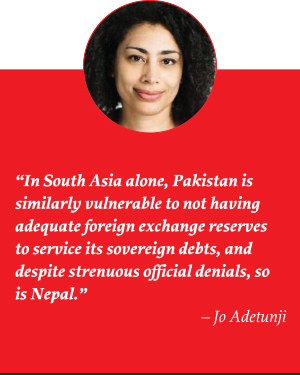 The Pakistani economy is also reporting similar conditions, facing a recurring balance of payment crisis as its foreign exchange reserves incur a drastic reduction, fiscal deficit is on the rise and the current account deficit is likely to hit record levels. Although, Pakistan is not likely to default on its debt obligations like Sri Lanka, rising political temperatures have contributed to the challenges. The new government has its hands full in terms of the economic policy maneuvering it is expected to undertake in order to soften the impact of the economic challenges.


The writer is an Assistant Professor of Economics and Research Fellow at CBER, Institute of Business Administration (IBA), Karachi. He can be reached at anakhoda@iba.edu.pk
Leave a Reply