



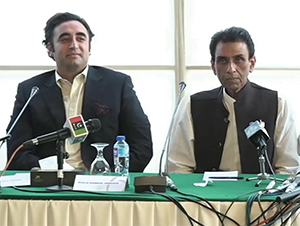
 MQM had a love-hate relationship with Pakistan Peoples Party for decades, with cooling off periods of varying duration in-between. However, the most recent parting lasted much longer and seemed to be permanent, because the magnitude of events leading to it had crossed all previous limits.
The last round started in August 2016, when the exiled MQM leader Altaf Hussain made a fiery telephonic address – perhaps in a state of intoxication – inciting his followers against the media. And under his spell, MQM workers started violent protests, even attacked some media outlets and also clashed with the police. Then Rangers started an operation against the MQM, arrested nine leaders and later sealed the MQM secretariat Nine Zero.
However, MQM leaders in Pakistan distanced themselves from Altaf Hussain and eventually made a complete break from the London setup. To mark this event, MQM added the suffix ‘Pakistan’ to its name, making it MQM-P while Altaf Hussain’s London setup was known as MQM-London.
MQM splintered into MQM-P, led by Dr. Khalid Maqbool Siddiqui, MQM (Haqiqi) headed by Afaq Ahmed while Syed Mustafa Kamal – with wonderful performance record as Karachi mayor – formed a new party called Pak Sarzameen Party (PSP). It is pertinent to mention here that while MQM-P and MQM-Haqiqi maintained Mohajir identity, Mustafa Kamal’s PSP is not ethnicity-based and embraces all Pakistanis. It is about time other factions followed PSP’s lead, and joined hands for common good, and to better serve the masses. It is interesting that Dr. Farooq Sattar is seen nowhere in any of these parties.
I still feel there is nothing wrong with a community calling itself Mohajir so long as this is done only to identify the community with its distinct language and culture. I would like to give here the example of ‘Jamiyat Punjabi Saudagaran-e-Delhi’ in Karachi which, despite multiple migrations spreading perhaps over a couple of centuries, still likes to carry its original ethnicity. No one should really object to it so long as they, and all of us remember that we are all Pakistanis, with equal rights and obligations.
I would also like to mention here that Urdu-speaking migrants to Pakistan were not really ethnic-minded and the fact that MQM was not formed until 1984 proves this. The MQM emerged as a response to the rising marginalization of Urdu-speaking migrants from India, started during Ayub Khan’s rule, and continued thereafter in urban Sindh, especially in Karachi, through ittehads (alliances) of various ethnic groups.
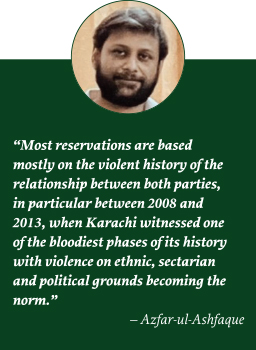 However, it was an even greater travesty of justice that after becoming powerful, the MQM, which had stood against persecution of the Urdu-speaking people, itself started abusing power by committing atrocities against people of other ethnicity, not sparing even those of its own ethnicity who dared oppose its excesses or differed with its policies. Of course, this state of affairs could not be allowed to continue and the authorities moved in to bring things under control.


The writer is a freelance contributor with interest in regional, South Asian and international affairs. He can be reached at hashmi_srh@hotmail.com
Leave a Reply