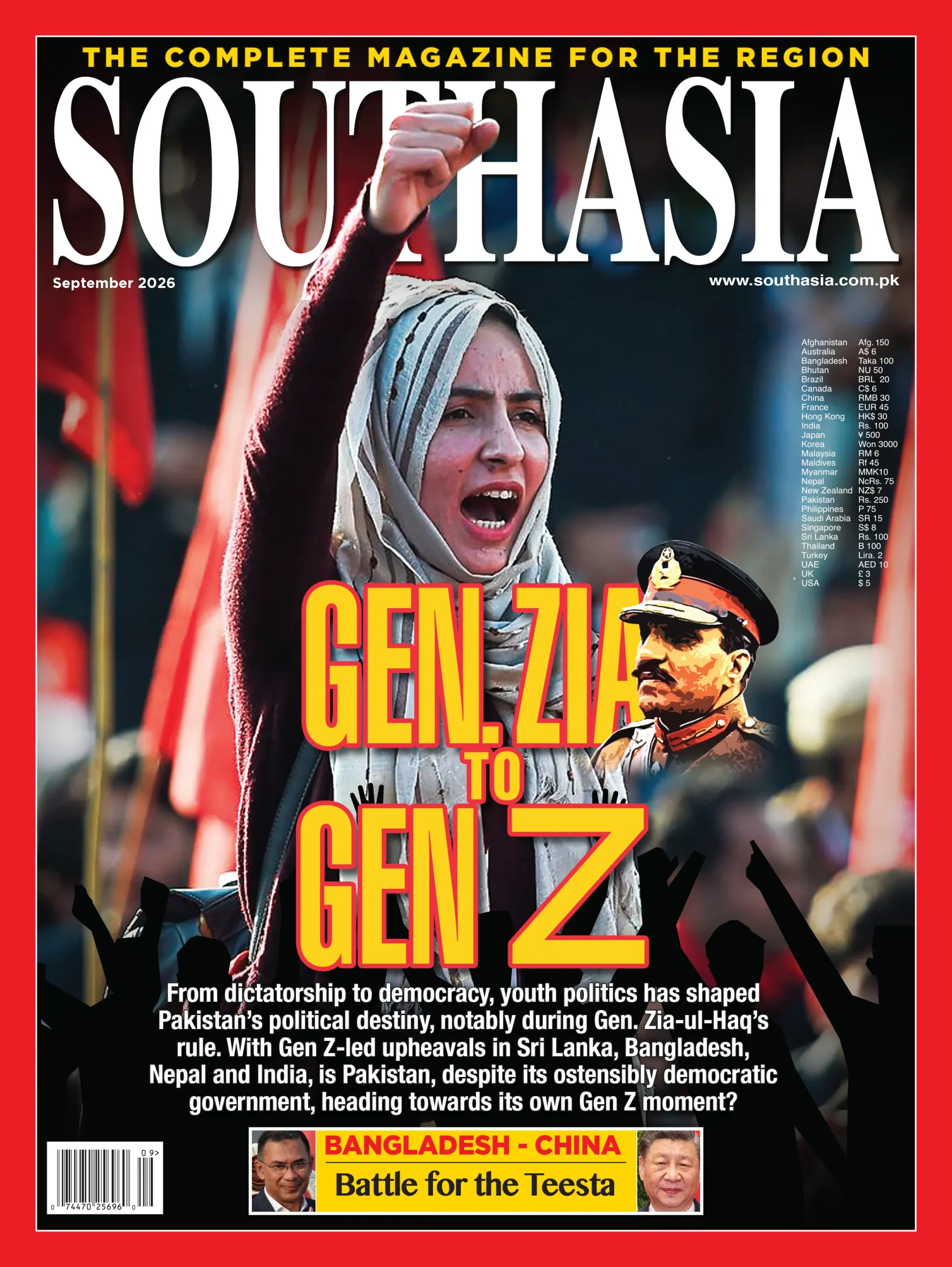



Pictorial Injustice
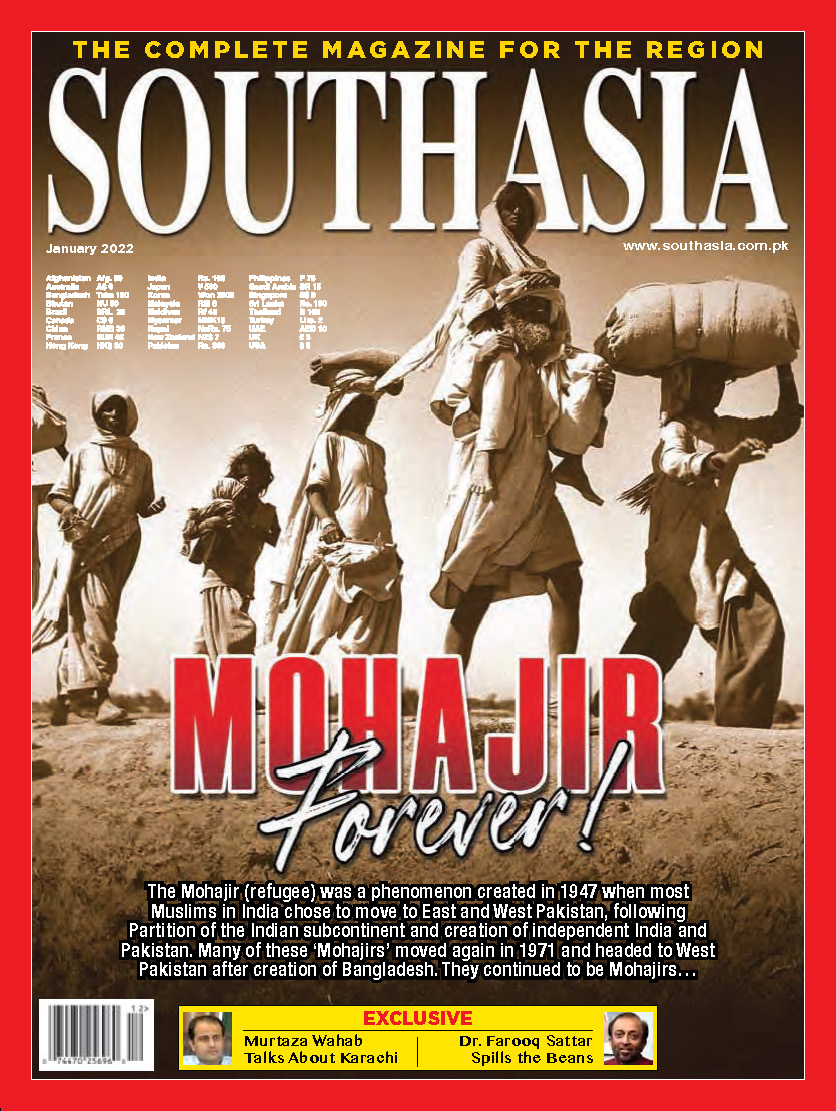 This is with reference to the cover story titled ‘Mohajir Forever,’ which appeared in the January 2022 issue of SouthAsia.
In Pakistan, the ‘Mohajir’ is commonly used to refer to community of those non-Punjabi migrants who went through a blood-ridden migration, just like their Punjabi brethren, while moving from India to Pakistan by train, sea and land routes at the time of Partition in 1947. The world’s most disastrous and gory exodus at 1947 Partition caused cruel death and displacement for countless millions of unfortunate souls on both sides of the border, including Urdu-speaking Mohajirs from India, particularly from UP and Bihar regions in large numbers. The majority of them were Urdu-speaking Mohajirs from India.
However, the pictorial depiction of the cover does not do justice with the overriding theme ‘Mohajir.’ The title incorrectly shows droves of people moving from Indian Punjab to Pakistan’s Punjab as they were able to cross the Indian border by foot and vehicular means, unlike those Urdu-speaking Mohajirs who were left with no option other than taking the death rides to reach their promised land even at the cost of their lives. A cover showing the Indian trains overcrowded with Mohajirs and Indian railway platforms covered with Mohajirs’ dead bodies would have done justice to ‘Mohajir’ theme and community. Unfortunately, the real Mohajir is missing from the main title.
Syed Raza Lakhnavi,
Karachi, Pakistan.
Short Memory
 There is much talk of Pakistan’s economy becoming a handmaiden of the IMF. Such voices try to ignore the fact that the rot in the country’s economy did not occur in the last 3 years. Things deteriorated over a much longer period, going back to Musharraf’s rule. How could Imran Khan correct things in a mere three years? If ‘Na Laiq’ and ‘Na Ahl’ is the frame in which the Opposition fits Imran Khan, then what were Nawaz Sharif and Asif Ali Zardari? Did they take Pakistan to new heights of glory? Do Pakistanis have such a short collective memory that they have forgotten the mis-governance of the PML (N) and the PPP?
Tahir Ahmed,
Rawalpindi, Pakistan.
Move to Deliver
 Karachi recently got a brand new transport system in the shape of the Green Line. Does this solve the city’s transport needs? Are the people happy? Maybe some of them are those who travel the Green Line route. But what about the others? Are we on our way to getting rid of the Chingchis, the Ubers and the yellow devils? By the same token, BRT systems in other cities, like Lahore, Rawalpindi-Islamabad, Multan and Peshawar have also much more to deliver.
Shazia Maqbool,
Karachi, Pakistan.
Sindh Government’s Governance
 The Sindh government is behaving in such a way that it does not seem to be governing the province within Pakistan. The local government system has been hijacked, there is no medical card for the people, neither hospitals, schools, road, sewerage system, water supply, public transport, etc., and what’s worse is that the rural population - whose votes the Sindh government banks on - still lives in the same quagmire as it did 70 years back. Where are Murad Ali Shah and Co. leading Sindh to?
Itriza Mahmood,
Jamshoro, Pakistan.
Traffic Accidents
 Why are there so many traffic accidents in Pakistan?
Buses collide, fall down and various slip down across riverbanks, dumpers climb over motorcyclists and the list goes on. Our is sure that traffic police is aware of all those but its personnel are standing at a street corner collecting bribes while traffic moves on its own. One does not see a ray of light anywhere.
Syed Kamran,
Lahore, Pakistan.
Imported Gas
 Gas shortages in Pakistan are again a story of mis-governance by the energy ministry. If they did not book imported gas cargoes on time, whose fault is it? And if they did not extend the gas exploration regime, only those in charge of the job, such as OGRA, are the ones to blame. The current government is starting a new gas exploration programme but this is too late in the day. We have to depend on imported LNG - even at very high rates and this is our fate.
Raza Ahmed,
Sukkur, Pakistan.
Fisheries Miseries
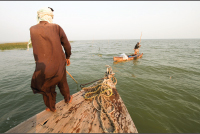 Pakistan is the only coastal country in the world with almost zero per cent of shrimp farming. Particularly from the late 90s, there has been a massive decline in overall inland fish production with the minimum landing of lobsters, crabs, shrimps and other types of fish and shellfish. As per the statistics shared by the Ministry of Food, Agriculture and Livestock, Government of Pakistan, each medium-sized fishing vessel brings approximately 70 million tonnes of trash fish on an average. In addition to that, less than 10 per cent of farmed seafood is exported, while nearly 80 per cent of seafood and seafood products become rotten before landing at the port and are thus recycled into fish meal to be used merely as poultry feed. In Pakistan, the existing seafood units produce substantially less than their production capacity, while in the Balochistan province, as many as 35 seafood processing units are not even operating.
Ghulam Ali Chandio,
Thatta, Pakistan.
Leave a Reply