


The Taliban takeover of Kabul has altered the regional security dynamics, foreign policy choices and realities. It has also affected the regional powers’ activism and interest, with China, Russia and Iran being at the forefront. The Taliban regime is a single manifestation of the changing security paranoma. Pakistan is not an exception. Being Afghanistan’s immediate neighbour and sharing the longest botder with it, Pakistan is the country most affected by the political and security instability in Afghanistan. However, the Taliban’s accession to power has changed its security posture and threshold. Unlike Ghani’s and Karazai’s regimes, when the RAW-NDS nexus and Indian-sponsored proxies posed the greatest security threats to Islamabad, the Taliban’s ascendency has transformed the threat spectrum. Put another way, the threat threshold has been reduced to a considerable extent. This is mainly because of two reasons: Taliban’s denial of space to India as a launchpad against Pakistan and the latter’s say and primacy in Taliban leadership. This is evident from Pakistan’s intelligence and political leadership rushing to Kabul in the immediate aftermath of the Taliban’s accession to power.
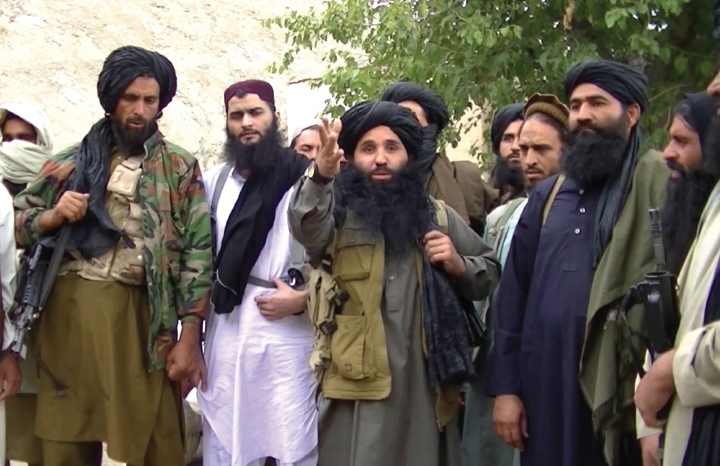
Although the Taliban takeover did diminish the TTP‘s operational and logistic capabilities, it is still a cause of concern for Islamabad. After being released from prisons in Afghanistan, the group members are reported to be regrouping in the tribal regions of Pakistan. The Taliban’s assurance of not allowing its soil to be used against any other state notwithstanding, radicalisation and extremist tendencies might still exist, and perhaps may be rejuvenated. Weakened by reining in of Indian influence and the Ghani government’s collapse, the TTP might be softening it’s tone both with the Taliban and Pakistan, in a ploy to restore their relevance. Taliban ascendency is one of the greatest reasons for the TTP, which may have led to its postponing its nefarious plans to earn legitimacy both in the eyes of Kabul and Islamabad. Kabul has already asserted its reluctance to take action against the TTP as it probably assumes that the terrprist group poses no threat to Kabul.
In this backdrop, Pakistan’s engagement with the proscribed group that bled the country and its innocent citizens for over a decade, calls for concern and caution. More troubling, however, is Islamabad’s official willingness to grant general amnesty to the hard-core TTP.
In a interview with TRT , the Turkish TV and radio channel, Prime Minister Imran Khan revealed that talks were underway with the TTP under the facilitation of the Afghan Taliban.
“There are different groups which form the TTP and some of them want to talk to our government for peace. So, we are in talks with them. It’s a reconciliation process,” he said.


Ali Hassan Bangwar is a freelance columnist and researcher based in Kandhkot. He can be reached at alihassanb.34@gmail.com
Leave a Reply