


Democracy is considered one of the best forms of governance. In the contemporary world, however, many astute writers, philosophers, and erudite minds have observed that democracy is in a state of crisis worldwide. Indeed, elected leaders and military powers have distorted the spirit of democracy to serve their vested interests.
The elected demagogues always play a key role in the erosion of democracy. To validate power, they make spurious promises with people but when they assume power they tend to renege on.
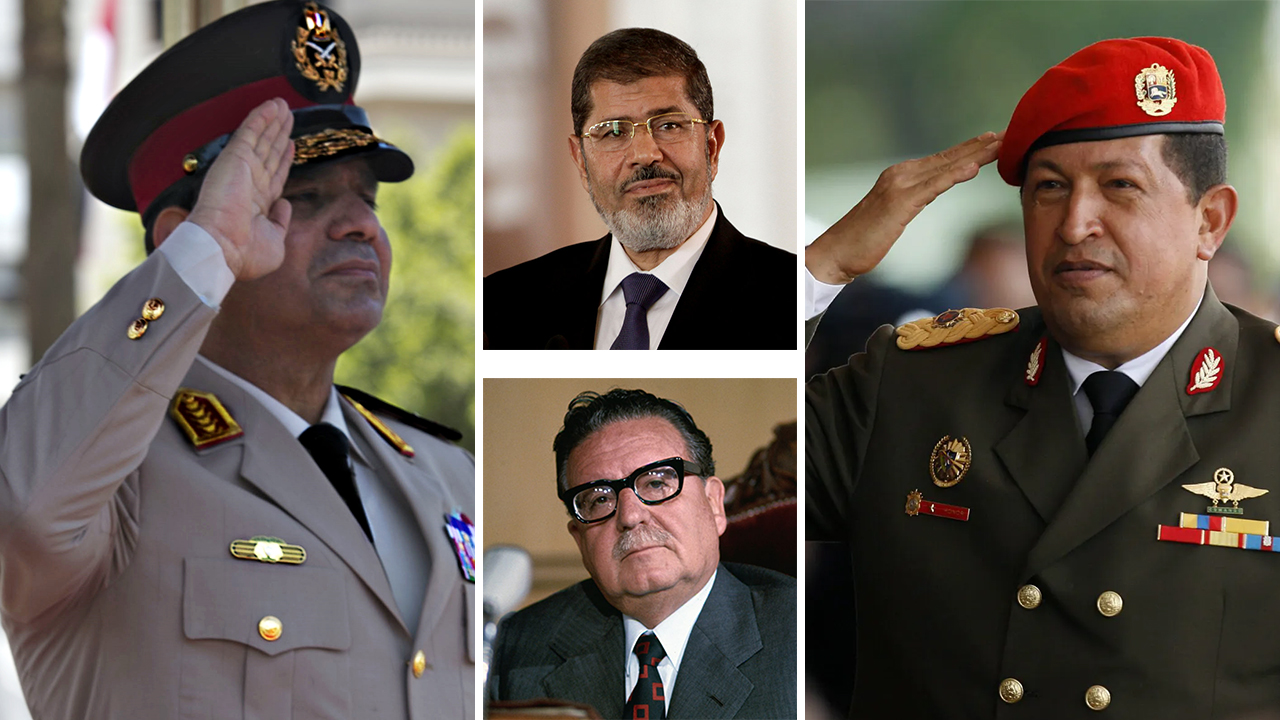
Hugo Chavez, a Venezuelan political leader, made a promise with his people to build an authentic democracy that would ensure safety and improve the living standards of the people. However, when he became the President of the country in 1978, he went back on his pledges to the people of his country and grew up as an upright repressive figure. He shut down television channels, arrested and exiled his opponents and also abolished the presidential term limit so that he could remain in power for life. As a corollary, Venezuela emerged as an autocratic state.
Moreover, democracy also dies at the hands of military power. For instance, the President of Chile, Salvador Allende’s government was toppled in a coup d'état by the armed forces and within hours, the president was found dead. During Allende’s term, the country was passing through an insurmountable socio-political crisis as well as economic recession. Similarly, military chieftains toppled the then Egyptian President Mohamed Morsi in 2013 and Thai Prime Minister Yingluck Shinawatra in 2014.
To revive the true spirit of democracy, both the military and political leaders should show mutual tolerance and institutional forbearance, the pillars of democracy, which help it function effectively.
In fact, when the norm of mutual tolerance becomes fragile, democracy cannot remain intact. Besides, the second norm for the survival of democracy is institutional forbearance, which means exercising self-control even in adverse circumstances. In fact, when the norm of institutional forbearance is adequately observed, politicians may resolve their differences through mutual discussion and negotiation. For example, the limit of the presidential term in the United States is not defined in the Constitution, but it is a norm of forbearance which has not been challenged by any authorities.
And, when the Democratic Party wanted to nominate Grover Cleveland for the third term, other political leaders rightly warned that such a candidacy would violate the norm of institutional forbearance. Indeed, when the norms of institutional forbearance and mutual tolerance are weak it becomes difficult for democracy to remain stable and will succumb to dictatorship or authoritarian rule. Hence, it is important for the powerful authorities not to erode the norms of institutional forbearance and mutual tolerance and always abide by the democratic principles for peace, prosperity, and progress of the nations.

The writer is a Sharia and law student at the International Islamic University in Islamabad. He can be reached at abbas.naveed2017@gmail.com
Leave a Reply