



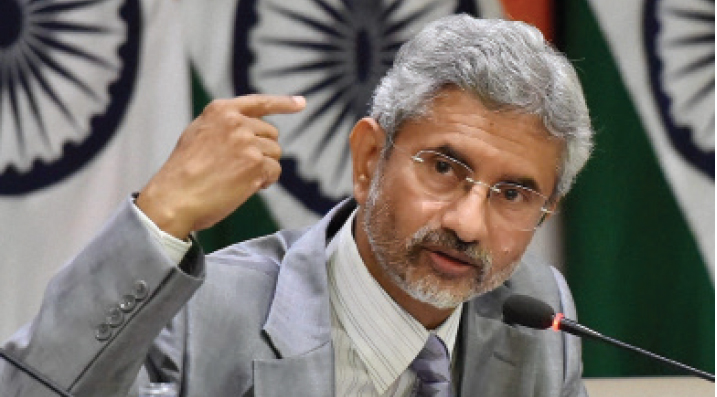
“Due to us, Pakistan is under the lens of FATF and it was kept in the grey list. We have been successful in pressuring Pakistan and the fact that its behaviour has changed is because of pressure put by India by various measures.” This was a tacit admission by the Indian External Affairs Minister, Subramaniam Jaishankar, that Pakistan was placed in the grey list in 2018 and continues to be there due to the Indian pressure on the Financial Action Task Force (FATF).
The statement has exposed the double standards of the international counter terror-financing and anti-money laundering watchdog that this organization has been exploited by powerful lobbies and remains vulnerable at the hands of its financiers and other important players. On top of that, its decisions are based on manipulation rather than transparency.
Having been placed in the increased monitoring list in July 2018, Pakistan was handed out a set of actions along with a timeline for implementation of counter terror financing and anti-money laundering measures by the end of 2019 by the FATF. However, the deadline was extended later. After the June 21-25, 2021 plenary held in Paris, FATF President Dr Marcus Pleyer said, “The Pakistani government has made substantial progress in making its counter-terrorist financing systems stronger and more effective. It has largely addressed 26 out of 27 items on the action plan it first committed to in June 2018.”
Nevertheless, FATF decided that Pakistan has to remain in the grey list owing to its failure to comply with the last remaining item. To this, Foreign Minister Shah Mehmood Qureshi retorted, “We had been given 27 points in the FATF Action Plan, out of which work on 26 has been completed. In this situation, there is no justification to keep Pakistan on the grey list. India wanted to use the forum for political purposes but should not be allowed to do so.” Besides, he responded to Jaishankar’s shocking revelations that, “Pakistan has consistently maintained that India has politicized FATF. The recent Indian statement makes clear their mal-intent. Manipulating an important technical forum for narrow political designs against Pakistan is disgraceful but not surprising for the Modi Government.”
Pakistan has complied with almost all the FATF recommendations, yet it has not thus far been released from the grey list. Federal Minister Hammad Azhar, while condemning the Indian Minister’s statement, said,, “The statement of Indian External Affairs minister only confirms what Pakistan has been saying all along; India actively politicizes and undermines the technical processes and spirit of FATF.”
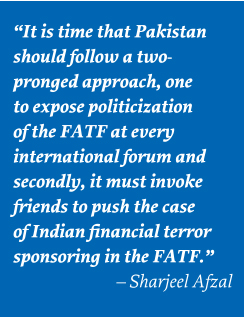 India’s senseless action has made the credibility of the organization questionable. Despite the fact Pakistan has gone out of the way to work on the action plan, there is no reason to put the country on the grey list. FATF President Dr Marcus has praised Pakistan with words like ‘substantial progress’ and ‘largely addressed’. Against this backdrop, the entire development still gives the indication that FATF has become a political tool for powerful players to advance their geopolitical goals.


This writer is a freelance contributor and can be reached at amjadsiyal@hotmail.com
Leave a Reply