Conservation
Exploiting Wildlife
Nepal needs more stringent policies and regulations to implement strict bans for prevention of commercial exploitation of terrestrial wildlife.

The National Parks and Wildlife Conservation Act, adopted in 1973, sought out to reflect Nepal’s wildlife policy. The policy rests on the philosophy to protect terrestrial wild animals from commercial exploitation. However, the Nepalese government has now decided to cash in on farming wild animals for commercial purposes and is pressing ahead with its plans to launch commercial farming of wild animals as major traditional Chinese and Indian pharmaceutical companies seek to invest.
Wildlife farming, as the name suggests, is the abhorrent practice of stocking undomesticated animals in an agricultural setting to produce commodities such as traditional medicine, fur and food or to be kept as pets to symbolize wealth. It involves the cruel and inhumane process of subjugating wild animals to captivity and farming techniques that pose the risk of detrimentally impacting endangered species. If that isn’t enough, in 2019 we have had to learn the most disastrous threat of such a practice that has proven to directly affect mankind – the emergence of zoonotic diseases.
The National Parks and Wildlife Conservation Act envisages Nepal’s breakthrough policies to implement strict bans to prevent the commercial exploitation of terrestrial wildlife. Considering the legislative intent behind the Act, it is now difficult to reconcile the complete back flip stance of the government through its recent amendments.
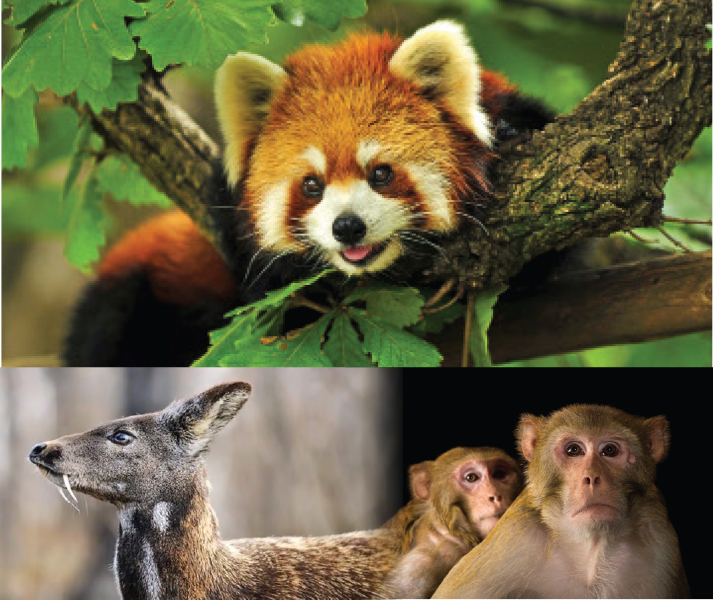
The amendments echo the wildlife farming policy adopted in 2003 and face similar criticism. The 2003 policy was dropped by the government in 2009 after it became known that rhesus macaques, a species of monkey, were being exported to labs in the United States for biomedical research by exploiting the allowance to use wild animals for conservation and research purposes. This led to protests led by animal welfare activists, highlighting the troublesome nature of the policy which, in their view, was tailored to pursue economic incentives rather than wildlife conservation.
The present-day amendments propose wildlife farming and breeding for meat and animal sourced commodities and to adopt an international trade policy. A ‘seed’ animal is to be provided to farm-permit holders which enables them to commercially use the second-generation wildlife born from the seed animal. There are four classes of animals for wildlife farming, namely mammals (which includes species considered endangered by the International Union for Conservation of Nature such as the Himalayan musk deer, hog deer and the swamp deer), reptiles, amphibians and birds.
The reason behind the controversial decision was to promote private sector interest in wildlife farming for commercial purposes. This would improve the economic standards of marginalized rural communities and advance biodiversity conservation by reducing hunting of the wild animal population as the food security needs of local communities would be met.
Conservationists and animal welfare activists criticize the lack of consultation with stakeholders when formulating the amendments, particularly targeting the lack of clarity on how these specific species were chosen or whether any scientific analysis was undertaken to identify the purported benefits of permitting wildlife farming. Additionally, by using overarching and ambiguous categorizations of animal species, threatened species within these categories could potentially be covered by the farming guideline which will permit capturing these animals to be used as seed animals.
Further, the policy decisions behind the move have failed to explain how they would alleviate the poverty status in remote areas as the costs associated with the licenses to farm are unaffordable by locals who do not have the capital to invest. According to government regulations in 2019, the cost to farm the Himalayan musk deer was USD 900 and USD 700 for each seed animal bought from the government, excluding transport costs.
The regulation of this sector is also a problem which is central to the debate on whether to legalize wildlife farming as it will be difficult for officials to identify the source as from licensed farms or from illegally hunting the wild population of the species for animal products or meat which could enable illegal trade. Breeding wild animals in captivity is also an arduous task that could potentially lead to some restocking from the wild. There is also the issue of consumer perception as many prefer products from wild animals rather than farmed. These technical difficulties alongside the multiple ambiguities in the law promote the perception that the move is merely to satisfy individual economic pursuits, therefore, it would not be a “win-win” state for conservation and economy, as some suggest. Rather, by allowing this practice, Nepal would, in effect, undermine the efforts of conservationists having invested years of work in the protection of various species.
For wildlife farming to be successful in achieving its policy objectives, farmed products must provide a suitable alternative to the product sourced from the wild and should satisfy rather than stimulate demand in the market. Farming must also be cost-efficient to prevent farmers from restocking from the wild and should not serve as a means to trade illegally sourced products. However, maintaining this balance requires the government to employ strict implementation and oversight measures.
Despite the criticism, lawmakers are eager to carry on. By doing so, the policy in effect promotes the exploitation of wildlife for human utilization in disregard to animal welfare and its negative ecological effects. Given the current pandemic, many countries, the World Health Organization and public health experts have called for a ban on consumption of wildlife. This has currently halted the progression of the amendments to Act status with multiple businesses waiting for a more facilitating global climate to lobby the amended National Parks and Wildlife Conservation Act.![]()

The writer is a legal consultant and an animal rights activist. She can be reached at hooriya.muj68@gmail.com


Leave a Reply