



Since Brexit, the United Kingdom has been in hot waters. The economy, despite new-found stability, has inched its way back to the European Union. The financial markets have started showing a transition from London to Amsterdam and the investor sentiment can only be described as pessimistic. It is safe to say that the much advocated Brexit disrupted more than originally anticipated; starting with a referendum, the exit has harmed the UK more than it salvaged. A stabilizing economy is the only glimmer of hope and while the UK could use a period of dormancy to evade the vice of the pandemic entirely, apparently neither the pandemic nor the troubles are parting ways with the UK any time soon.
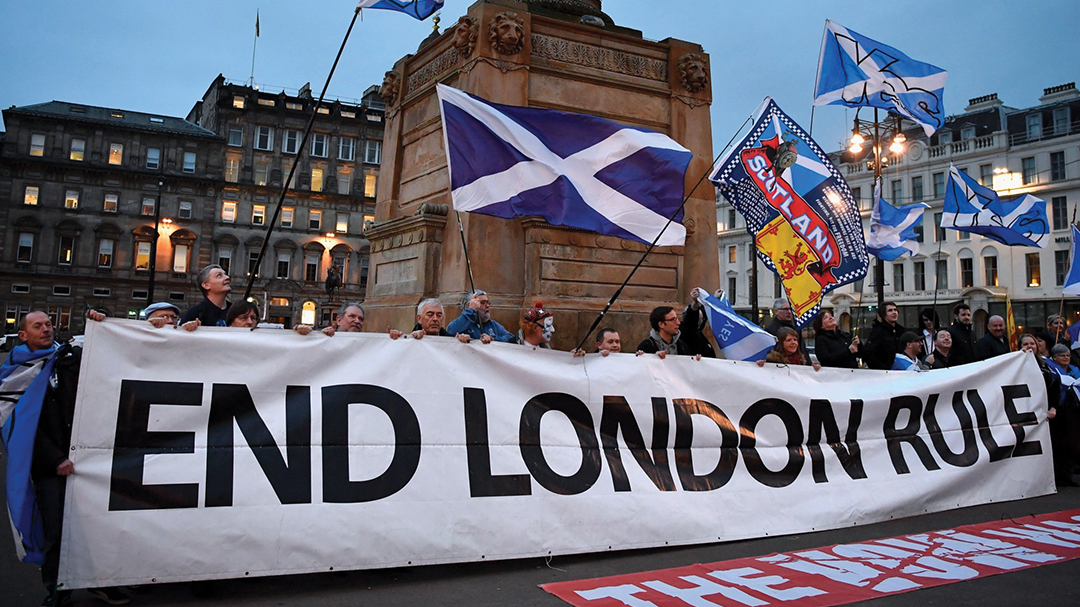
Months after the UK’s exit from the EU, the Scottish outcry for a new independence referendum has rattled Westminster. Despite a long shot at independence and the legislative authority of England drawing complexity for the referendum to begin with, the pro-independence factions in the Scottish parliament have gained momentum and the likelihood of another referendum alone could spark a nightmare for a unified Britain.
Scotland entered a union with England back in 1707: a 300-year old voluntary junction setting the foundation of the United Kingdom in all its might. However, the contentions over England’s excessive control started to surface in the late 20th century. While Scottish allegiance to Britain remained tensile, the surging independence movement spilled popularity in the 1970s as London’s supremacy over revenues right off the Scottish coast started to irate Scottish circles. An estimated 90% of the UK’s oil resources, majorly from the North Sea, fell under Scottish jurisdiction. Roughly 4.13% of all UK exports stemmed from the fuel extracted from the North Sea, adding an estimated GBP 2.1 billion to Britain’s exchequer. However, the proceeds hardly benefitted the Scottish public; a major point of argument that ignited the nationalist movement in Scotland.
‘Its Scotland’s Oil’ was a popular slogan in the 70s for the Scottish National Party (SNP) - the first major pro-independence party in Scotland. The narrative spread like wildfire and the exceeding demands for dispersal of power eventually led to the creation of the Scottish Parliament in 1999. However, the undertone of Scottish independence was further augmented rather than subdued by a transfer of power to Edinburgh.
Now, under an independent, democratic regimen, the pro-independence factions have gained a proper footing, primarily in the form of SNP as the flag-bearer of the nationalist movement. As the SNP held a consistent term after term leverage in the Scottish parliament, the party achieved enough time in politics to pressure the UK under the premiership of David Cameron - - to hold a referendum. However, the underlying desire to be a part of the European Union far subsumed the desire to be an independent state. The Independence Referendum 2014 fell short of a majority as 55% of the Scottish public voted to remain part of the United Kingdom and, by extension, a part of the EU. A diplomatic success for Cameron that could have erased any remnants of nationalism from Scotland was short-lived as the 2016 Brexit vote changed Britain’s entire political landscape.
 While the UK edged in a 51% majority vote to decisively push for Brexit, an overwhelming majority of Scotts opposed the move entirely. An estimated 62% of Scottish voters stood against Brexit, many citing the move as a betrayal. The turning point in European politics revived the pro-independence factions of Scotland. More importantly, the Brexit vote paved a diplomatic route for the Scotts to vie for independence. A 2020 poll revealed a popular nationalist sentiment in the Scottish population; over 70% of the Scottish youth being strong proponents of an independent Scotland.



The writer holds a Bachelor's degree from the Institute of Business Administration (IBA), Karachi. He can be reached at szainabbasrizvi.14122@khi.iba.edu.pk
Leave a Reply