



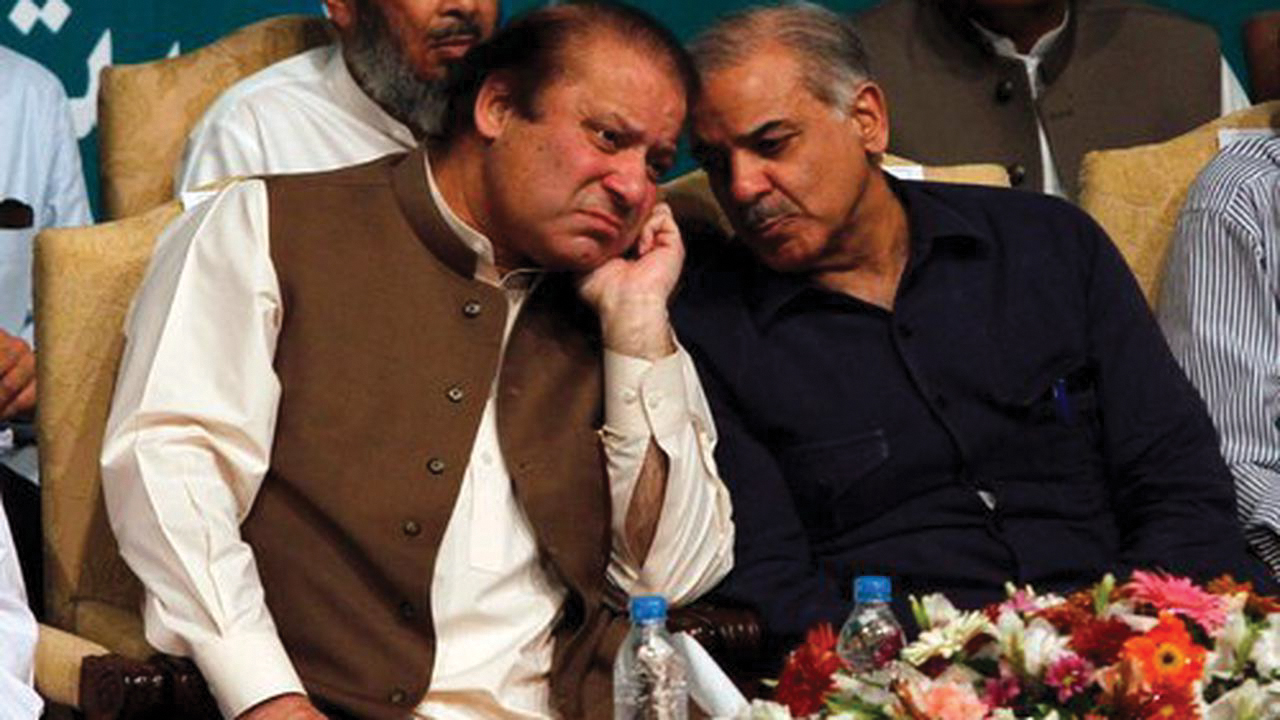
Pakistan’s experience with democracy is less than pleasant and peculiar in many ways. From the formative years, the Establishment, essentially permanent institutions, assumed a praetorian role in running the affairs of the state - a role neither authorized by the Constitution nor endorsed by the polity. It was apparently justified on the grounds of unusual circumstances and legitimized by a judicial fiat on the basis of shady legal doctrines of necessity and revolutionary legality. Except for the initial few years (1947-54), all political leaders and parties came to power with the help of Establishment and upon the latter’s terms.
It may look ironic to many, particularly to the disillusioned youth, but it can now be safely said with the benefit of hindsight that several unthoughtful and unwise decisions made during that crucial and critical period set the course for subsequent events. Those decisions were purportedly dictated by external and internal factors, which included the unfortunate and terrible events of the partition, war on Kashmir, refugee influx, inexperienced and less than honest political leadership clinging to power at the cost of principles and an over-zealous Establishment ready to take over affairs of the state in violation of the law and the Constitution. Still, this did not provide worthwhile justification to the Establishment for claiming a larger role. Exceptions can be argued for temporary measures and justified by stretching some legal principles but this creates a recurring phenomenon that eventually undermines democracy, rule of law and social and political justice in a society.
The political elite of that time, largely landed classes having been created and protected during the Raj, were unwilling to accept democracy as a system of government as they would have to share power with the masses, which neither understood nor appreciated the meaning of democracy and rule of law according to the elite. That concept was also shared by the Establishment. Two powerful institutions – the Army and the bureaucracy, were not prepared for a transition to true democracy in Pakistan and prolonged the status quo. In this background, almost every political leader came to power in Pakistan with the blessings and upon the conditions of the Establishment. A Constitution could not be agreed upon for almost eight years and no elections were permitted on the basis of adult franchise. The future of democracy was almost doomed.
It may be true that even in advanced countries, permanent institutions have a greater say in the affairs of the state and processes but there still exists a façade of democracy that is apparently maintained to give an impression that the ‘little man’ - the voter, makes a choice freely on the election day, although his choices may have been manipulated by the parties and leaders in more than one way. In Pakistan, the role of the Establishment has visibly increased over the years although an electoral process has been allowed to continue with intervals by bringing winners to power who proclaim, defend and swear upon the fairness of the process while the losers wear the mantle of reformers of the system.
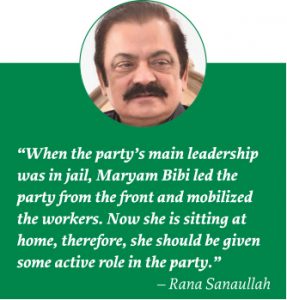 Today, in stark opposition to its past, the Pakistan Muslim League (N) stands for reforms and real democracy. It is one of the largest political parties whose leader Nawaz Sharif, (although he started his political career during the martial law regime of General Zia), seems to have apparently transformed himself into a political figure, after so many compromises. It seems he is willing to challenge the status quo. He has built a political empire and a legacy - and has now an heir apparent - his daughter Maryam. The task, however, demands a long and harsh struggle. It is still in the realm of the unknown if the Party and its leadership is willing to make the ultimate sacrifice. Both father and daughter have been able to build a narrative by using political and democratic jargon but the history of political struggles shows that leadership is not jargon alone and has to perform in practical terms.

The writer is an advocate of the Supreme Court and former Additional Attorney General of Pakistan. He holds an LL.M. degree from Harvard Law School and is the co-author of a book ‘Comparative Constitutional Law.’ He can be reached at mwaqarrana@yahoo.com
Leave a Reply