
International
Fruitful Revival
US withdrawal from the P5+1 Deal under Trump compelled Iran to resort to a more aggressive posture. Revival efforts of the Deal could also end in a stalemate.

The Biden administration has indicated the revival of the Joint Comprehensive Plan of Action (JCPOA) with additional demands as pre-conditions to be complied with by Iran before re-negotiation of the deal. These conditions may render the deal next to impossible and it could end up in a stalemate.
Former US president Donald Trump walked out of the 2015 landmark deal that was inked after a strenuous process known as P5+1, and which was aimed to prevent or at least slow down nuclear weapons acquisition by Iran as well as provide economic relief in return for its compliance with the agreement. The Trump administration considered the accord as flawed.
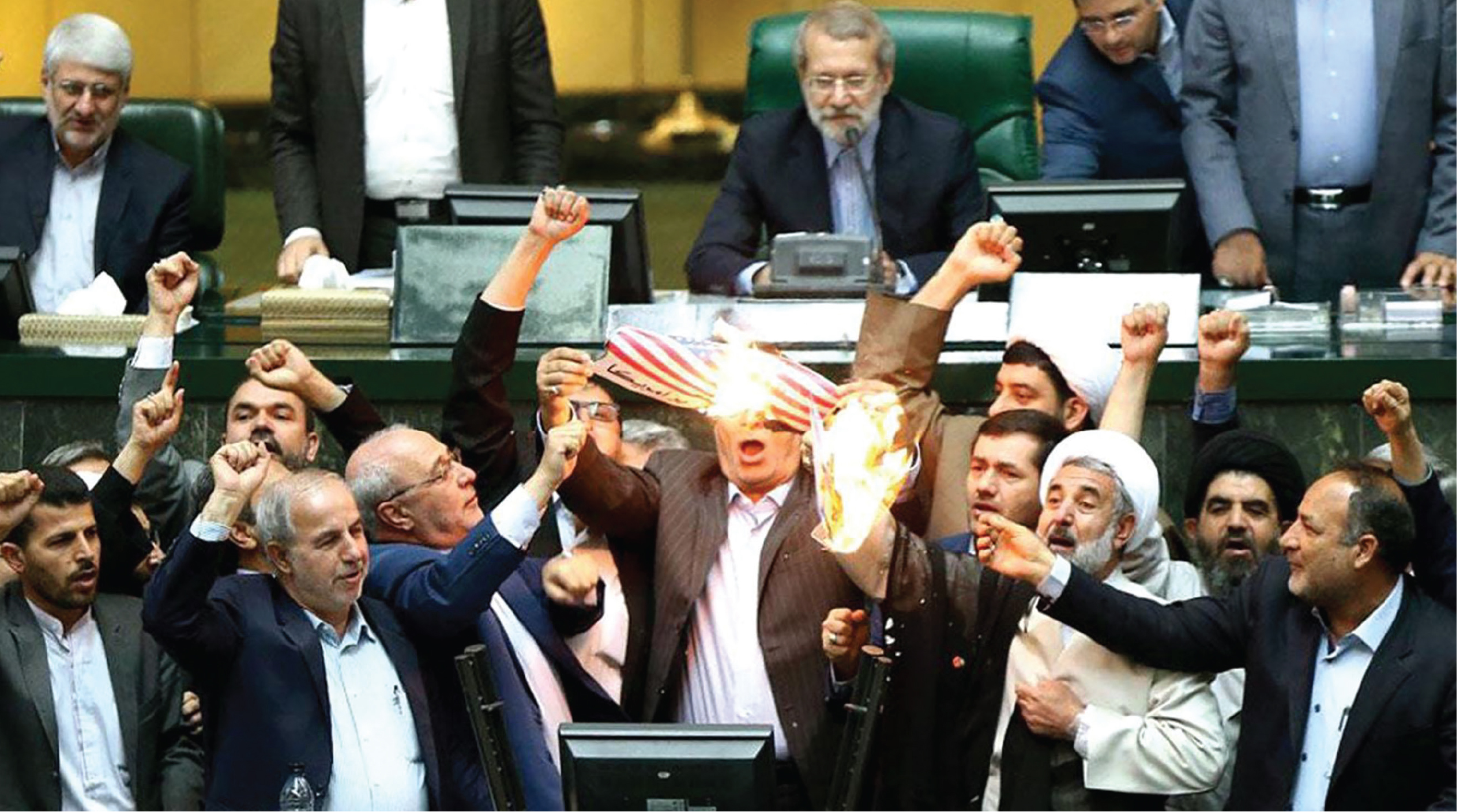
Despite the fact that Iran was compliant with the deal as testified by the International Atomic Energy Agency (IAEA) and EU signatories to the deal, the US withdrawal compelled Iran to resort to a more aggressive posture. The White House reinstated a series of crippling sanctions with a view to putting maximum pressure on Iran. In consequence, Tehran ramped up its nuclear enrichment programme beyond the permissible 5 percent limit and increased it up to 20 percent in violation of the JCOPA and the development of ballistic missiles. Moreover, it also temporarily suspended the IAEA inspections.
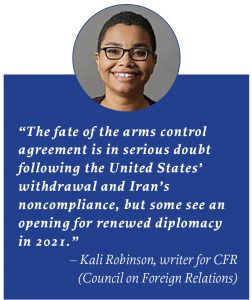
President Biden, during his presidential race, committed to revive the JCOPA. After assuming power, his administration has insisted on Iran’s compliance with the agreement before renegotiations, while Tehran has emphasised that this advance will be made once sanctions are lifted. Hence, it is a game of political brinkmanship that may spiral out of control.
Besides, US Secretary of State, Antony Blinken has recently stated that Iran may acquire nuclear weapons in a matter of weeks. He has also emphasised the requirement to involve regional issues as part of the agenda linked to the revival negotiations of JCPOA. However, Foreign Minister Javad Zarif has urged for lifting of sanctions and disagreement to include the regional issues.
Consequently, the revival of the agreement is fraught with challenges because of the rigid stance of the parties and the emerging regional political landscape. Either side feels threatened by the other. The US assumes that nuclear Iran will be a threat to its interests in the region as well as its Middle Eastern allies, particularly Israel. On the flip side, Iran has also had a bitter experience with the western powers. The P5+1 negotiation continued for two years and was successfully signed in 2015; nevertheless, the Trump administration unilaterally withdrew from the agreement and imposed new harsher sanctions, including a total ban on Iran’s oil exports. The E3 (UK, Germany and France) also toed the US line.
In view of these rigid positions, there is a danger of a deadlock leading towards a charged environment in the region. Blinken, during a meeting with his European partners, stressed that Washington would return to the accord if Tehran observed full compliance of the deal. In other words, Iran has to back scale its stockpiles of enriched uranium exceeding permissible limits under the JCPOA.
Such revival may delight the US and its European allies, but not the GCC states and Israel. The Saudi Foreign Minister, Prince Faisal bin Farhan, while attending the Manama Conference urged: “What we expect is that we and our other regional friends are fully consulted in what goes on vis-à-vis the negotiations with Iran.” He further added, “I don’t know about a revived JCPOA, although one may look to a JCPOA plus plus something well beyond the JCPOA.”
The German Foreign Minister Heiko Maas also stressed, “A return to the previous agreement will not be adequate in any case. There should be a kind of a ‘nuclear agreement-plus’ deal, which is also in the interest of us.”
Additionally, demands to reverse enriched uranium beyond permissible limits by Iran along with the ballistic missiles programme and attaching non-JCOPA issues as part of the agreement are serious hurdles between the parties.
As ‘maximum pressure’ tactics have produced the worst results such as economic stagnation of Iran, international concern about its nuclear programme, and increased regional tensions, the willingness on part of the parties to negotiate presents a narrow window of opportunity that can break the impasse.
There is a need for both parties to renegotiate the deal that ensures rolling back nuclear material acquired, ballistic missiles and open access to the IAEA inspectors in return for economic relief to Iran. This agreement may not prevent Tehran from acquiring the nuclear weapons, but will certainly slow down the process towards that end.
Renegotiation should also address the legitimate grievances of the Middle Eastern arch-rivals of Iran, including Israel, in order to make the deal more sustainable. The finally negotiated terms of the deal should be presented in the US Senate so that it survives even in the post-Biden era. The E3 countries as well as China must play their vital role for steering the negotiations in the right direction that ensures stability to the global order as well as economic respite to Tehran.![]()
The writer is a freelancer and can be reached at amjadsiyal |
|
Cover Story
|
|
News Buzz
|
Update |


Leave a Reply