
Debt Trap or Crap?
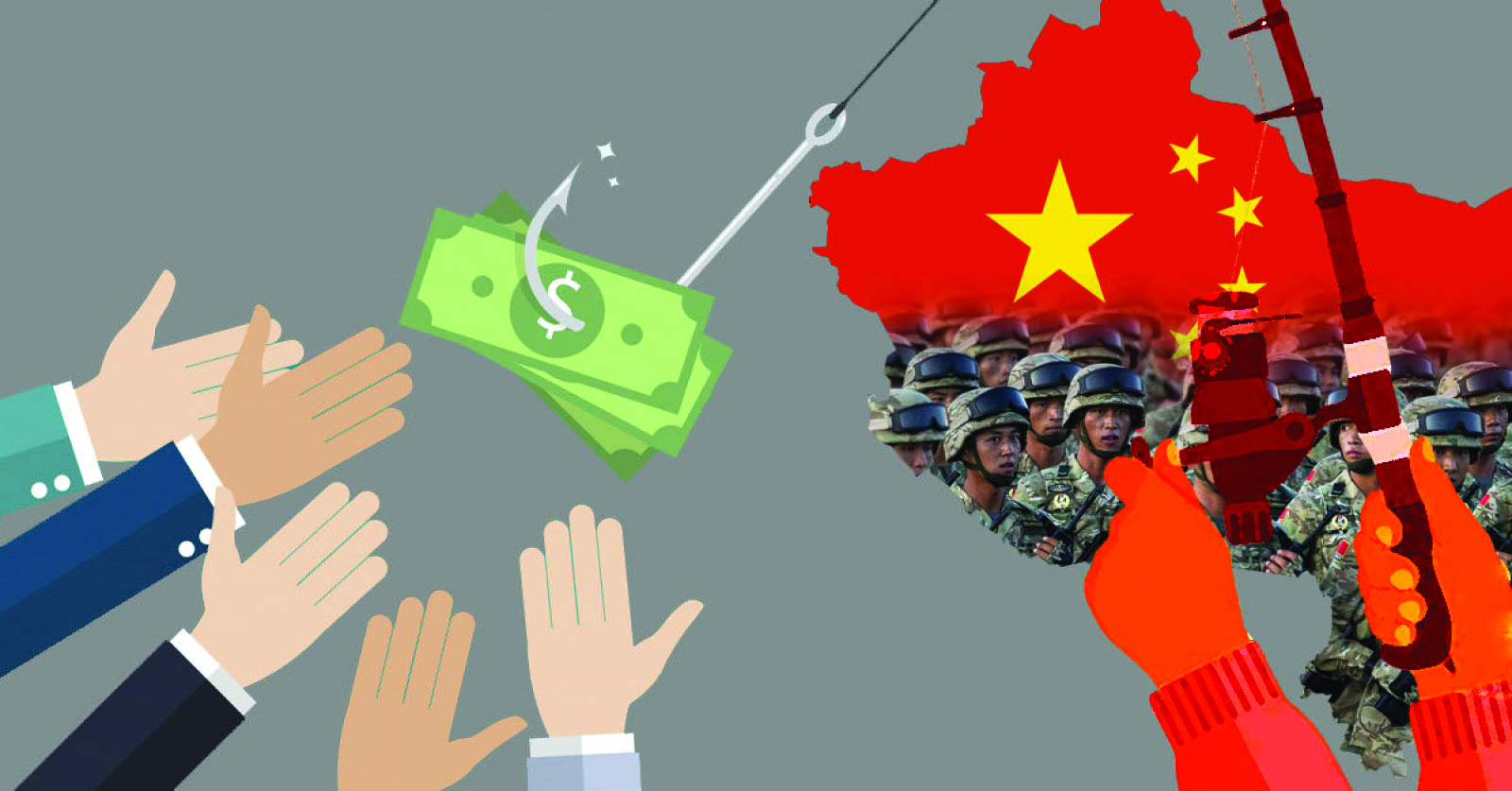
‘Debt-trap diplomacy’ is little more than a fantasy. China is not trying to seize strategic infrastructure by crippling poor countries with unsustainable loans and it is not the driving force behind their problems.

Debt-trap diplomacy is generally understood as a trap where an economically strong country deliberately lends enormous amounts of credit to an economically feeble and smaller debtor country, with an intention to consequently obtaining economic or political compromises when the debtor country is unable to repay the loan. These days this term is accompanied with serious criticism, primarily from the western hemisphere, regarding the foreign policy of the People’s Republic of China. The criticism is about China’s temperament of extending excessive loan to facilitate countries in severe economic crises, with an intention to ultimately control the economic and political decisions of the debtor countries that are said to support China's geostrategic interests, when it becomes unable to honour the debt contracts.
The West has reached this conjecture in light of examples of Sri Lanka, some African countries, and even Pakistan, where China is hugely investing in infrastructural development, and the West is worried about China incapacitating these countries in taking their own decisions. History does not allow the trusting of such plausible concerns of Western countries because, in the past and even in the present, many financially sound countries have taken and tested new ways to increase their own economic gains from underdeveloped countries and underprivileged humans in poor counties.
The Western argument was always supportive of a notion that if a country utilizes its resources to increase its wealth alongside the development of another weak country, there is nothing wrong with it. This argument is considered shallow when used by China. While staying absolutely positive about the concerns of the West, in the phrase “Debt Trap Diplomacy”, the West is ok with debt and diplomacy, but very much alarmed with the word trap and, seemingly, does not want independent countries to get trapped and lose their sovereignty.
Genuinely speaking, the trap was always there. Company Raj shifted to British Raj in India. It was a few million dollars partnership fund against terrorism that forced us to import the external war into Pakistan and made us lose thousands of lives and trillions of dollars. The USA has been extending conditional funding facilities. The conditions were nosey in nature and challenged Pakistan’s sovereignty many a times with the small utterance of Do More. Recently, the country’s strings were pulled and th PM was forced to cancel his scheduled participation in the Kuala Lumpur meeting. The reason was the dollars and facilities bestowed on Pakistan by the Kingdom of Saudi Arabia to meet the reserves needs of the State Bank of Pakistan, and those few hundred thousand Pakistanis working in KSA. Many examples can be found in which economically strong countries have trapped Pakistan under their financial might.
What is the trap offering? Being trapped by the West resulted in sieged sovereignty, a drowned economy, an afflicted political structure, shrinking foreign linkages, a distorted social texture, growing uncertainties, hopelessness among the youth, a rising brain drain, etc. In the last 70 years, the money-casting demi-gods of the West never considered Pakistan a partner to grow along, but a slave of a modern kind.
Even if room is given to China’s trap allegation it needs to be observed as to what this trap is contributing to the debtors? Is China using Pakistan to pull it into a missiles war for its geo-political interests? Is Pakistan becoming China’s weapon import market? Is China using Pakistani military bases to meet its warfare targets? The simple answer is No.
President Xi Jinping has increased China's foreign aid, infrastructure investment, energy engagement and interconnectedness. This should not be a surprise, because four fifths of China's investments are spent on infrastructure projects in underdeveloped and developing countries that ultimately cause development. For instance, China has increased its investment relationship with African countries, created a program like the African Human Resources Development Fund (AHRDF) that helps in improving the education of Africans and a large proportion of the African population has obtained entrepreneurial skills and employed themselves.
The unemployment rate in Sub-Saharan Africa has reduced to 6.09% from 7.88% in the last 15 years. Yes, educational growth continues to invite debt for the region. However, this is balanced because people are able to work to produce goods which lessens the debt. Human resource development has also been seen in agriculture and technology, where teams from China regularly visit African countries each year to further their training in these ever-changing fields. Moreover, the main types of infrastructure that these debts improve include roads, railways and ports, and improved infrastructure that favours internal trade, healthcare and education systems.
Thus growing debt to China positively affects Africa's economy via the much-needed development in infrastructure. Another example of infrastructure development is the Merowe Dam Project in Sudan: this is set to more than double the power development in Sudan, which is currently severely lacking. China’s investment on the Hambantota Port in Sri Lanka - a port leased to China for 99 years in 2017 - is largely the reason Sri Lanka is widely cited as a clear example of getting trapped in Chinese debt. However, the real picture of Sri Lanka’s debt crisis was far more destructive. Debt repayments for the loans obtained for Hambantota Port amount to only around 5 percent of Sri Lanka’s total annual foreign debt payments. The money obtained through leasing Hambantota Port was used to strengthen Sri Lanka’s dollar reserves in 2017-18, particularly in light of the huge external debt servicing due to the maturity of international sovereign bonds in early 2019.
The largest portion of Sri Lanka’s foreign debt was international sovereign bonds, which amounted to 39 percent of the total foreign debt as of 2017. Sadly, though, Sri Lanka has failed to increase exports or FDI by a sufficient margin to match its rising foreign debt repayment obligations. The so-called Chinese trap helped Sri Lanka to break the Western debt prison.
The notorious and most criticized Chinese trap for Pakistan is the China-Pakistan Economic Corridor (CPEC) - the main plank of President Xi Jinping's Belt and Road Initiative that includes 20% debt-based finance and 80% investments in joint venture businesses between Pakistan and China. The CPEC comprises ports, roads, railways, energy, agriculture, science and technology and other projects in various sectors. This trap is assisting Pakistan to realize and take advantage of its geographical location, materialize its natural resources such as agricultural land, livestock, flowing rivers, deep sea shores, tourist attraction sites, etc. If borrowing loans is ultimately causing Pakistan to reorder its developmental anomalies and grow together with China as a partner, then debt trap diplomacy is a better way than the Wests’ debt crap diplomacy that just draws foreign resources against dollars and deserts the partner countries.![]()
The writer is a columnist and broadcast journalist. He teaches at UVAS Business School in Lahore and can be reached at |
|
Cover Story
|
|
Interview
|
|
News Buzz
|
Update |


Leave a Reply