


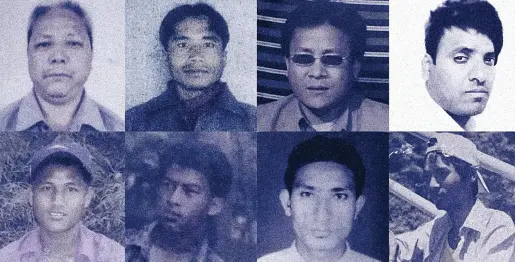
International human rights organizations have intensified pressure on the Bhutanese government to free dozens of political prisoners who have been behind bars for decades, many of them serving life sentences under harsh conditions.
During the 16th World Social Forum held in Nepal in March 2024, members of South Asians for Human Rights (SAHR) urged Bhutan to release individuals they described as “prisoners of conscience” immediately. The group said these detainees were jailed for their peaceful political expression or identity, and under Bhutanese law, only King Jigme Khesar Namgyel Wangchuck has the power to pardon them. The appeal was echoed by Human Rights Watch (HRW), which documented at least 37 political prisoners detained between 1990 and 2008, of whom about 34 remain imprisoned, many without the possibility of parole.
HRW highlighted the case of Ram Bahadur Rai, a 66-year-old man who was released in July 2024 after spending 30 years in prison for distributing political pamphlets. Rai, a member of Bhutan’s Nepali-speaking minority, was among nearly 90,000 people forced to flee Bhutan in the 1990s amid widespread discrimination and violence. He told HRW that he was arrested in 1994 while distributing leaflets on behalf of a banned group and later convicted under fabricated charges without legal representation. During his trial, he was allegedly tortured and given a sentence of more than 31 years. Upon his release, he was expelled from the country.
Rai described severe prison conditions, including limited food, lack of medical care, and poor living facilities, where detainees rely on rice sacks for bedding and receive low-quality blankets only once every few years. HRW said such treatment amounts to inhumane and degrading punishment, calling for the immediate release of all remaining political prisoners.
As per a report on HRW.org, “The physical torture was merciless,” said one man, “so we had no option but to present ourselves to the court based on [the security forces’] demands and their statements.” “They would beat me up, so I confessed, although it wasn’t true,” said another.
Such accusations are not new to Human Rights Watch, which has documented similar cases globally. Yet, few would expect them to emerge from Bhutan — the Himalayan kingdom often celebrated for pursuing “gross national happiness” rather than economic gain. The concept, embedded in Bhutan’s 2008 Constitution, has captured global attention, influencing economists, the United Nations, and even inspiring the annual World Happiness Report.
In a submission to the UN Human Rights Council’s Universal Periodic Review (UPR) in April 2024, HRW noted that independent reporting on human rights in Bhutan remains severely restricted. The group said local media outlets operate under heavy government influence through the Bhutan Media Foundation, and that defamation and libel laws are often used to silence dissent. Journalists have reported pervasive self-censorship and fear of retaliation when covering politically sensitive topics.


Based in Karachi, the author is a novelist and science fiction writer. He has a special interest in the social and political affairs of South Asia and can be reached at omariftikhar82@gmail.com
Leave a Reply