In contrast to the recurring election victories of a narrow, religion-driven political platform in India, not once in the eleven general elections held in the Islamic Republic of Pakistan between 1970 and 2018 has any religion-based party ever got more than a small percentage of the vote. To cap it all, religious zealotry is rising in a “secular” India while even showy religiosity in Pakistan in the past 30 years has not led to political success.
 The second impediment is the apparent inability of moderate forces in India to mount a united challenge to Hindutva with a singular, coherent alternative philosophical framework. With both political and civil society segmented into the retreating Left, and other centrist, somewhat balanced segments unable to transcend partisan, regional or individual interests, the bulk of the Indian polity appears to be weak, confused and lacking a clear, shared, progressive direction.
Despite the fact that the BJP and its allies increased their share of the cast vote from about 32% in 2014 to about 38% in 2019, 62% of Indian voters in 2018 --- a decisive, strong majority --- voted against Hindutva on two occasions in the past 7 years, the segment that has received less than 40% of voter support not only claims to represent 100% of voters --- but pays little heed to the 60%-plus that actively opposed it.
Due to the absurdities of the First-Past-The-Post (FPTP) electoral system which both Pakistan and India thoughtlessly adopted from the British Westminster model in 1947 --- the two countries continue to pay the price for operating an electoral system that is non-representative of majority opinion, at the constituency level and at national levels.
In the two countries, even where voter turnout exceeds 60% --- as in India in 2019 --- or sometimes 50% as in Pakistan --- a sizeable part of the electorate either does not vote at all or, because of the FPTP system, the winning candidate does not represent the majority. Yet the winner represents not only those who voted specifically for her/him, they being a minority of voters, but also those who voted against her/him, as well as of those who did not vote at all!
Two possible corrective ways to undo such a non-representative system is to make voting compulsory (as in over 22 countries) and if the candidate with the highest number of votes does not get 50% plus one vote, a second (or even third) round should be held with only the top 2 or 3 candidates from the first round participating. Until a majority of votes is secured by a candidate.
The preceding digression was necessary to reinforce one’s earlier contention that, even though the BJP coalition secured a decisive majority of seats in the Lok Sabha in 2019 due to the anomaly of the FPTP system, the present Government of India does not accurately represent the totality of the majority of Indian voters, leave alone the totality of Indian society.
But though one retains the hope that Indian society possesses the capacity to be larger-hearted, more inclusive and universal than the narrow parochialism of Hindutva, it is disturbing to see how the virus has infected other parts of the political spectrum. To be seen to unequivocally oppose the extremism of the BJP and RSS’s brand of Hindutva seems to be seen by other political parties in India as creating the danger for themselves being perceived as being less Hindu, less Indian and less patriotic.
A third impediment is the set of actions taken on and after 5th August 2019. Violating both UN Security Council Resolutions as well as India’s own Constitutional principles of democratic debate and due time for judicial consideration before enactment, the outrageously rushed “annexation” of Jammu & Kashmir was enforced and the region forcibly divided into two entities.
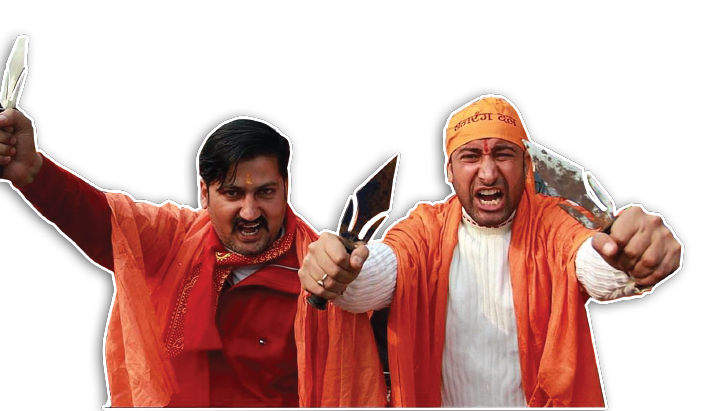
Combined with the mass production of domicile certificates for non-Muslims to enable non-Kashmiri non-Muslims to become permanent residents of Muslim-majority Jammu & Kashmir, shadows from the Citizenship Registration law falling from the darkness of persecuted Assamese of Bengali Muslim origin and the vitriol spewed by persons such as the Chief Minister of Uttar Pradesh, among many others, the J&K crisis has aggravated prospects for bilateral ties by taking them to a potentially lethal flashpoint.
Pakistan has categorically stated its unwillingness and inability to conduct dialogue with India unless the measures taken on 5th August 2019 are suspended or reversed. While there have been impasses in the past seven decades, this latest instance represents the creation of an obstacle not previously seen. The regressive action is actually a revelation of the profound failure of the Indian state to effectively address the challenge of Jammu & Kashmir for the past 74 years. After unilaterally withdrawing from the impartiality of a multilateral framework within which this dispute could have been peacefully resolved, India attempted a military solution to an issue that is fundamentally about the right of self-determination and about human rights and dignity.
A steady increase --- rather than a decrease --- in the number of troops deployed to control unrest signals the continued failure of the Indian approach to the crisis. So deeply rooted and so authentic is the character of Kashmiriat that neither 700,000 troops --- which make J&K the most militarised region in the whole world --- nor the contortions and distortions introduced on 5th August 2019 will bring a solution to the problem.
Though small parts of Indian news media retain a modicum of balance and credibility, the hysterical chauvinism of most of Indian media, including cinema, becomes the fourth impediment. While leaders everywhere have the inherent tendency to play to the media gallery and to tailor their words and actions to strive for what they believe will produce the most positive perceptions for them through news media projection, in India’s case, it is clear that the country’s TV news channels in particular hold hostage most of the country’s leadership. They also pre-empt and thereby prevent any attempt to reset relations with Pakistan or to attempt new initiatives for the reduction of tension.
Compared to the high pitched, screeching jingoism of most Indian media, Pakistan’s own quite frenetic TV news channels offer a sharp contrast of relative balance and sobriety.
There is a modicum of internal filtration and phased processing of content in mainstream, conventional media such as print, radio and TV channels. But the anarchy of social media such as WhatsApp symbolises the inanity and insanity of the instantness with which hate and fake news can be mass circulated within minutes to become a formidable, almost insurmountable new barrier to any bold new initiative for taking the relationship forward in a positive direction.
In theory, if not in practice, collectively and individually, and as perhaps best personified by the state of Indian news media and social media today we have to deal not with V.S. Naipaul’s “a million mutinies now” but with a whole billion, and more. Those parts of Indian media content and the few courageous individuals that project mutually-respectful content, and campaign for moderation and sanity are admirable in their perseverance --- despite the far louder clamour and venom churned out by inimical forces.
It is a telling sign of the complicity of media owners, editors and content controllers --- far more in India than in Pakistan --- that there is no attempt whatsoever by the representative bodies of Indian media to initiate a dialogue with their counterparts in Pakistan. Neither at the level of newspaper publishers nor electronic media owners nor at the purely professional journalistic level has any part of Indian media leadership attempted in the past 7 years in particular to reach out to their equivalents across the border. One looks back to the decade of the 1990s with both humble pride as well as sadness. When one was present in Colombo, Sri Lanka in April 1991 to establish the South Asian Media Association (SAMA) as the first network to bring together editors and media practitioners of both countries as well as other regional countries into an informal network and one was honoured at being asked to serve as founding Chairman, it was a privilege to be in the company of eminent Indian journalists such as Nihal Singh and P.T. Unnikrishnan.
In later years, SAMA was joined by distinguished Indian stalwarts such as Nikhil Chakravarti, Ajit Bhattacharya, Vijay Darda, Karan Ketkar, I. Venkat, and several others. Between 1999 and 2004 through the South Asian Editors’ Forum of which the esteemed Vijay Darda was Chairman and this writer was a founding co-Convenor with Sundeep Waslekar, dialogue and interactions were arranged at Karachi, Hyderabad (India) and Kathmandu. Several positive steps were taken to improve perceptions and reduce the vitriol from the coverage of one country by the other country’s media.
The Media Charter and Agenda for South Asia, 1995-2000 of which Nikhil Chakravarty was also a co-signatory included specific principles and prescriptions to “eliminate hostile propaganda in mass media” and to :”breakout of the prevailing focus on the power structure and its proximity”.
A body called the South Asian Free Media Association (SAFMA) formed in 2000 in Islamabad borrowed most of the original SAMA’s name and aims and then made several laudable contributions for some years to reduce the acrimonious content of news media.
In further fulfilment of the proposal originally made by SAMA, the Geo group of Pakistan and the Times of India conducted the notable process known as “Aman ki Asha” for a few years.
Yet initiatives not sustained because political extremism was allowed to be stoked pandering to the excesses of the political leadership. And vice versa!
The fifth impediment is the role of RAW, Anti-Pakistan Disinformation Units (such as the networks exposed by an EU investigation a few months ago in 2021) in sponsoring violence, subversion and content in public discourse that seeks to undermine national cohesion in Pakistan. Support to the Tehreek-e-Taliban Pakistan, separatist elements of Balochistan, extremist ethnic outfits in Sindh, and attacks on Chinese citizens in Pakistan are well-known and confirmed by intelligence agencies. Harder to conclusively prove but very obviously evident are ploys such as relating false but credible sounding threats of terror against a visiting sports team --- a la New Zealand’s cricket team in September 2021, and other instances of encouraging distrust between civil and military spheres.
Much is made in India about the real or alleged control of the military in Pakistan on all principal aspects of internal and external policies. Such control is only partly true. Yes, the military does contribute to policy-making on strategically vital issues particularly security of nuclear weapons and relations with countries of vital interest to Pakistan. But where such association is visible and evident in Pakistan, the military’s strong influence in India on certain strategic subjects is covert and consistent --- but not any the less potent and not acknowledged.
Thus, the sixth impediment is the unwillingness of the Indian military to allow the civil government to reconcile several critical territorial issues with Pakistan. These include Siachen, Sir Creek and most of all Kashmir which is not only about territory but concerns the right of self-determination. The about-turn performed by Rajiv Gandhi’s Government in July 1989 after initial agreement in Islamabad on readjustments in Siachen is an eloquent example of how the Indian military compelled the civil government to reverse its position, thereby preventing a rare breakthrough. Like any large institution that, overtime, develops its own rigid interests and fixed positions e.g. the Pentagon!, the Indian military finds ways to obstruct constructive, equitable readjustments with Pakistan.
Perhaps aptly, the seventh impediment should receive the least attention in this essay despite, ironically, requiring the most! One calls this the appalling ignorance about the realities, nuances and complexity of Pakistani society and state that one finds in the utterances and writings of many prominent Indian commentators and public figures. There are admirable exceptions but only a few. That lack of basic knowledge exists and thrives in a country immediately next door to the other and one, moreover, which has many shared interests and even features, makes the ignorance and inaccuracy even more startling.
Whether it is getting wrong minor details about the respective seniority of Generals who could potentially succeed the present Chief of Army Staff in Pakistan or whether it is major dimensions of parallel truths in Pakistan that reflect both diversity and solidarity, whether this is the result of arrogant presumption, distorted information absorbed from media or the expression of inherent prejudice, this sheer absence of knowledge of fundamental facts becomes a virtual tall wall that breaks connectivity. Shibboleths and fictions inevitably intrude into policy-making for both overt purposes and covert stratagems. Perhaps this writer also suffers from ignorance of certain aspects of Indian realities. If so, one is willing to keep learning.
In conclusion, two submissions. Though the title and the content of this reflection may convey the impression that this writer is congenitally hostile to India and unwilling to accept that Pakistan too has a responsibility to shape any improved bilateral relationship, one would like to affirm one’s respect for the individuality and the identity of both India and Pakistan as two new nation-states created simultaneously in mid-August 1947. Both are blessed with rich heritages of cultures and civilizations, both possess beautiful diversities of ethnicities, languages, lifestyles, both suffer enormous problems of human resource development, both possess great capacity to resolve their respective internal problems and contribute to a better future for humanity.
Second: so public and so deep are the prevailing tensions, causes and currents shaping bilateral relations that secretly conducted, back-channel dialogue is the only feasible way to break the current logjam. Whether this is sustained over weeks, months or years, non-media reported exchanges between one or two representatives of the respective Heads of Government alone can candidly and comprehensively explore the scope for reconciliation --- to formulate a new beginning that can then be presented for public endorsement in both countries.
Parallel to such a secret process, the resumption of periodic meetings of the non-media reported, confidential but numerically larger i.e. 8 to 10 persons from each side, should also be resumed. This latter mode is represented by the longest-running such process known as the Neemrana Initiative, which commenced 1992 and which has been stalled since 2018. Similar quiet dialogues are direly needed between the leaderships and owners of media in both countries and of influencers in social media.
With unfaltering patience, with unwavering vision for a better tomorrow, the secret, back-channel dialogue and quiet Track II dialogues alone offer a viable way to overcome the seven Indian impediments and, if any, impediments on the Pakistan side.
Here’s to benevolent secrecy and wise quietness in the age of advocated transparency and loud noise. 
Note: The article was first published in India in December 2021 in the book titled "In Pursuit of Peace: Improving Indo-Pak Relations," compiled and edited by O. P. Shah., a veteran Indian activist.





Leave a Reply