


Huxley, Tolstoy and Gandhi hated machines, including trains, which according to them would bring dirt, odour and pollution on the Earth’s surface. Trains were actually responsible for creating a sense of nationhood in almost every country. The role of trains in the colonies made the British feel their power because of these machines and their capacity to haul heavy objects and a larger number of human beings. Trains have, since then, proved their efficacy and worth very well.
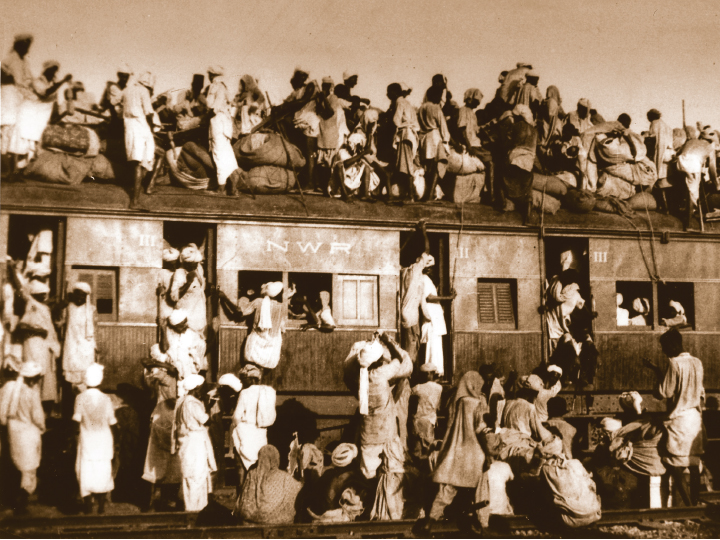
Trains are special in the case of South Asia because a number of histories are interconnected with trains, especially the Partition histories. These were the trains in which not only migrants travelled from one country to another, but also the worst stories of atrocities were committed through these trains. South Asian postcolonial literature has represented and given voice to these stories. Out of these, the stories by Khushwant Singh and Bapsi Sidhwa became more famous in their portrayal of trains and the history connected with them. Trains actually have become a permanent part of the collective imagery of the history of the subcontinent.
Whenever the history of India and Pakistan is discussed, trains carrying this history appear everywhere. Khushwant Singh’s Train to Pakistan, published in 1956, has the most wonderful accounts of Partition and its fallout on both sides of the borders. But it mainly traces the historical evidence of the place called Mano Majra where not only a story of love prospered but also a story of religious hate unfolded. Khushwant Singh draws scenes of charred and burnt trains moving slowly with dead bodies. Ironically, on both sides of the border between India and Pakistan, people thought that all atrocities would be happening on the other side of the border and they would remain safe on their side. But soon they were disillusioned.
A similar narrative is evident in the Bapsi Sidhwa novel Ice Candy Man. Instead of Mano Majra, Dera Tek Singh is where Hindus, Sikhs and Muslims lived peacefully before Partition. Sidhwa describes horrifying scenes of how young and old men and women were killed, burnt and butchered. All this she explains through Raana’s story in the novel. He is a young boy and he makes a painful journey to Lahore all alone with a deep knife scar in his head. He had witnessed horrific scenes of his people being butchered and raped while he was hiding in a heap of hay. On his way to the railway station, he witnesses the marks of tragedy and violence on the faces of men and women at the station. Also, he finds men and women crying at the station, telling the stories of horror committed to them and their families during the gory journey.
Bapsi Sidhwa along with tracing the history of on ground atrocities committed on both sides includes one very sombre scene of the killing death and destruction of humanity riding on the trains to Pakistan to India. The trains were overloaded with men, material and animals. But most of these trains were stopped in the middle of their journeys and were looted, human beings killed and women dishonoured. And later on, the same trains reached Lahore but only with the dripping blood as all people had been butchered in the train.
Like Khushwant Singh, Sidhwa too, relives the stories of death and destruction associated with the train journeys at the time of Partition. The British government and the newly established dominions of India and Pakistan had promised peaceful migration and passage. But the innocent people who were trying to save themselves in the wake of the shift of power to the local people fell victim to the monstrosities committed by the rioters. Revenge was taken on both sides of the border, especially on people who wished to migrate to the country of their choice and used trains to reach their destinations. Most of these people did not make it. South Asian postcolonial writers, especially Khushwant Singh and Bapsi Sidhwa relive this train history of both the nations through their literature.

Prof. Dr. Zia Ahmed is -professor of English at Emerson University, Multan. He can be reached at zeadogar@hotmail.com
Leave a Reply