
Region
Regional Trade Opportunities
Pakistan is looking for better geo-economic relations with South Asian states.

The Pakistan government under Prime Minister Imran Khan is considering Southeast Asia as a feasible test bed to give a new direction to the country’s foreign and moving from a geopolitical to a geo-economic approach. As far as peace in South Asia is concerned, Prime Minister Imran Khan has announced a clear policy for better relations with all South Asian countries. With India, he wants to resolve the Kashmir issue in light of the UN resolutions.
The China-Pakistan Economic Corridor (CPEC) has also opened up avenues of regional integration and economic growth for Pakistan and other regional states. Foreign policy that is synonymous with Khan’s idea of Naya (new) Pakistan emphasizes that Pakistan has shown a genuine enthusiasm to advance its policy in South Asia by stepping up both multilateral and bilateral engagements in the region.
The time is therefore opportune and conditions are ripe for Imran Khan to prioritize Southeast Asia in Pakistan’s foreign policy and redress the benign neglect in Pakistan-South Asia relations. Due to political-oriented policies and knowledge-based mindset of Prime Minister Imran Khan, South Asian countries prefer him for strategic economic relations.
In recent decades, exports have been a key catalyst in transforming many Asian economies and lifting hundreds of millions of people out of poverty. But South Asia, one of the fastest growing regions in the world before the Covid-19 pandemic, is yet to see dynamic export growth spanning diverse sectors.
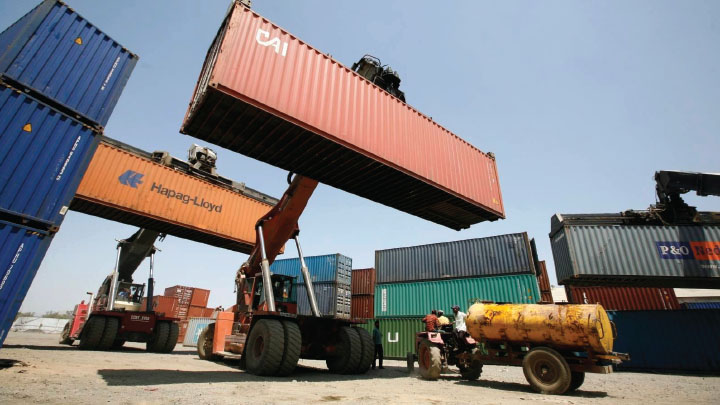
Pakistan’s trade with South Asia accounts for only 8 percent of its global trade, despite the region being the world’s fastest growing. However, intraregional trade in South Asia is among the lowest at about 5 percent of total trade, compared with 50 percent in East Asia and the Pacific. Regional trade can create many more jobs and make the country prosperous if trade barriers are removed.
The costs of trade are much higher within South Asia compared to other regions. The average tariff in South Asia is more than double the world average. South Asian countries have greater trade barriers for imports from within the region than from the rest of the world. These countries impose high para tariffs, which are extra fees or taxes on top of tariffs. More than one-third of the intraregional trade falls under sensitive lists, which are goods that are not offered concessional tariffs under the South Asian Free Trade Area (SAFTA).
In Pakistan, nearly 20 percent of its imports from, and 39 percent of its exports to, South Asia fall under sensitive lists. Pakistan is a market of 220 million consumers with a middle-income class of over 80 million people. The country is bestowed with some of the world’s largest reserves of gold, copper, gas, coal and numerous mineral resources ready to be explored and exploited. The country’s government has identified numerous projects in the oil and gas sectors: on-shore and off-shore exploration, establishing oil refineries acquisition of oil tankers, plus constructing oil storage facilities and pipelines.
Pakistan is a land of opportunities for investors in the identified sectors, plus many other areas. In addition to the areas listed as SEZs. For investment, there is enormous potential for investment and business opportunities in telecommunication infrastructure, fisheries, gems and stones, dairy products, livestock for breeding and exporting halal meat, solid waste management, surgical goods and sports goods production and exports, higher education in emerging technologies, public health, developing tourism projects, plus the Prime Minister’s Affordable Housing Scheme (of five million houses with one of the most liberal investment policies.)
Covid-19 has disrupted the global economy and world trade. As South Asia emerges from its worst economic performance in decades, exports can be an important engine to help foster economic recovery. For the promotion of bilateral economic relations with South Asian countries, proactive policies are needed to improve competition in markets and ensure they function properly. Reforms are needed to promote technology adaptation and innovation, develop product standards and certifications, provide trade finance, and reduce bureaucratic red tape.
Pakistan and the South Asian countries need to make joint efforts to enhance bilateral trade and economic ties, free trade agreement (FTA), trade dialogue, and aggressive economic diplomacy. Business-to-business and government-to-government cooperation can unlock new avenues for fruitful collaboration. A shift in the leadership’s diplomatic approach from geopolitics to geo-economics would further strengthen Pakistan’s economic and trade relations with the potential trading partners
The economic interaction and interdependence has remained quite slow in this region because of inherited conflicts and polarization among the regional states of South Asia. Pakistan has its concerns in the region and from its perspective, the rise of Russia and Chinese involvement in South Asian affairs appears to be more pragmatic.
People-to-people contacts such as academic exchanges and cultural programmes should be promoted between Pakistan and South Asian countries. Formation of a Corridor of Knowledge must be instituted, The Center for Global and Strategic Studies (CGSS) has been striving hard to have close ties with all the South Asian countries.
It is time to devise a progressive and pragmatic foreign policy and economic strategy to have friendly, healthier, productive and contributory bilateral and trilateral relations with ASEAN without omitting any strategic ally. Diversification of economy and security options should be convergent; divergent trends should be discarded. ![]()


Leave a Reply