



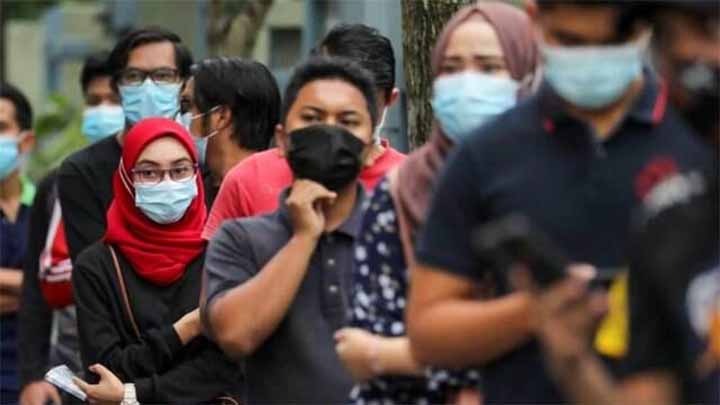
Similar to other nations, business and economic activities in a developing country like Malaysia have also been hit hard by the Covid-19 outbreak. Many businesses have gone bankrupt and scores of workers have lost their employment. Overall, the Malaysian economy is on the brink of collapse chiefly owing to a lack of tourists and foreign travellers. Though Malaysia's neighbouring countries Thailand, Singapore, the Philippines and Indonesia have opened their borders for tourists, the Malaysian government is still hesitant in re-opening the country's borders to allow foreign visitors and tourists into the country.
Although 90% of the population have been vaccinated against Covid-19, the government is still reluctant and has not been able to play its due role in restoring tourism activities in order to stabilize the economy which primarily hinges on tourism and has a formidable proportion of jobs and employment opportunities in the hospitality sector.
When the Covid-19 pandemic took the world by storm, the Malaysian government pushed the panic button, which resulted in an overreaction to both the response of the government and. Although most deaths in Malaysia are mostly caused by heart attacks, mental disorders, cancer and high blood pressure, such deaths are not highlighted in the state media as much as Covid-19 epidemic rumours are able to grab public attention. Practically speaking, the death toll from the Covid-19 pandemic happens to be much lower than other health-related issues, but it is still blown out of proportion, a deadly blow which is weakening the country's economy day in and day out.
The Malaysian government must rise to the occasion and re-open the country's borders to allow tourism to resume, since the sector is the major contributor to foreign exchange earnings. Other than employment loss and prevailing economic recession, Malaysia is emerging as a pariah state for foreigners as most of them have already returned to their home countries, thus resulting in an acute shortage of foreign workers.
There are currently about 170,000 UNHCR-recognized refugees in Malaysia, but they cannot work in the country because they do not have a work permit and are unable to meet the labour shortage and stimulate economic recovery and growth.
There is also a prevailing fear that many business sectors in Malaysia will soon come to a standstill under the prolonged Covid-19 restrictions. On the one hand, nightclubs, bars and restaurants are allowed to operate in total violation of the imposed SOPs and safety protocols, but the UNHCR office, on the other hand, has not been allowed to resume their operations, which is an open contradiction.
Every citizen in Malaysia is following the SOPs, but the fear of the virus has spread so much that even if the virus is eradicated, much of the citizenry will be scared for years to come.
Instead of intimidating people, the government should have encouraged them to go back to their workplaces for the greater interest of the national economy. Though the Malaysian government has announced that it is going to allow vaccinated tourists to enter and travel into the country, a lot more efforts are required to get the Malaysian economy back on track.
In point of fact, Malaysia is the only country in Southeast Asia, which is ranked as the top tourist destination in the region. Against this backdrop, the Malaysian government must re-open the country's borders at the earliest possible time.

The writer is a senior journalist. He can be reached at pmpk55@hotmail.com. His Twitter handle @SyedfawadAli303
Leave a Reply