


 Whistleblower Frances Haugen who is a former Facebook employee has accused the company of putting profit over the public good and her revelations have generated a heated debate about how media giants have become so powerful that they are now acting as states within a state.
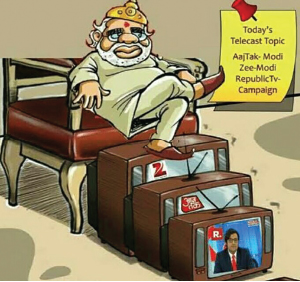
Media outlets can be immensely powerful and can overturn or even deny the existence of the sovereignty of the public. As all human atrocities boil down to capitalism, media corporates also have become commodities and can be purchased and sold out. This means the basic right of citizens can be sold and purchased.
Media outlets can prolong the tenure of a corrupt fascist government and with the help of the same outlet, a coup d’état can be executed against a democratically elected government. For the sake of the capital they are getting, they can force you to believe the alternate truth.
If the Western textbook democracy is alarmed by the influence of media, which is of course far better and transparent in terms of electoral procedures, what could we expect from those democracies of South Asia, which are by core camouflaged versions of kinship, wealth, and thugs?
The logical moral declination of a street thug making his/her way up to State Parliament is undeniable. The power-hungry individual hustling his way upward can never be the saviour of those who have elected him willfully or he somehow staged that he has been elected by power, bullying, wealth, and fear.
As a communication practitioner, I strongly believe that in dictatorships the media is controlled by the State while in democracies media is controlled by wealthy individuals and objective media and journalists simply do not exist in the mainstream. I also believe that the western form of democracy is a total failure in South Asia and the infectious relation between media and power has made my case stronger.
A unique demographic is the criterion of becoming a politician is not the personal conduct and agenda for civil service. On the contrary, it is the level of corruption. The richer bully can become a minister. This is the indigestible state of affairs of South Asian democracies.
“You have to leave Lakhempur (a city of Kheri district of the Indian state of Uttar Pradesh) otherwise you know what I can do against all of you if you will not obey me”.
“Come on line, otherwise I will do that. I am not only a minister, you better know what I was prior to that; you have to leave Lakhempur”.
 This is not a recorded conversation of a drug cartel but a public speech of an Indian state minister who was threatening innocent farmers while refereeing his previous criminal record and barbaric acts against his opponents. He was not only owning his shady past but also harassing the public by giving it as a reference. The media coverage of his speech did not solidify the pretence the minister was providing because media men might have gotten their booty. During the same protest, five people got killed among whom one was decisively crushed under the minister’s vehicle.


The writer is a Prague-based analyst writing for national and international media outlets. She can be reached at shaziaanwer@yahoo.com. Twitter handle:@ShaziaAnwerCh
Leave a Reply