


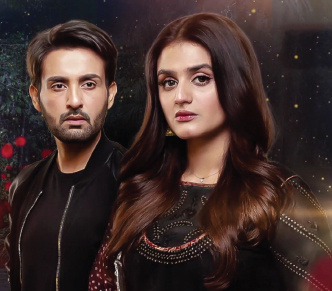
 In today’s massive ocean of poorly written and regressive Pakistani TV plays being broadcast almost uncensored as prime time entertainment, Yun Toh Pyar Hai Bahot, written by Aliya Bukhari and directed by Kashif Saleem, is a breath of fresh air, touching upon contemporary society, relevant themes, noteworthy issues and brimming with, for a change, a strong and highly progressive female protagonist.
The standard of storytelling for prime time television has been deteriorating since entertainment became privatized. Today, the quality and genre of content is dictated by the marketing departments and production houses where advertising revenue along a skewed system of TRPs decide which drama serial qualifies as a ‘hit’.
Given the current scenario of mass entertainment on private TV channels, which is unfortunate, to say the least, it is all the more necessary to laud a television serial which modestly attempts to uphold a feminist narrative, has a strong female protagonist driving the story (who is neither moping, wailing, oppressed or being constantly beaten up by men around her, nor dying to get married) and surprisingly strays clear from the extremely jaded saas-bahu-aur-saazish trope that has featured on our TV screens ad nauseum. YTPHB will keep you at the edge of your seat, which is one of the fundamental traits of an engrossing narrative (thankfully the serial is not on air three to 4 times a week or has double episodes packaged as one).
Yun Toh Pyar Hai Bahot wins your heart with a strong leading lady carrying the plot on her shoulders. Hira Mani as Aima makes a statement right from the first scene where she makes her entrance as a part-time office employee, who is juggling a job whilst pursuing her law degree and is consistent in her performance throughout. Aima struggles to find a job as a fresh law graduate, despite being a bright student who has topped university examinations.
Aima’s character deserves to be celebrated because such fortitude on the small screen has now become a rarity. She has inadvertently given strength to all women watching this serial with her undaunted spirit and progressive outlook. She neither succumbs to the trap of shortcuts for easy success, nor turns to any man for moral, emotional or financial support and persistently fights all her battles on her own. The Main Bechari Main Dukhyaari syndrome prevalent in TV plays today is crippling the very minimal presence that women on screen can potentially have in the not-so-empowering scripts being written for Pakistani television today. YTPHB tries to break these very shackles through Aima’s character.
Following a gruelling job hunt, Aima begins fighting cases for underprivileged women who come to seek help at an NGO run by elite women (who are generally bored in their lives so they undertake social work as a pastime). Watch out for a hard-hitting scene where the women running the NGO are having a gala tea party, and social justice remains a far-flung superficial goal for them. As things go, when Aima comes over to meet the underprivileged women, she makes it clear to the head of the NGO that she is only there to do her job and not squander her time socializing.
Affan Waheed as Zain has paired Hira’s character and is also laudable in myriad ways as the (surprisingly) creative, positive and sincere leading male protagonist. He promises to give an adopted child his name, and takes on the financial and parenting responsibilities for the six to-7 year old boy named Saru and channels his affection and care towards him; he enrolls him in school as if Saru were his own kith and kin.
Affan moves to Lahore after Aima rejects his proposal, but never becomes embittered towards her. He continues to love Aima but channels his hurt and dejection into his music. He tries to be a pillar of support when Aima’s family is forcefully evicted from their rented home, although Aima vehemently rejects his help and repeatedly expresses her disdain for him.
YTPHB is not without flaws; the production quality could have been better and there are some extraneous sub-plots which tend to drag the story a bit. For instance, the character of Aima’s sister Nazee who is irresponsible, hasn’t completed her education and is looking for a fast track to success, so she ends up attracting a millionaire sugar daddy. And then the tedious sub-plots of Zain’s close friends (who are also his ex-band mates), their family problems and financial issues followed by their love interests and their employment challenges, are unnecessary and do not really help move the story forward.
Leave a Reply