


Noam Chomsky, American theoretical linguist and historian, asserts that, in a “properly functioning democracy”, there are a “small percentage of the people”, a “specialised class of citizens” who … “analyse, execute, make decisions and run things in the political, economic, and ideological systems”. .. To Chomsky, the American masses are like a “bewildered herd” that has stopped thinking (Noam Chomsky, Media Control: The Spectacular Achievements of Propaganda p.16). In his book, ‘Iron Law of Oligarchy’, Robert Michels, a German-born Italian sociologist and economist, likewise laments that only a handful of people within parliament make decisions for the whole country.
While American political dissident Noam Chomsky calls people in a democracy ‘a bewildered herd’, Michels calls them oligarchies.
Michels observed that since no sufficiently large and complex organisation can function purely as a direct democracy, power within an organisation will always get delegated to individuals within that group; elected or otherwise. Sans tangible participation, democracy is a farce.
In modern times, “democracies” use think tanks to hoodwink people at home or abroad.
Their “scholarships” are meant to generate ideas justifying the sponsors’ line of thinking. Columnist John Chuckman called them “phony institutes where ideologue-propagandists pose as academics' ', into which “money gushes like blood from opened arteries to support meaningless advertising, suffocation of genuine debate”.
Jonathen Rowe rightly observed that the term think tank is a misnomer - ‘They don’t think, they justify’. Research from think tanks is ideologically driven in accordance with the interests of their founders and financiers.
Brookings report
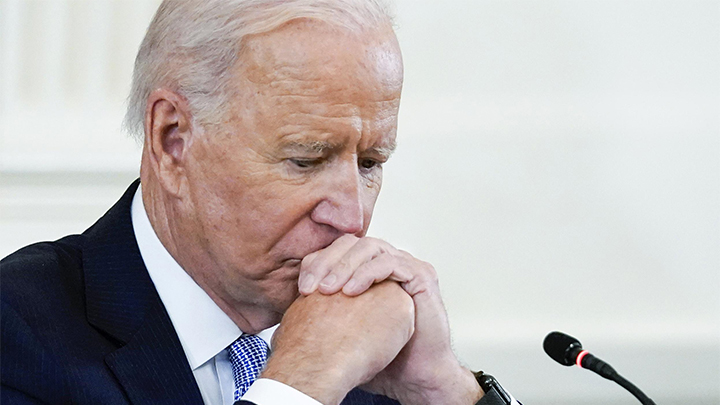
Let us have a look at the Brookings Institute report titled titled The agonizing Problem of Pakistan’s nukes (Marvin Kalb, September 28, 2021). This report teems with distrust of Pakistan government. It suggests that Pakistan’s nuclear arsenal may fall into hands of the Taliban “terrorists”. Look at the following excerpts: (a) Governed by a shaky coalition of ineffective politicians and trained military leaders trying desperately to contain the challenge of domestic terrorism, Pakistan may be the best definition yet of a highly combustible threat that, if left unchecked, might lead to the nightmare of nightmares: jihadis taking control of a nuclear weapons arsenal of something in the neighborhood of 200 warheads”.(b) American presidents have been haunted by the fear that Pakistan’s stockpile of nukes would fall into the wrong hands. That fear now includes the possibility that jihadis in Pakistan, freshly inspired by the Taliban victory in Afghanistan, might try to seize power at home. (c) “The single biggest threat to U.S. security, both short term, medium term and long term”. “The nation that has both nuclear weapons and a dangerous mix of terrorists was and remains Pakistan”. (d) “These official assurances have fallen largely on deaf ears at the White House, principally because one president after another has learned from American intelligence that these same Pakistani leaders have often been working surreptitiously with the terrorists to achieve common goals. One such goal was the recent defeat of the Kabul regime, which had been supported by the U.S. for 20 years. During this time, the victorious Taliban secretly received political and military support from Pakistan’s Inter-Services Intelligence (ISI) agency. Shortly after 9/11, for example, the terrorist mastermind, Osama bin Laden, escaped U.S. capture, in part because sympathetic to ISI colleagues. Bin Laden fled to the one place where his security could be assured — Pakistan. In 2011, when the U.S. finally caught up with bin Laden and killed him, Obama chose not to inform Pakistani leaders of the super-secret operation, even though the target was down the street from a Pakistani military academy, fearful that once again bin Laden would be tipped off and escape”. (e) The U.S. has learned over the years not to trust Pakistan, realizing that a lie here and there might be part of the diplomatic game but that this level of continuing deception was beyond acceptable bounds. That Pakistan was also known to have helped North Korea and Iran develop their nuclear programs has only deepened the distrust. (f) Indeed, since the shock of 9/11, Pakistan has come to represent such an exasperating problem that the U.S. has reportedly developed a secret plan to arbitrarily seize control of Pakistan’s nuclear arsenal if a terrorist group in Pakistan seemed on the edge of capturing some or all of its nuclear warheads. America’s concerns about Pakistan’s stability and reliability have only worsened. Since the debacle in Afghanistan, and Pakistan’s barely disguised role in it, serious questions have been raised about America’s embarrassing predisposition to look the other way whenever Pakistan has been caught with its hand in a terrorist’s cookie jar. How long can America look the other way? (g) But even if Biden, despite knowing better, decided to continue to look the other way, hoping against hope that Pakistan would be able to contain the terrorists and keep them from acquiring nuclear warheads, he will find that Prime Minister Imran Khan is not a ready and eager ally, if he ever was one.
The information in the Report is largely re-churned old wine in new bottle. Here are silver linings from a similar Pakistan bashing “research” report titled 'Nuclear Black Markets: Pakistan, A. Q. Khan and the Rise of Proliferation Networks' (International Institute of Strategic Studies)
“Many of Pakistan's internal reforms since 2001, and then following Khan's confession and confinement to house arrest in 2004, have been transparent and appear to have worked well. A robust command-and-control system is now in place to protect Pakistan's nuclear assets from diversion, theft and accidental misuse. A.Q. Khan and his known cohorts are out of business”.
The dossier also notes that 'A new defence policy was adopted in March 2004. This policy reportedly intended to "further strengthen institutionalization of control of strategic assets", and "turn all policies and decisions from an invisible secrecy into solid documentary form following the recent proliferation scandal" (p. 36).
Concluding remark
Till the day, the people re-assume thinking for themselves; the think tanks will continue to think for them.
The writer is a freelance contributor. His articles are published in dailies at home (The News, Nation, etc) and abroad (Nepal. Bangladesh, Sri Lanka, et. al.). He is author of eight books including Kashmir: The Myth of Accession. He can be reached at amjedjaaved@gmail.com
Leave a Reply