



 The Mughal emperor Babur came to the Indian subcontinent in 1526 A.D and established Mughal rule. This developed into an empire that held sway over India for the next 300 years.
The Mughal throne and authority brought substantial development and was a pivotal factor in laying the roots of distinct art and architecture traditions.
The works were revolutionary in which stone was transformed into sumbols of Mughal nobility. Their monuments depicted personal representations by which they wanted to be remembered and their glory recognized by the world.
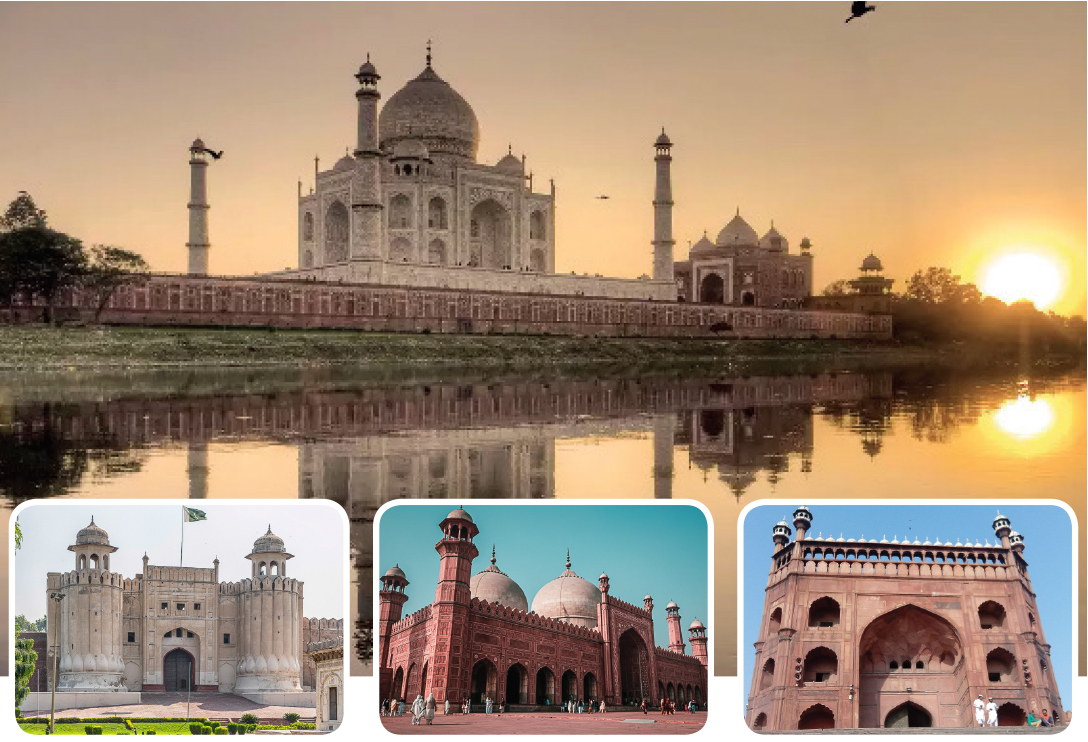
The artists of their times were the ones who introduced uniformity in patterns and structure. Grand domes, graceful minarets at the corners and massive halls were embellished colossal vaulted entrances with exquisite ornamentation.
Mughal architecture reached its apogee during the reign of Emperor Shah Jahan; this is not to say that other Mughal emperors, both preceding and succeeding him, did not have their own contributions to make to Mughal heritage.
Emperor Babur began his reign over the subcontinent in 1526 A.D. He brought staggering developmental changes along with monumental structures. He contributed to building masjids (mosques), temples and gardens. Panipat Masjid, Jama Masjid, and Babri Masjid are his renowned contributions. Out of these, Babri Masjid created more hype in recent times and was destroyed by the current extremist Hindu dispensation in India. Located on the banks of the Ghaghara River in Faizabad disrtrict, it was designed with three entrances; the middle entrance was more and prominent.
His successor was his son Humayun (1530 to 1556). He did not bring much improvement in any department as war broke out though Humayun was responsible for the recruitment of many artists and painters.
The actual astounding growth in terms of monuments and art pieces took place during the reign of Akbar (1556-1605).
His extraordinary use of rocks such as standstone was his signature. He employed artists from all over the subcontinent. It were these people who were responsible for countless books on history, romance, poetry, and much more.
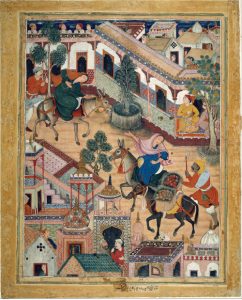
Hamzanama, commissioned by Akbar, is the most mentionable for containing illustrations of the legendary exploits of Amir Hamza. The volume was completed in 14 years. It originally ccontained 1400 illustrations but only 200 have survived. Humayun’s tomb, constructed by his son Akbar in 1562, is in Delhi. This was the first-ever garden tomb in the subcontinent. It was also the first of many tombs with a Persian double dome. It is sleek, finished with white marble which is applied across the exterior. The small canopies surrounding the central dome are designs beyond their time. This style was the key to design concepts that led to the designing of the beautiful Taj Mahal.
 Jahangir (1605-1627) the son of Akbar, had concepts more in the Persian mould, rather than Indian. His most incredible creation is the tomb of Itmad-ud-Daula in 1628, decorated with white marble.

The writer is a Social Development and Policy graduate from Habib University. He can be reached at bilalmustikhan@yahoo.com
Leave a Reply