

International
Nazis Again!
Speaking in Doha, Hamas chief Ismail Haniyeh said the fighting was primarily about Jerusalem.

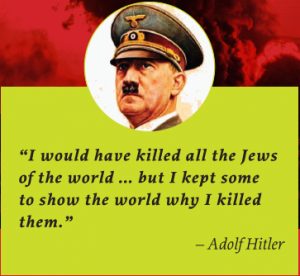
The Holocaust is a dark era of human history that you can’t erase from the minds of the survivors and their progeny. What started as a systematic, state-sponsored genocide for a ‘Final Solution’, culminated in 1945 with over six million European Jews massacred in the name of supposed Nazi superiority over the Jewish race. While the Germans and their facilitators left no stone unturned to persecute the innocent Jews, the execution drove the diaspora of European Jews to scatter around the globe in the aftermath of World War II, homeless and helpless. Sounds a bit familiar, doesn’t it? Apparently, the Nazis never ceased to exist in the mid-20th century. The draconian mentality was ironically inherited by the descendants of the very victims of the horrendous genocide.
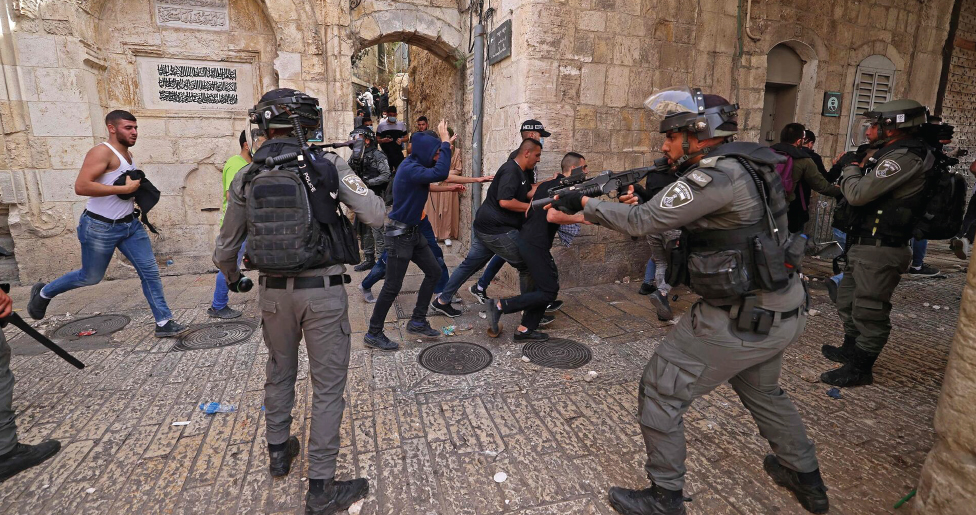
Wailing children, decimated buildings and a fire ravaging the streets of Jerusalem and Gaza. This was the ground reality. Over 240 Palestinians massacred cumulatively in airstrikes over Gaza and killings in the occupied West Bank and East Jerusalem as the fighting entered its 11th consecutive day. The situation was astonishingly deteriorating and the world surrounding the purgatory was still in the delusion that a ceasefire was an option. As the fighting entered its second week of catastrophe, the airstrikes turned devastation up a notch. The resulting resilience, however, faded with each successive day. Perversely, the state of Israel was facing a threat far greater than it ever witnessed in a handful of Intifadas etched in history.
Israeli cruelties further escalated when minor clashes in East Jerusalem occurred over a series of coincidental events that were treated with abject disregard: a prime example of the abysmal nature of management implemented in the occupied regions. The skirmishes sparked when Israeli forces restricted the Palestinian youth from entering a popular spot just adjacent to the Damascus Gate. Coupled with the eviction of 6 Palestinian families from Sheikh Jarrah, a contentious neighborhood in East Jerusalem, this evoked a sense of detachment and oppression which pressed the sore sentiments of the young Palestinians. The frequent infiltration and desecration of the Al-Aqsa Mosque acted as a catalyst to the already incendiary situation. Made more sensitive in Ramadan, the invasion of the mosque by Israeli soldiers added fuel to fire and ignited the head-on collision of force between the ambitious and infuriated Palestinian youth and Israeli forces. The situation flared and turned into the mayhem that pervades the region today. Benjamin Netanyahu is a notorious right-wing politician who has pivoted his regime on extremist policies involving discrimination against the Palestinians, tightening his grip over the occupied West Bank and even advocating a perforation of the neighborhoods like Sheikh Jarrah to dilute the Palestinian presence in Jerusalem. Earlier, his main agenda was to form a coalition of similar ideologies in the Israeli political arena to win the forthcoming election - the fourth in two years. The faltering coalition, however, dented his chances to regain power and exposed him to the awaiting charges of corruption. Exacerbating the chaos in Palestine allowed him to edge fellow right-wing politicians to his corner along with creating enough disequilibrium to scatter the opposing coalition of the moderates.
Palestinian President, Mahmoud Abbas, also faced a similar choice. The leader of the Palestine Liberation Organisation (PLO), also known as ‘Fatah’, was edging towards a political vacuum in Palestine. With the economic deterioration of Palestine and the worsening standard of living of the Palestinians, his political power was on crutches and showing fissures. Coupled with excessive pressure from Hamas, a militant group controlling the Gaza Strip, the leader, like his Israeli counterpart, had very little incentive to appease the crumbling peace of the region. He resorted to defer the upcoming elections - first in 15 years.
Hamas resorted to taking an offensive stance. With the growing atrocities of the Israeli forces in East Jerusalem, the group fired warnings before eventually resorting to launching attacks from Gaza, first over East Jerusalem and then unprecedented attacks directly over the State of Israel. The offensive was expected neither by Netanyahu nor by Mahmoud.
The obliteration on display was nothing but a manipulation of a crisis that was surmised to be stable yet is an enigma that was awaiting a pressure point to explode for years following the 2014 war. An apt example was the oozing violence between the Arabs and the Jews in the cities of Lod and Tel Aviv. It could be gauged by the chants of the Israeli extremist groups, enunciating ‘Death to Arabs’, in the outskirts of the Old City. It was deflected by the millions of protestors showing solidarity with the Palestinians around the globe, a sentiment that defied oppression and reflected the frustration in the streets of Gaza and East Jerusalem. There were befuddling statements from the United States’ House of Representatives and President Joe Biden articulating their support to the state of Israel, and hailing ‘their [Israel’s] right to defend themselves’. Leaders like Senator Bernie Sanders were contradicting the notion, stating: “The US must stop being an apologist for the Netanyahu government”. Nations converged on advocating a ceasefire but the situation worsened. With no incentive to placate the tensions on either side and confusion and frustration governing respective parties, the end was not imminent. The Israelies continued to kill, Hamas continued to fire rockets and the Palestinians of all ages and genders continued to die.
With a massive death toll on the Palestinian side, a ceasefire was reached between Hamas and the state of Israel through mediation by Egypt, sharing the South-eastern border with Israel. While the abrupt de-escalation is a blessing without doubt, the culmination of a raucous narrative pulled by Netanyahu mere days ago seems contradictory. One could argue that the 11-day escalation was a lesson learned by the rightists on either side yet the eventual ceasefire is nothing new in the regional powerplay.
Both Israel and Hamas are claiming victory. This is a post-war commemoration in this decades-long conflict. Traditionally, ceasefires have barely lasted a few days before either Israel attacks Gaza with the proposition of destroying the warring Hamas or Hamas launches missiles on Israel. In the aftermath of the 2014 war, Israel bombarded the Gaza strip from the adjacent Mediterranean while ground forces infiltrated the territory in the days following the truce, accusing Hamas’ militants of forging trenches towards the state of Israel.
However, the real collateral edging the instantaneous de-escalation could be attributed to the growing impatience of the United States. As Netanyahu continued to chant that ‘the war would continue for days’, a sharper tone from President Biden delivered a strong message. He was quoted by the White House stating: “I expect a significant de-escalation today [Thursday] on the path to a ceasefire.” The tensing in relations with the United States coupled with the growing global pressure was too much to fend off. Thus, the ceasefire, while in place, offers only temporary solution. As the attacks have ceased, humanitarian assistance could flow into the war-ravaged Gaza Strip. The underlying factors still exist and could be triggered again. A truce establishes momentary peace. What about the growing Zionist settlements in the West Bank sanctioned by the state of Israel? What about the economic disparity looming in the Gaza Strip? And what about the fate of the Al Aqsa Mosque? ![]()

The writer holds a Bachelor's degree from the Institute of Business Administration (IBA), Karachi. He can be reached at szainabbasrizvi.14122@khi.iba.edu.pk


Leave a Reply