



Boasting of a blend of religious and secular ideology, Pakistan relishes in having a national mindset devoid of bias, discrimination and prejudice. But it is not true. The country often projects itself as a human rights champion as well as the lone saviour of the lives and rights of the minorities suffering in any part of the world. No doubt the country is a voice for the oppressed, be it Kashmiris in the Indian-occupied Kashmir, the displaced Rohingya of the Myanmar or the banished Palestinians. Doing so, Pakistan leaves no stone unturned to raise its voice for suffering minorities and subjugated people at the international fora. However, when it comes to minority rights, justice and their social integration, the track record of the country blights its neutral image and invalidates any claim that falsely endorse its spurious credentials as being a moderate, religiously tolerant and minority-friendly state.
The plight of the minorities in Pakistan has steadily outgrown the very growth of their community. The discrimination is deep-rooted and is viewable in various such forms as religious prejudice and ethnic divide. The pain continues to pile and intricacies go beyond count yet with each passing government, from one party to the other. However, the acts within the country have been less of a reflection of its apparent altruistic ideology and more of the extremist mindset residing within each of us.
In Pakistan, Hindus make up a formidable 2.5% of the country's total population, but they have been subject to discrimination since the partition of the Subcontinent and what started as a retribution of the destruction of Babri Mosque in 1992 continues to this day. Sometime referred to as ‘Mulk Dushman’ and ‘Hindustani,’ the notion of regarding Hindus and Indians synonymous to each other has been one of the most astounding misconceptions shared by some Pakistanis. Churches are no differently treated on the peripheries of the country and the forced conversion of non-Muslims to Islam is also reported in some parts of the country.
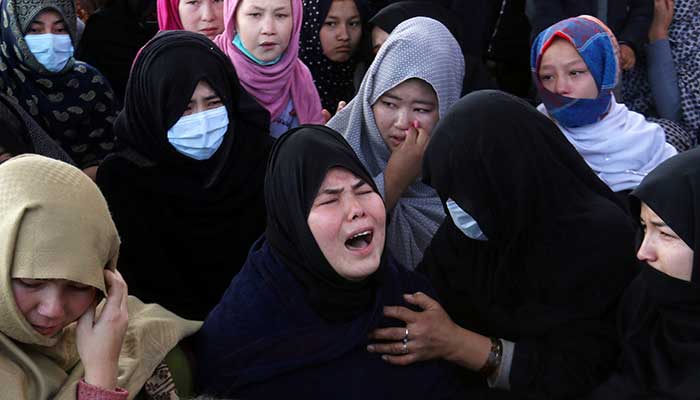
Unfortunately, the country seems to have failed to protect its religious minorities and sectarian communities. The recent massacre of Hazara Shia community is a blatant example of this failure. Over half a decade, according to the National Commission of Human Rights, more than 500 members of the Hazara community have been killed in different terrorist acts. For the past 22 years, the Hazara Shia community, suffering from a spree of vandalism together with non-stop identify-and-kill attacks, has been awaiting a national decree against this selective killing to have a sigh of relief, but to no avail so far.
The stark reality of the sorry state of the minorities is reminded time and time again. Be it the recent attack on the Hindu temple in Karak district, the reportedly forceful conversion and marriage of a 13-year-old Christian girl Arzoo or the inhuman decapitation of 11 Hazaras in Mach coalfield. Despite more blank promises, more joint committees and more compensations promised to the bereaved kin of the dead, the deadly spiral continues. Within the country, the rights are trampled upon, emotions are shredded and impunity reigns. Pakistan claims to consider its minorities as equal citizens, yet it fails to justify the tall claim within its own borders. 

The writer studies at the Institute of Business Administration, Karachi. He can be reached at szainabbasrizvi.14122 |
|
Cover Story
|
|
News Buzz
|
Update |
Leave a Reply