


Pakistan’s Provincial Puzzle
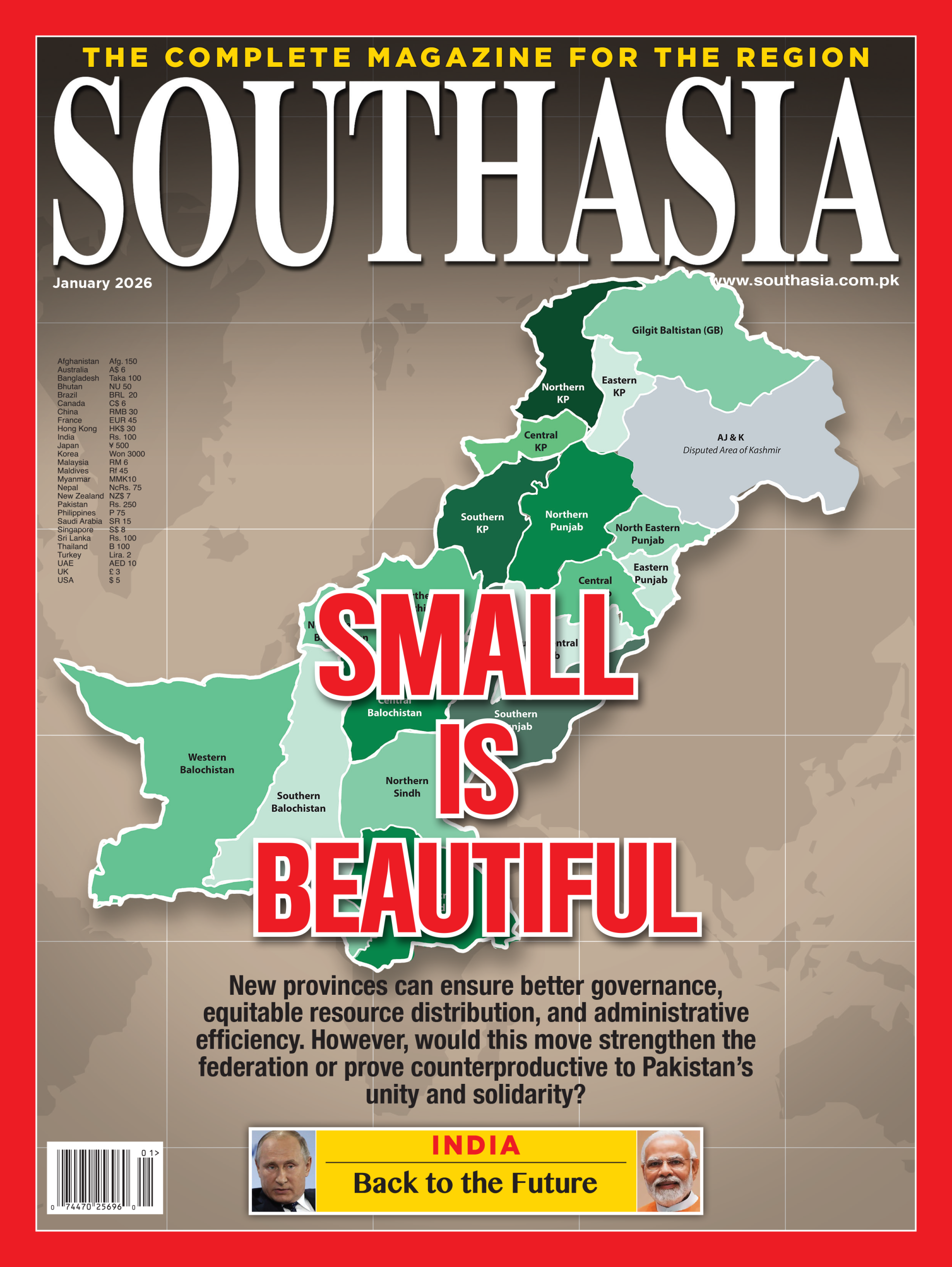
This is with reference to the January 2026 cover story of SouthAsia Magazine. For any country, making new provinces is an arduous task, which requires much deliberation and consensus among the key stakeholders of the state. In a similar vein, though it looks easy to create new provinces in Pakistan, it is far from possible or feasible to make it happen, given the tribal mindset governing the nation’s collective psyche. The creation of new provinces out of the existing four could be a recipe for disaster for a country already struggling with several internal and external issues. In place of considering such drastic measures for the sake of political point scoring, the current hybrid regime must take sufficient steps to improve its governance credentials by focusing on socio-economic matters.
Mohammad Sharf Ali,
Islamabad, Pakistan.
Heads I Win, Tails You Lose!
 This is with reference to the cover story ‘Small Is Beautiful’ that appeared in the January 2026 edition. The matter regarding the creation of more provinces in Pakistan was well discussed by the writers. The piece by Nikhat Sattar was excellent, but she should have been given more space to argue more extensively. The article by Dr Moonis Ahmar was also not lacking in ideas, and arguments were well delineated. However, the column penned by Ishtiaq Mekri manifested the system and populace in words; Paulo Coelho is the crux of the matter. However, I will sum up Mekhri’s article in a quote, which is vulgar in Sindhi slang, that you might not be familiar with. It says, “Jahay bi Jahan Khan, faislo be karay Jahan Khan.” In English, “Heads I win, tails you lose.”
Aftab Qureshi,
Karachi.
Might Is Not Right!
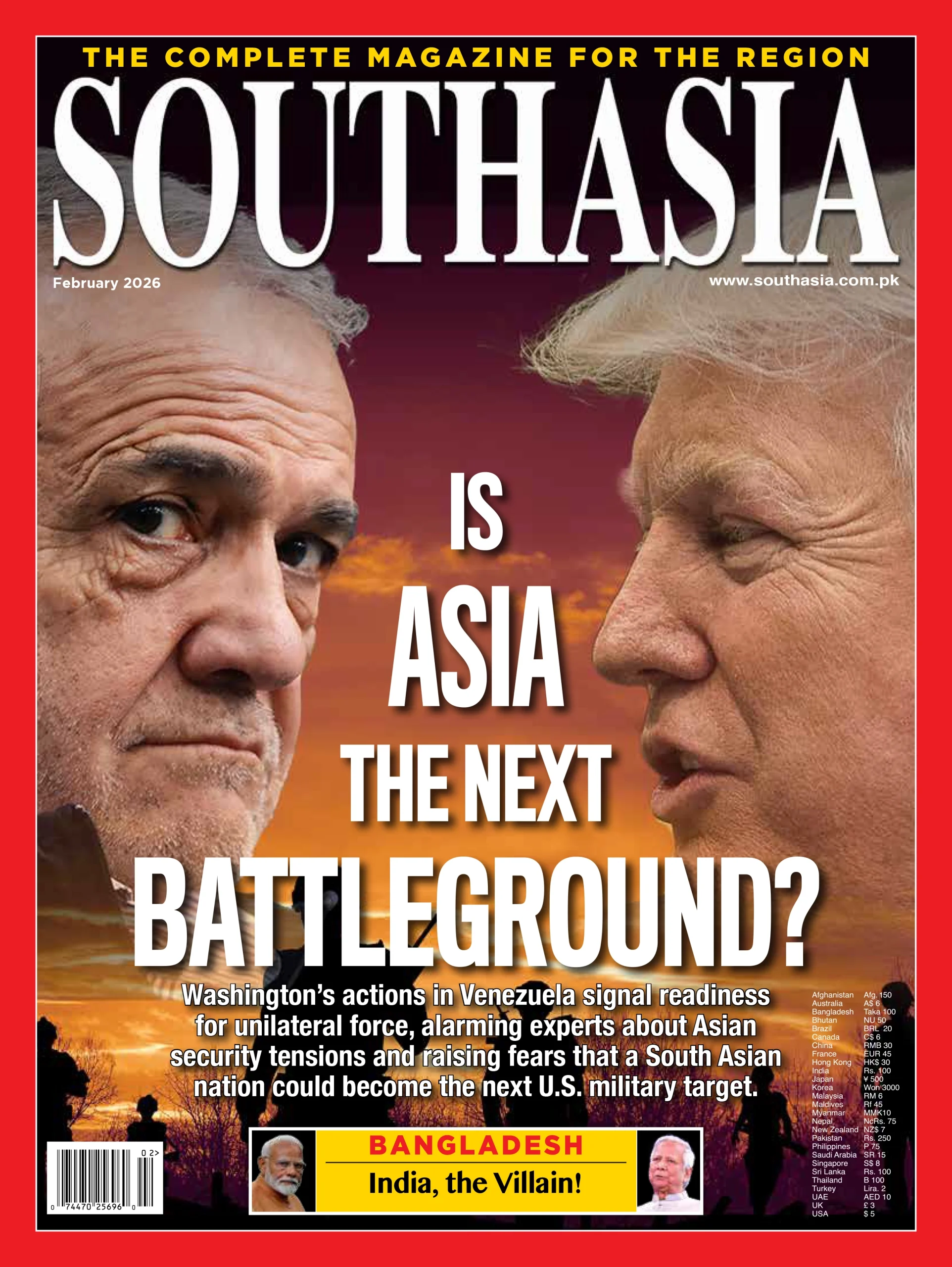
 After the U.S. invasion of Venezuela, the days ahead for the South American country are extremely difficult. Its institutions are being tested, its people are surrounded by fear and uncertainty, and its politics are at a point where every step is like a pen rising towards history. But perhaps an even greater test is for the international community: does it want to see law subordinate to force, or does it have the courage to bring force under the rule of law? This question will decide the political and moral future of the coming time. The recent forcible ousting of Venezuelan President Nicolás Maduro is not just a story of military victory or political defeat; it is also a story of the moral bitterness in which powerful states attack whenever they want, prosecute elsewhere, and then disguise this process as peace and stability. If this trend persists, sovereignty will become a symbolic term, and weak nations will need not a constitutional structure but the mood of a great power to guarantee their future.
Dr. Safdar Ali,
Lahore, Pakistan.
Flawed Electoral System
 Pakistan’s electoral system does not reflect the majority will of the electorate, as it lacks mechanisms such as referendums or minimum voter turnout requirements. In modern democracies, countries such as Germany, Sweden, and Australia employ proportional representation systems, in which political parties receive seats in proportion to the percentage of votes they secure. France follows a two-round electoral system, where a second round is held if no candidate obtains 50 percent of the vote in the first round, and the leading candidate then competes to secure a majority. Ideally, only candidates who secure the support of at least 50 percent of registered voters in a constituency should be declared eligible; otherwise, a second round of voting or the formation of a coalition government should be required. While such reforms are constitutionally possible through amendments, they are resisted by the political elite, as they threaten entrenched interests. This situation contributes significantly to ongoing political instability.
Naeem Ahmed,
Gujranwala, Pakistan
Ongoing Protests in Iran
 Iran, once a regional power with Gulf oil wealth, is now in the throes of a severe economic crisis. The real reason for the protests is continuing economic hardship. Iran’s recent protests began on December 28, 2025, in Tehran’s Grand Bazaar, where shopkeepers went on strike. The Iranian currency’s value has fallen to a million to the dollar, a record low. Inflation has reached up to 52 per cent to 60 per cent, coupled with severe electricity and gas shortages, and imported goods have also become scarce. Exacerbated by Western sanctions, the trade deficit, liquidity crisis, and foreign exchange shortages have been present for months. Protests, which began in December 2025, are not about social issues like the hijab, but about everyday inflation, the depreciation of the rial currency, and unemployment. The current Iranian regime must look at the overall picture critically and take immediate measures to come out of the stagnating crisis.
Abdul Rehman,
Kabul, Afghanistan
Dirty International Politics
 More than a diplomatic move, Israel’s recognition of Somaliland is part of a broader geopolitical engineering by breaking weak Muslim states from within and reshaping the Muslim geography in a way that maximizes the protection of Zionist interests on the Red Sea, the Gulf of Aden, and the sensitive routes of the Middle East. A vulnerable, war-torn state like Somalia seems to be forced to pay the highest price for this new international game, as the country’s territorial integrity and a significant part of its coastal control are gradually slipping out of its hands. Israel’s recognition of Somaliland depicts the fact that when the interests of world powers are at stake, principles such as international law, the UN Charter, and the sovereignty of states take a backseat, and pacts like the Abraham Accords become tools for unilaterally shifting the balance of power in the name of peace.
Iqbal Nafees,
Dhaka, Bangladesh.
IMF’s World Economic Outlook
 In today’s global economic scenario, the value of a currency is determined not only by the nominal exchange rate but also by the purchasing power parity (PPP). In Pakistan, the US dollar is worth about 280 PKR, while in India, it is limited to 89 Indian rupees. This difference apparently indicates the superiority of the Indian economy. However, in reality, the value of the Indian rupee should be even lower than that of Pakistan because the Indian economy is based on the old base year of 2011-12, and 850 million people are deprived of purchasing power. The IMF’s World Economic Outlook report of October 2025 exposes this fraud, proving from authentic sources that the value of the rupee is being artificially kept low due to the manipulation. In marked contrast, the situation in Pakistan is more realistic. Experts believe these figures are “at best unreliable” and the recent growth of 8.2% is also questionable. Due to this old base year (base), India’s GDP per capita PPP is shown as $9,817, which is as of 2024, but in reality, it is 55% lower than the world average. The IMF report clearly states that India’s national accounts system is of ‘C’ grade because it has not been updated for 20 years. The GDP is overestimated by ignoring new economic structures, such as digital transactions, changes in the informal sector, and inflation.
Sanjay Mandke,
New Delhi, India.