



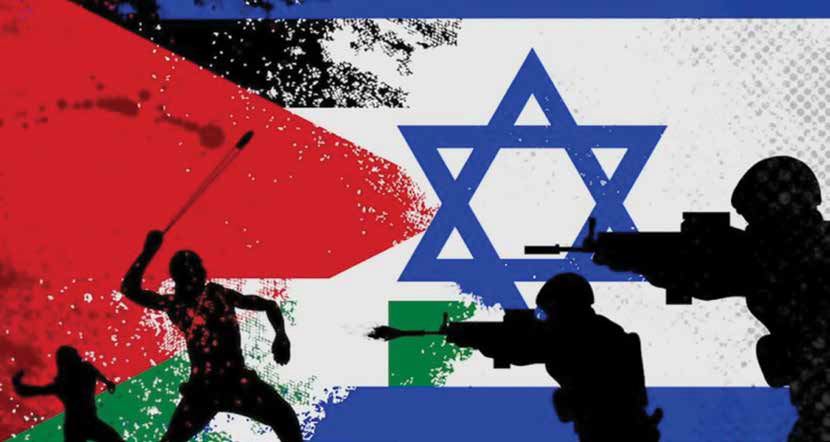
The root causes of the Israel-Palestine dispute are multifaceted and are deeply rooted in a mélange of historical, political, religious, and social factors. Understanding these causes requires delving into a complex interplay of events and perspectives, as listed below:
Historical Claims and Nationalism: The conflict has its roots in the late 19th and early 20th centuries with the rise of both Arab and Jewish nationalism. Jews, facing persecution in Europe, started the Zionist movement, aiming to establish a national homeland in Palestine. At the same time, Arab nationalism grew in the region, which was then part of the Ottoman Empire.
British Mandate and Balfour Declaration: After World War I, the League of Nations granted Britain the mandate over Palestine. The 1917 Balfour Declaration by the British government supported establishing a “national home for the Jewish people” in Palestine, which was predominantly Arab. This declaration is seen by many as a pivotal moment that heightened tensions.
Mass Jewish Immigration: The rise of anti-Semitism and the Holocaust in Europe led to a significant increase in Jewish immigration to Palestine. This influx was opposed by the Arab population, leading to tensions and violence.
Partition and the Creation of Israel: In 1947, the United Nations proposed a partition plan to create separate Jewish and Arab states. The plan was accepted by Jewish leaders but rejected by the Arab side. In 1948, Israel declared independence, leading to the Arab-Israeli War. The war resulted in Israel’s victory and the displacement of a large number of Palestinians, known as the Nakba or “catastrophe” in Arabic.
Palestinian Displacement and Refugees: The 1948 war and subsequent conflicts, including the 1967 Six-day War, led to the displacement of hundreds of thousands of Palestinians, creating a significant and ongoing refugee problem. Many Palestinians were either forced from their homes or fled, and their right to return remains a contentious issue.
Occupation and Settlements: After the 1967 war, Israel occupied the West Bank and Gaza Strip territories that Palestinians claim for a future state. Israeli settlements in these areas are seen by Palestinians and much of the international community as illegal and an obstacle to peace. The conflict is exacerbated by internal divisions within both Israeli and Palestinian societies, with hardline and extremist factions often undermining efforts for peace.
International Involvement and Geopolitics: The conflict has attracted extensive international involvement, with various countries and organizations supporting different sides, often reflecting broader geopolitical interests.
Core Issues and Other Factors
While keeping in view the whole issue from the beginning, the core issues may be considered through a broad prism of interrelated issues, as shown in the following:
Territorial Borders: Determining the borders of Israel and a potential Palestinian state. Jerusalem: A city with significant religious and historical importance, claimed as a capital by both sides. Palestinian Refugees: The right of return for Palestinians displaced in 1948 and 1967 and their descendants.
Israeli Settlements: Israeli communities built on occupied Palestinian territory, considered illegal under international law but disputed by Israel.
Security: Concerns of Israel regarding its safety and concerns of Palestinians regarding military occupation.
The Human Aspect Casualties and Violence: Sustained violence has resulted in numerous casualties on both sides.
Living Conditions: Palestinians in the West Bank and Gaza Strip often live under challenging conditions, with restrictions on movement, economic hardships, and periodic military conflicts.
Cultural Impact: The conflict has deeply affected the cultures, psychologies, and everyday lives of people on both sides.


The writer is Professor and Head of the Department of Political Science as well as Dean, Faculty of Social Sciences at the Bhupendra Narayan Mandal University in Madhepura, Bihar. He can be reached at rajkumarsinghpg@gmail.com
Leave a Reply