



The year 2025 marked a significant inflection in Pakistan’s economic story, a shift away from crisis management towards the early contours of growth. After years dominated by currency volatility, soaring inflation, and an overreliance on emergency financing, macroeconomic indicators showed notable improvement. Inflation eased, geopolitical engagement widened, and policymakers began pivoting from stabilization to strategic growth planning.
Yet, beneath these encouraging developments, a chronic external sector imbalance, notably a widening trade deficit, emerged as a central test of whether Pakistan’s upward trajectory can be sustained into 2026 and beyond.
One of the most striking developments of 2025 was the easing of inflationary pressure. From an average above 23% in the prior year, headline Consumer Price Index (CPI) inflation fell to around 4.5% in FY 25, with several months registering near-historical lows. This slowdown in the pace of price increases provided much-needed relief to households and helped stabilize expectations.
Despite a rebound into mid-single digits later in the year, inflation remained far more predictable than in past years. IMF cautioned that price stability remained vulnerable to supply shocks, seasonal food price volatility, and climate-related disruptions.
Pakistan’s geopolitical repositioning was another defining feature of 2025. With global supply chains adapting to strategic realignments, Pakistan strengthened economic ties with Gulf states and deepened trade and transit links with Central Asian markets. CPEC projects transitioned towards industrial and export-oriented phases, reframing Pakistan’s role from passive receipt of infrastructure funds to an active node in regional commerce.
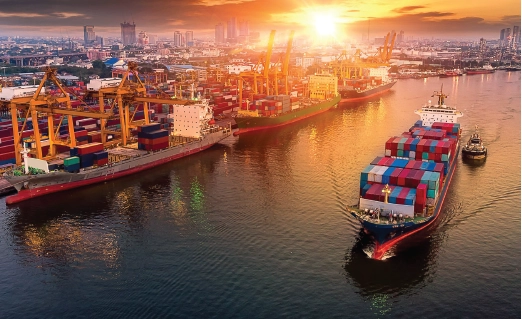
Despite modest progress on inflation and financial balances, the trade deficit widened sharply, both overall and with regional trading partners. As of December 2024, Pakistan recorded a trade deficit of $2.99 billion, showing persistent import-dependence that did not abate in 2025. Pakistan’s growth remains import-intensive, particularly for energy, machinery, and intermediate goods, while exports have struggled to regain momentum.
Widening deficits were especially pronounced in Pakistan’s trade with its neighboring countries. According to State Bank of Pakistan data, in the first five months of FY26, the trade gap with nine neighboring states surged by over 39% to $ 6.22 billion, compared with $ 4.47 billion in the same period last year. The expansion was driven by a sharp decline in exports to key partners, notably China and Afghanistan, even as imports from regional partners increased by more than 22%. Imports from China alone, which dominate Pakistan’s regional trade profile, jumped nearly 23% to $7.71 billion in the first five months of FY26. Exports to India rose marginally but remained negligible in absolute terms.
These trends demonstrate that Pakistan’s export performance has not kept pace with import growth, even with close neighbors, highlighting the depth of structural competitiveness challenges in manufacturing and trade facilitation.
 The industry, especially major manufacturing and export-oriented sectors, struggled during the past 18 months, and many industrial units have been shut down or are operating at barely half of their installed capacity. Record-high gas and electricity tariffs, a high interest rate, higher taxation, and delayed refunds were significant challenges for the industrial sectors. The closure of the industry also caused lower production levels, a decrease in export volume, and an increase in unemployment.


The writer is an Associate Research Fellow at the Sustainable Development Policy Institute (SDPI). He can be reached at asifjaved@sdpi.org
Leave a Reply