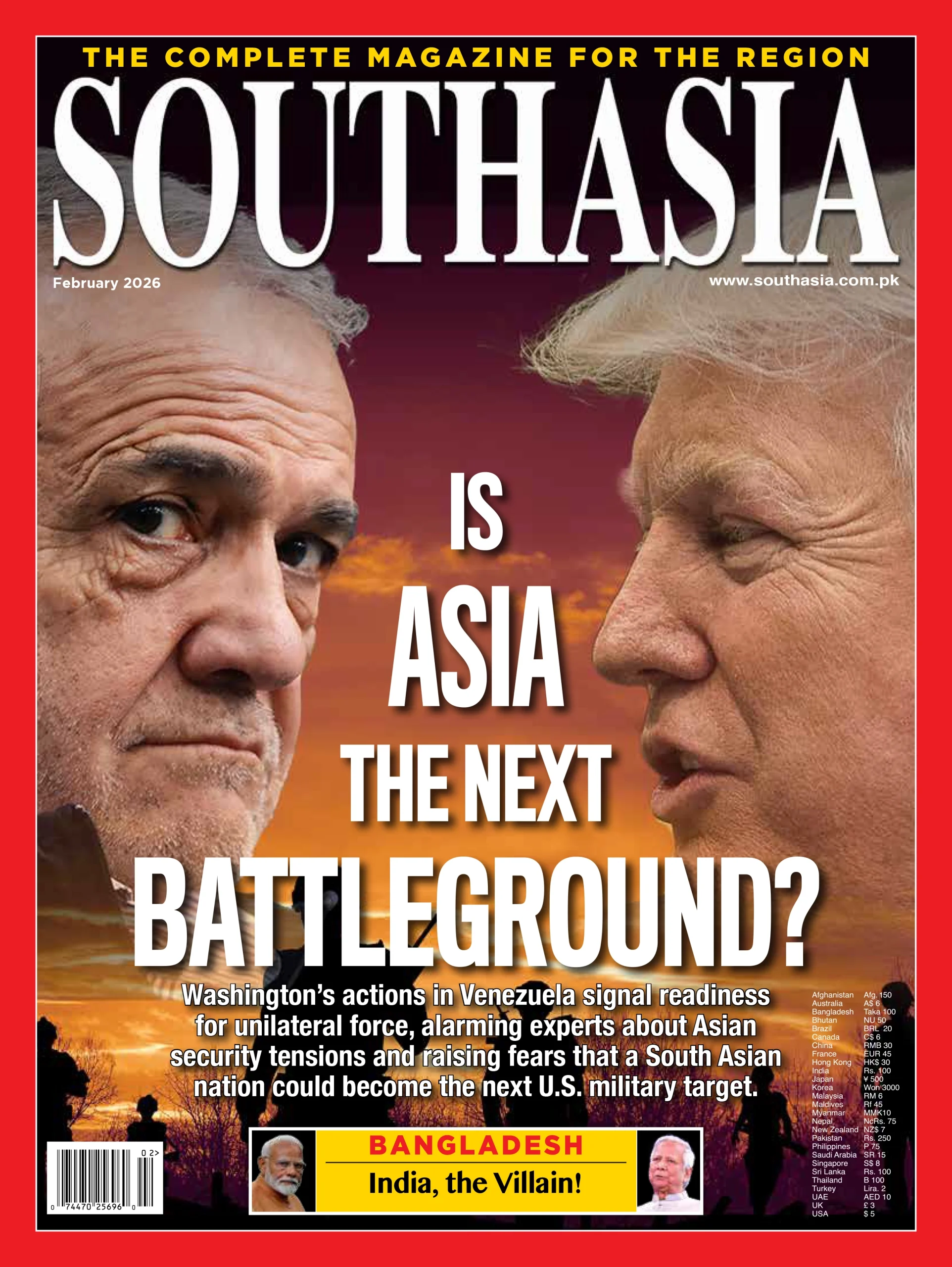




The world order that took shape after the devastation of World War II is no longer merely under strain — it is visibly rupturing. The carefully constructed balance between power and principle, geopolitics and international law, sovereignty and collective security is giving way to a far harsher reality. Across continents, the norms that once constrained great powers are eroding, and institutions designed to manage conflict are losing relevance. Most affected are the West, Latin America, and the Middle East. So far, Asia is insulated.
The question Asia must now confront is not whether this order is changing but how exposed the region is when it finally gives way. Can Asia be the next battleground? Is it about time that Asia must wake up to a fragmenting system? The answer lies in the evolving geopolitics around the world.
Recent events should leave little room for complacency. The removal of Venezuela’s president and rupture of US and Caribbean nations’ alliances, the cracks in NATO over Greenland’s sovereignty, the grinding and unresolved war in Ukraine, and deepening fractures within the Western alliance system all point to the same conclusion: power politics has returned as the organising principle of global affairs.
There is a collapse of assumptions. For nearly eight decades, much of the world operated on the assumption that international disputes — however intense — would ultimately be moderated by multilateral processes. The United Nations, despite its flaws, served as a symbolic and sometimes practical brake on unilateralism. UN resolutions, international law, and collective legitimacy mattered.
For smaller and middle-ranking states, this is not an abstract concern; it is an existential one. If sovereignty can be overridden in one region, it can be questioned in another.
Equally revealing are the signs of strain within the Western alliance itself. The prolonged war in Ukraine has exhausted political consensus across NATO capitals, exposing divisions over resources, strategy, and long-term commitment. Recent meetings of U.S. and NATO leaders on the sidelines of global economic forums such as Davos have reflected a growing anxiety about alliance coherence.
The recent speech by Canada’s prime minister at Davos, warning of deep fractures in the Western political and economic order, was particularly telling and has sent shockwaves around the globe. Such statements, once confined to academic circles, are now entering mainstream political discourse.
When Western leaders themselves question the durability of the order they once championed, the implications for the rest of the world are profound.
Meanwhile, even within Europe, debates over territorial sovereignty — from the Arctic to Eastern Europe — underscore how fragile long-standing assumptions have become.
The Middle East offers a glimpse into the future of global politics if current trends continue. A single security framework or power broker no longer shapes the region. Instead, it is defined by overlapping conflicts, shifting alliances, and bilateral maneuvering.
The Gaza reconstruction debate has become entangled in broader geopolitical rivalries, while the growing divergence between Saudi Arabia and the United Arab Emirates over Yemen highlights how even close partners are recalibrating their interests.
These fractures have reduced the scope for unified regional responses and marginalised multilateral diplomacy. Most notably, these developments are unfolding largely outside the effective control of the United Nations. Resolutions exist, but enforcement does not. Negotiations take place, but legitimacy is fragmented. The lesson is clear: where institutions weaken, power fills the vacuum.
Asia is under the dangerous illusion of distance. So far, much of Asia has remained insulated from the direct shocks shaking Europe, Latin America, and the Middle East. This has fostered a dangerous illusion — that Asia can remain an observer rather than a participant in this unfolding disorder. The belief is misplaced.
Asia is home to some of the world’s most volatile flashpoints: the Taiwan Strait, the South China Sea, the Korean Peninsula, and the unresolved rivalry between India and Pakistan. These are not dormant conflicts; they are managed risks, kept in check by deterrence, diplomacy, and—crucially—the expectation that escalation would be universally condemned and internationally contained. But what happens when the global consensus against unilateral force weakens?
When UN resolutions no longer carry weight, when vetoes paralyse the Security Council, and when powerful states increasingly act first and explain later, the constraints that once prevented escalation begin to erode.


The writer is the former president of the Overseas Investors Chamber of Commerce and Industry.
Leave a Reply