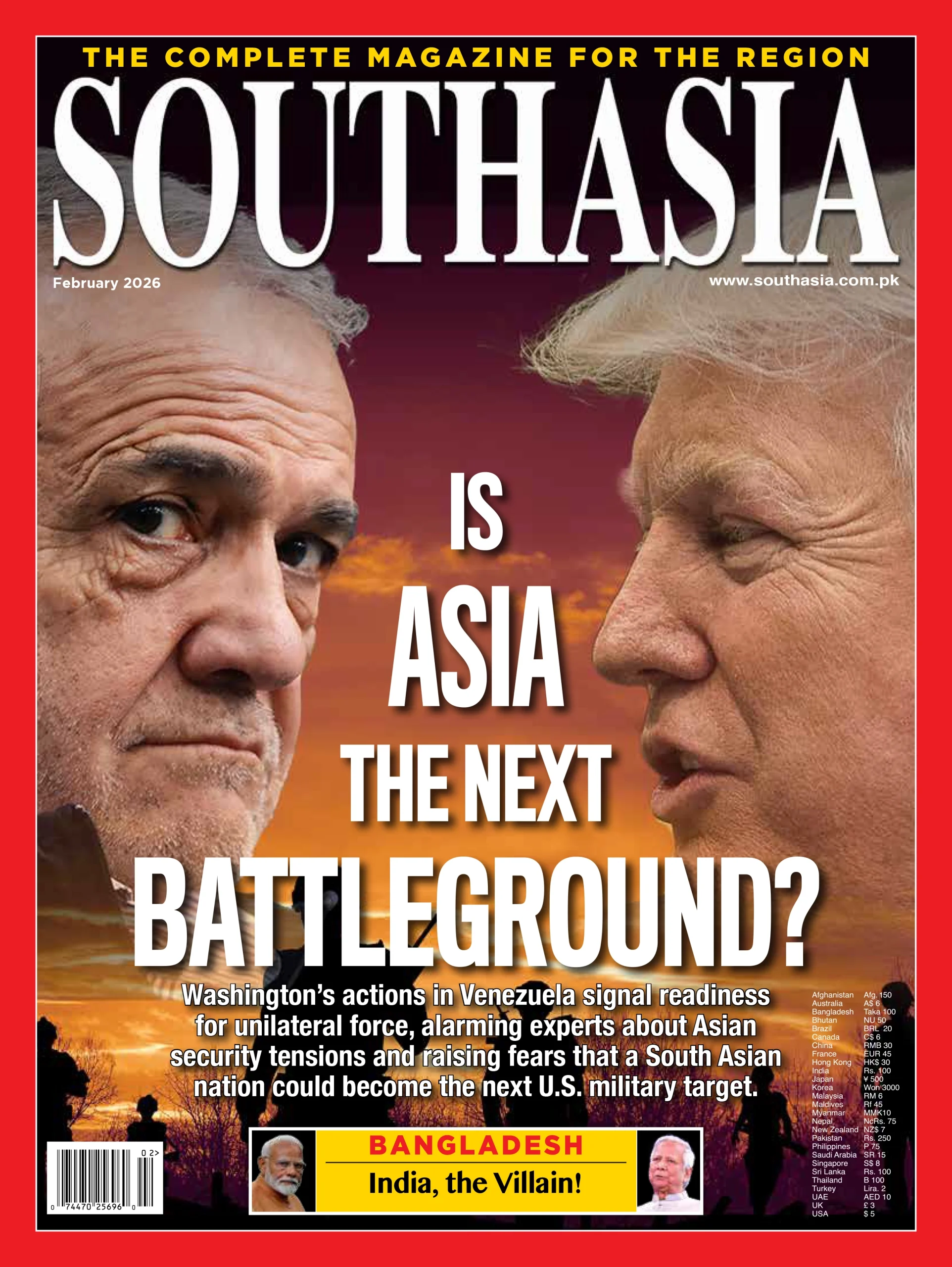



 On the sidelines of the 56th Annual Meeting of the 56th World Economic Forum, held recently in Davos, Switzerland, a decision was made, which can be described as not just a diplomatic breakthrough but a clear shift in the global power structure. Twenty countries, including Pakistan, signed the Charter of the Board of Peace (BoP), an international organization proposed, initiated, and finally established by U.S. President Donald Trump in order to promote global peacekeeping efforts in war-torn countries in general, and in Gaza in particular. Other than Pakistan, the countries that signed the charter included the United States, Saudi Arabia, the United Arab Emirates, Türkiye, Qatar, Bahrain, Indonesia, Morocco, Azerbaijan, Uzbekistan, Kazakhstan, Jordan, Argentina, Armenia, Bulgaria, Kosovo, Hungary, Mongolia, and Paraguay.

Compared to previous years, the recent Davos Summit reflected a notable evolution in focus and urgency, particularly in the area of global security. Heads of state and government from more than a hundred countries, foreign ministers, representatives of the world’s leading financial institutions, CEOs of large multinational companies, and key policymakers attended the meeting. Topics discussed in the forum included the global economic slowdown, trade disputes, artificial intelligence, the energy transition, climate change, and international security. Among all of these, however, one thing became clear: the world can no longer be run solely through talks and resolutions. The ‘Board of Peace,’ as it seems to be, is born from this feeling, not as a replacement for the United Nations (UN), but in practical terms, it appears to be a much more powerful decision-making platform parallel to the UN. The BoP is primarily based on the idea that global conflicts should be brought under urgent scrutiny and centralized control by employing result-oriented measures such as economic pressure, diplomatic incentives, and strategic maneuverings, rather than through never-ending diplomatic processes, formulaic UN resolutions, veto power, and a litany of bureaucratic hurdles and power politics by influential nations to safeguard their vested interests. The creation of the ‘Board of Peace’ suggests the watershed moment has come, and this is where the tone of the conflict-ridden world politics seems to be changing, giving rise to a new world order.
Amidst the emerging world repositioning, at such a crucial moment, how could Pakistan stand as a bystander when most of its most influential Muslim allies, like Saudi Arabia, Türkiye, and the United Arab Emirates, are part of the newly formed board? Foreign policy or bilateral relations are not permanent and are constantly evolving based on ground realities. It is hoped that Pakistan’s participation will help prevent further bloodshed among Palestinians and open a path to life and dignity that has been closed for them by both friends and foes alike. More than the success of our foreign policy, the BoP has also emerged as yet another opportunity to re-internationalise the Kashmir dispute, which seems to have long been forgotten by the global community. In this whole scenario, Pakistan’s participation in the Peace Board is a critical and sensitive decision, which is not just a diplomatic move but a strategic commitment that shows Pakistan’s global relevance as well as its increasing clout on the world stage.