



The nineteenth century was called Pax Britannica, and the twentieth century was referred to as Pax Americana. In a similar vein, the twenty-first century is termed Pax Asiana. Following the end of the Second World War, there was a shift in the global power structure from multipolar to bipolar because the Soviet Union and the United States, as the two superpowers, divided the world into their spheres of influence. After the end of the Cold War and the disintegration of the Soviet Union, the United States emerged as the only superpower representing a unipolar world. However, in the first quarter of the twenty-first century, the world again transformed from unipolar to multipolar, with China and Russia, along with India, Brazil, and South America, emerging as new centers of power.
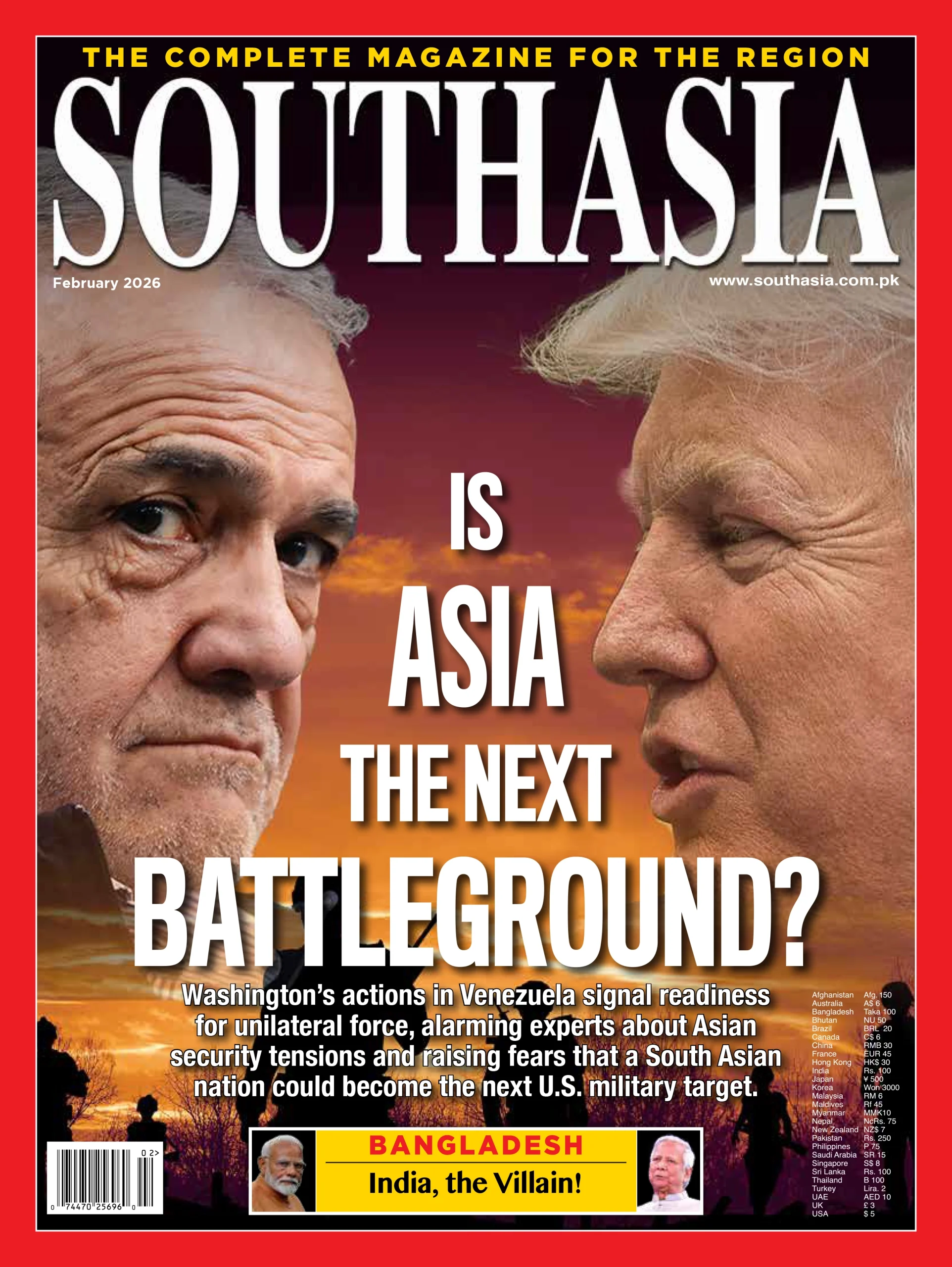
In a world where the global order is fragile, and the Trump administration is bent on pursuing a policy of unilateralism by threatening to annex Greenland, invading Venezuela, and calling for regime change in Iran, can the Asian century prevent the U.S from carrying out its policy of intervention and aggression? How do China, India, and Russia, as the three major Asian countries with enormous economic and military power, restrain the United States from carrying out its policy of unilateralism? If the U.S, under the Trump administration, has left 66 international organizations and calls Canada its 51st state with intentions to intervene in Panama, Mexico, and Cuba, can Asia challenge American power ambitions?
The Asian century is not a myth but a reality. As the largest and most prominent continent of the world, with China, India, Russia, Japan, South Korea, and Singapore as major economic giants, Asia has the capability to assert its position, particularly when the First World, for the first time after the end of the Second World War, conflicts with itself. With Europe eye-to-eye with the United States on Greenland and NATO, it is Asia that has an opportunity to take advantage of the emerging conflict within the Western world.
According to Modern Diplomacy, “The 21st century is often heralded as the ‘Asian Century,’ a period where the political and economic might of Asian nations will eclipse the West’s dominance. This notion gained attraction in the late 20th century, fueled by the meteoric rise of China and India’s economic prowess. Let’s delve deeper into the factors shaping this potential Asian ascendancy.”
As a home to nearly half of the world’s population, with its geography reaching the shores of the Pacific and Indian Ocean, Asia is a powerhouse reflecting the wave of the future. Russia shares its vast territory in Asia, and along with China and India, is in a position to effectively challenge the power ambitions of U.S President Donald Trump.
South Asia, as a sub-region of Asia, holds 20% of the world’s population, with India as the world’s 50th largest economy. By 2027, India hopes to emerge as the world’s third-largest economy, superseding Germany and Japan. How the United States can attempt to militarily intervene in Asia, or in a South Asian country, particularly when the Trump administration has opened multiple fronts, and the American economy, with a debt of 37 trillion dollars, will be destabilized if it tries to confront China or India.
According to Modern Diplomacy, “China has emerged as the world’s second-largest economy with a GDP exceeding $18 trillion in 2023, while India is projected to become the third by 2030, boasting a GDP surpassing $8 trillion. Asia’s strength lies not in uniformity but in the dynamism of its many economies and political landscapes. Developed nations like Japan and South Korea, with established democracies, coexist with developing economies like Vietnam and Indonesia, with evolving political landscapes. While China’s authoritarian model, characterized by state-driven capitalism, has fueled its rapid growth, democracies like India face challenges like poverty and social inequality. This heterogeneity suggests a more nuanced picture than a singular “Asian Century.”


Based in Karachi, the writer is a Meritorious Professor of International Relations and former Dean of the Faculty of Social Sciences at the University of Karachi. He can be reached at amoonis@hotmail.com
Leave a Reply