
International
Abduction of International Law
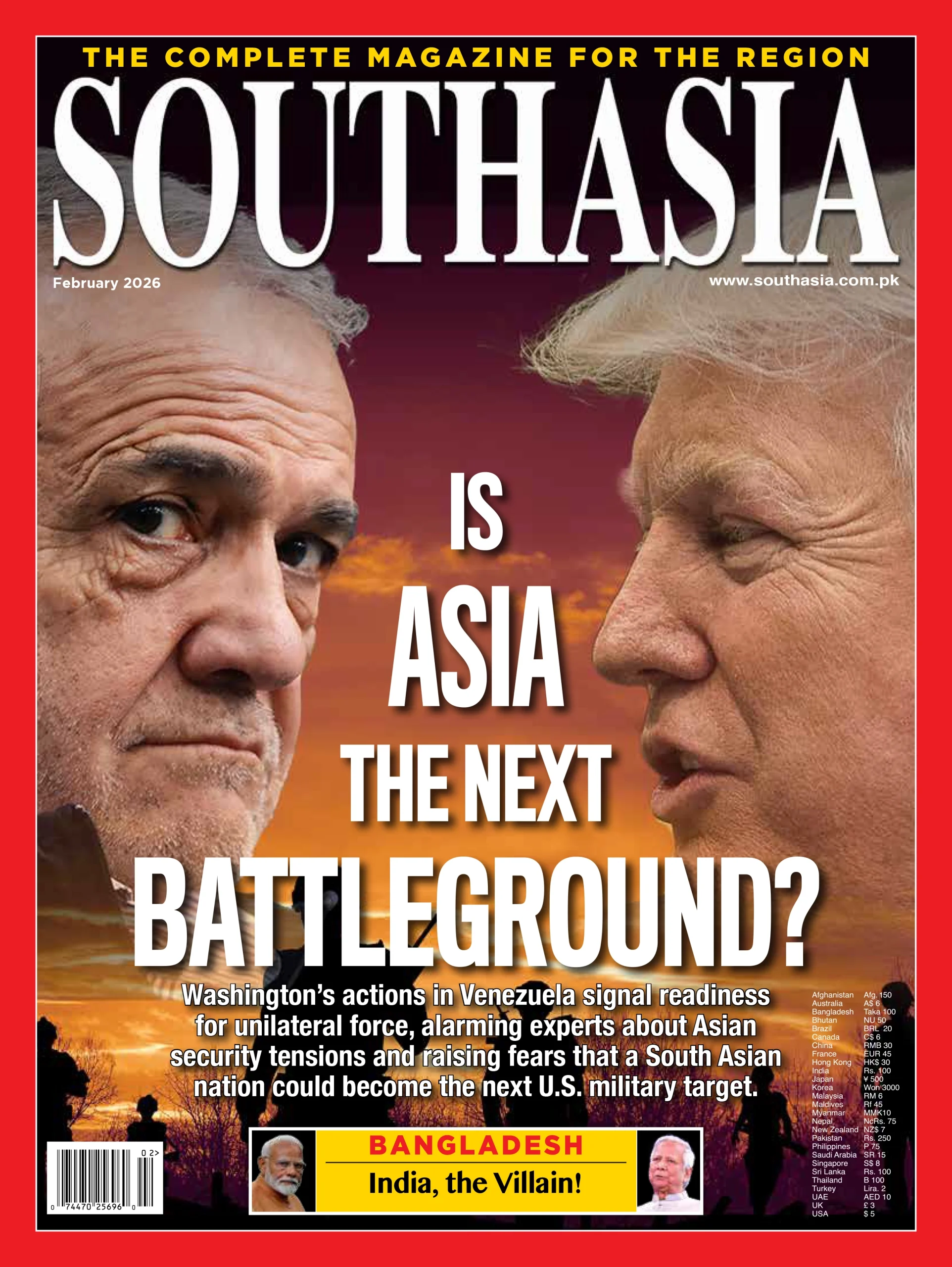
The abduction of Venezuelan President Nicolás Maduro sets a precedent in recent history that the strong do as they can

Soon after the world rang in the New Year, at Mar-a-Lago, a makeshift situation room was set up, with its occupants actively watching the abduction of Venezuelan President Nicolás Maduro and his wife, Cilia Flores. The abduction of a sitting president, Maduro, ordered by the President of the free, rules-based world, Donald Trump. What about the ‘rules’?
Let’s recall a lesson in Realism by the master Realist, Thucydides, a Greek historian, who wrote in the History of the Peloponnesian War, “The strong do what they can, and the weak suffer what they must”. Does this make the abduction justified? No. Perhaps the world will witness more of ‘flexible realism’, and adapt to the selective justice as has been the case with the ongoing genocide in Gaza by Israel, with the world watching since October 7, 2023.
In a recent interview with The New York Times, Trump said, “I don’t need international law”. When he was asked about any constraints on his global powers, he said, “Yeah, there is one thing. My own morality. My own mind. It’s the only thing that can stop me”.
If the leader of the free world sees the world through his own ‘moral’ lens, then what becomes of international law? Oh, the weak must follow, and are frequently reminded to do so.
It was in September of last year that Trump was escalating pressure against the Maduro regime, which the U.S. has accused of narcoterrorism. According to the Council on Foreign Relations, “Washington significantly increased its air and naval presence in the region as part of Operation Southern Spear, a U.S. military campaign that it says targets drug trafficking in the Caribbean. It has authorized more than twenty lethal strikes on alleged drug trafficking boats”.
Diana Roy further writes that “approximately fifteen thousand U.S. military personnel have reportedly been deployed in 2025, making it one of the largest U.S. military buildups in the region since the Cold War”.
Maduro and his wife, who are now imprisoned in New York and facing drug trafficking charges, await trial, while Trump and his officials are planning to ‘run’ the country. While they plan this (mis) adventure, Trump has threatened other countries in the region, including Cuba and Colombia, with aggression.
But this, coming from a self-proclaimed ‘peacemaker’, a President who has repeatedly mentioned that he should be given the Nobel Peace Prize for having stopped eight wars, aims to attack other countries? Isn’t he the same Trump who wanted to end all wars… but then leadership comes with its powerful hues.
Discussing Venezuela’s future and the Trump administration’s evolving foreign policy for the University of Chicago (UChicago) News, Dr. Paul Poast, Associate Professor in the Department of Political Science at UChicago, noted that although Trump claimed to “run” Venezuela, the “U.S. Secretary of State Marco Rubio almost immediately began walking back those statements, claiming instead that the U.S. would guide and pressure the transitional government led by Maduro’s vice president, Delcy Rodríguez”. This highlights how this episode could be another example of a U.S. administration employing military force without sufficient post-operation planning.
Many are questioning Trump’s actions in Venezuela, viewing them as a reassertion of the Monroe Doctrine, an assertion of U.S. power over the Western Hemisphere dating back two centuries. Dr. Poast has at length discussed Trump as a great 19th-Century President in a piece featured in SouthAsia Magazine back in July 2025 (Back to the 19th Century). For UChicago News, Dr. Poast noted that the Monroe Doctrine, which Trump’s ‘staff calls the “Trump Corollary” and what Trump himself labels the “Donroe Doctrine”, is a case in point”. He cautions that “the U.S. has long maintained dominance in the region and has regularly militarily intervened in Latin America over the two centuries since Monroe (named after U.S. President James Monroe)”. What’s different this time, according to Dr. Poast, is Trump’s fixation on the hemisphere and “a willingness to threaten and apply force at a scale that has not been seen in decades, even in a century”.
For some experts, Trump’s action in Venezuela could be a victory for President Putin of Russia. Abduction of Maduro, who happened to be Putin’s ally, sets a precedent in recent history that the strong do as they can…
To say that Trump carried out ‘gunboat diplomacy’ in Venezuela won’t be wrong – a form of diplomacy, where the “United States used its military to grab territory and resources for its own benefit” as reported by The New York Times.
According to Al Jazeera, “Venezuela sits atop an estimated 303 billion barrels of proven oil reserves, about 17 percent of the global total and more than Saudi Arabia, whose reserves stand at about 267 billion barrels”. This does explain why Trump wanted to oust Maduro and label “narco-terrorism” as a national security threat.
However, just days before Maduro’s abduction, he offered a conciliatory gesture during his New Year’s Eve address. In the interview, he described 2026 as a “Year of the Great Challenge”: “For 2026 – the year I’ve called the Year of the Great Challenge – we will overcome the turmoil and difficulties, and continue strengthening Venezuela as a country at peace,” he stated.
But peace… for the self-proclaimed peacemaker, is defined differently. For those with power, peace is described on their own terms.
The writer is a communications professional and a UN Volunteer. She can be reached at mariaamkahn@gmail.com


Leave a Reply