



In Pakistan, policy decisions are often made for the sake of political expediency or personal gain. Two recent examples are the 26th and 27th Amendments to the Constitution, the first stripping the Supreme Court of its legitimacy and subjugating the judiciary to Parliament, the second granting lifetime immunity to five-star military officers, creating the new post of Chief of Defence Forces with complete control over services, and introducing a Federal Constitutional Court, changing judicial appointment processes to give Parliament a role in selection and providing immunity for the President. These are decisions with far-reaching consequences for Pakistan’s future, and only time will tell of the immense damage done to transparency, accountability, and democracy in the country.
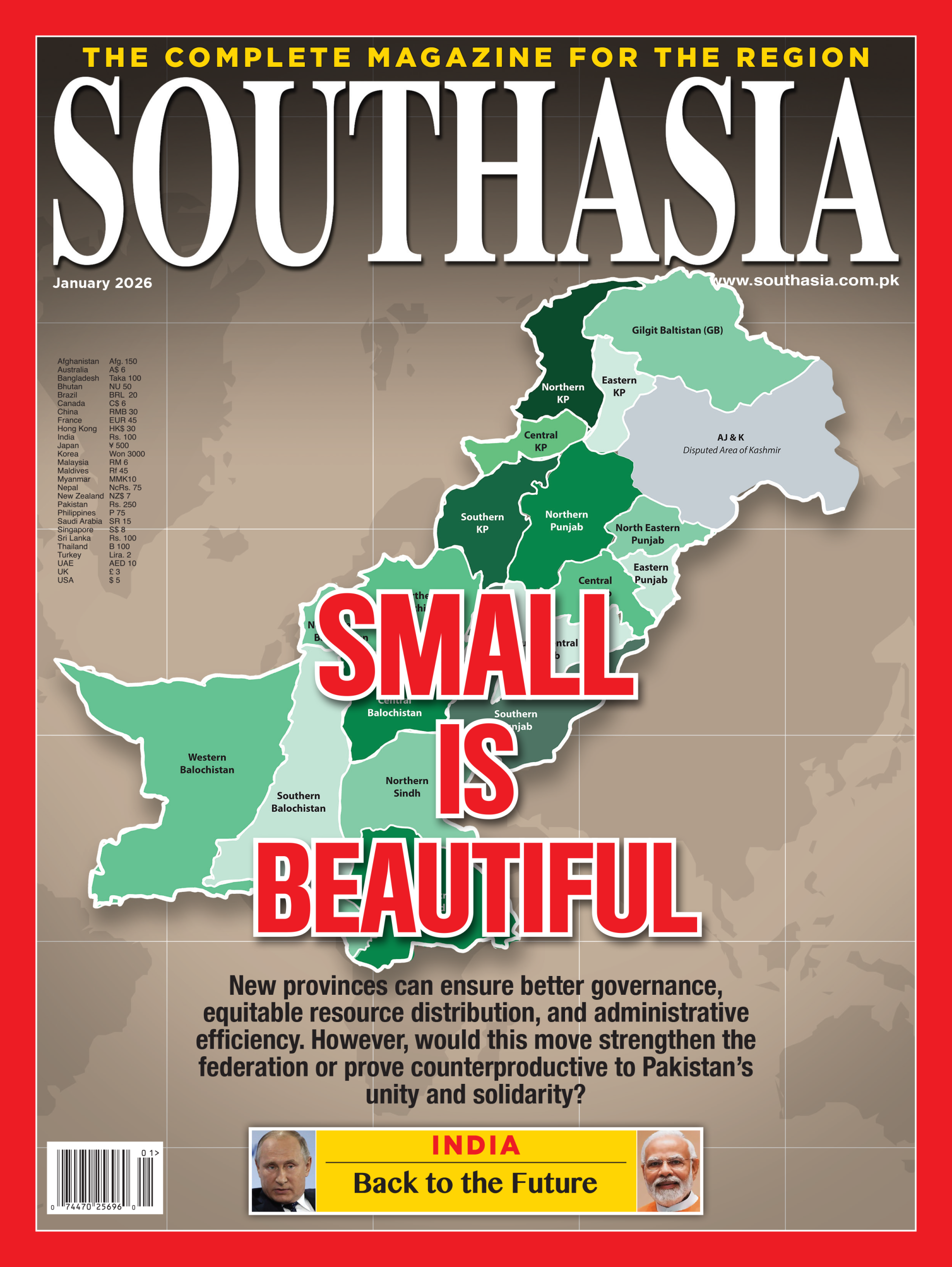
And once again, the issue of further breaking up the administrative units- the provinces into pieces has become a hot topic. Based on a report by a relatively unknown think tank, some ministers in the government are talking of it being the right decision at the right time. Nothing can be further from the truth. While indeed it is true that each province must govern many millions, given the burgeoning population, it is equally true that the answer does not lie in creating more provinces. Such a decision would serve merely to increase the costs of administration, with new sets of bureaucracy, new chief ministers, and new assemblies/cabinets. With these, hallowed people would come the protocol paraphernalia, imported SUVs, free electricity and medical services, and of course, foreign travel. Given the still prevalent colonial systems, it is highly doubtful, in fact impossible, that new provincial set-ups will serve the people better and resolve local issues.
It is said in favour of new provinces that the current four (disregarding AJK, GB, and Islamabad) are too unwieldy, too large, and too overpopulated to be governed effectively. The real concerns of people get lost somewhere in the far-off provincial government corridors, and issues such as crime rates, rising extremism, poverty, inequality, and lack of attention to environmental degradation become too large to handle.
The fact of the matter is that the answer to the above problems already exists in the Constitution and even in the current setup. The division of provinces into districts and tehsils, their proper demarcation, adequate allocation of human resources and financial resources, and a system of checks and balances over the implementation of people-centric programmes is what good governance is all about. It is no rocket science to understand that a proper system of devolution of powers to lower levels of administration will yield far better results in terms of addressing the issues cited above.
Today’s Pakistan is facing internal strife and political stagnation with a government that has all but ceded its responsibilities to the establishment. It is a democracy in name only, with a hapless people looking on at the machinations of those who did not come into power on the strength of their vote. It would be a travesty of monumental proportions to impose upon them the increased burden of fragmenting provinces into smaller pieces, merely multiplying the problems multifold.


Based in Karachi, the writer is a development professional, researcher, translator and columnist with an interest in religion and socio-political issues. She can be reached at nikhat_sattar@yahoo.com
Leave a Reply