



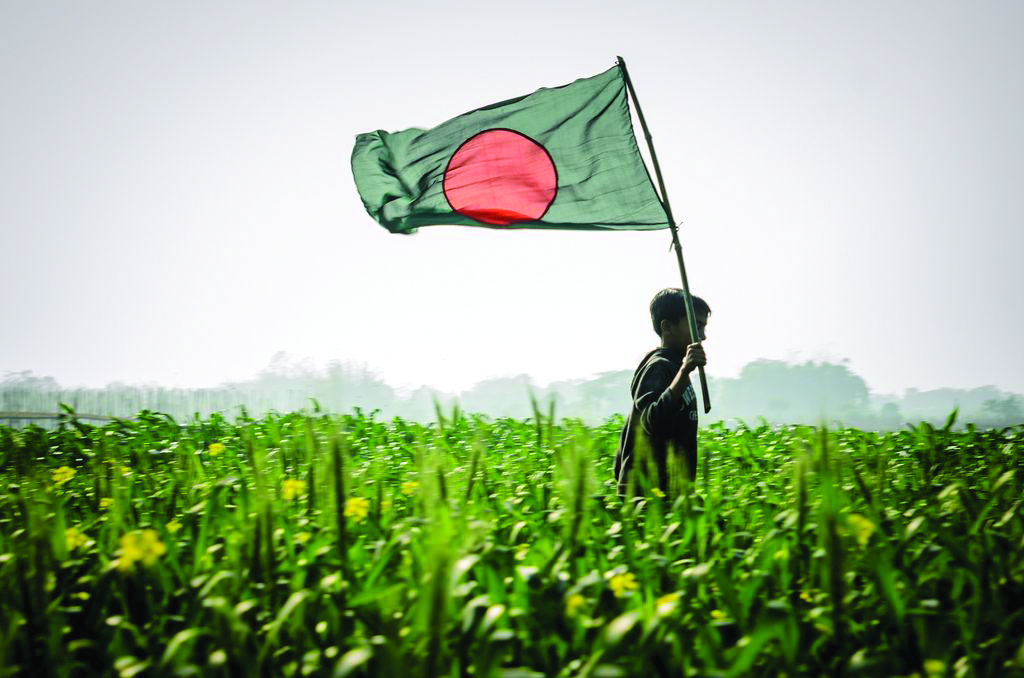
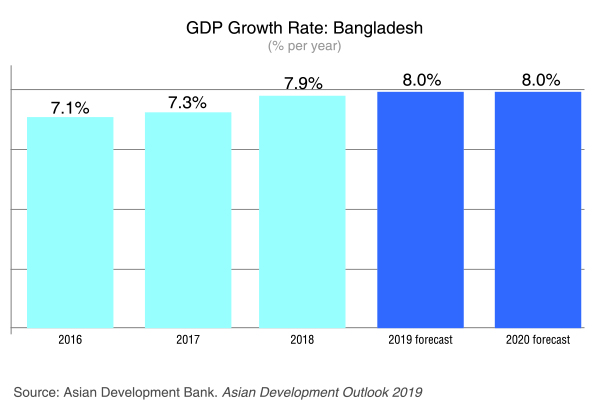
Bangladesh illustrates a most intriguing and delightful puzzle in international development. In 1971, it was dismissed as an “international basket case”, a bottomless pit of foreign aid and external dependence. It was regarded as disaster prone, resource scarce, war traumatized, poverty stricken, burdened with a huge and illiterate population, and lacking the basic “fundamentals” of economic growth. But, the country has defied that characterization, has overcome many of its challenges, and demonstrated a liveliness in its economic performance that has been as totally unanticipated as it has been genuinely impressive. According to the World Bank, the GDP of Bangladesh, in USD current prices, increased from $31.6b in 1990, to $115.3b in 2010, and $302.6b in 2019. In per capita terms, it went up from $306 in 1990, to $781 in 2010 and $1855 in 2019, demonstrating a rate of economic growth over the last 20 years, that is better than its neighbours, and higher than most developing countries. Taking into account the variable pressures and dislocations caused by the corona pandemic, the IMF has estimated that Bangladesh’s GDP per capita in nominal terms could overtake that of India by 2021 (though in Purchasing Power Parity measures, India would still be higher).
From the “sick man” of South Asia, Bangladesh has emerged with a more muscular image. It met the World Bank threshold to graduate from Low Income Country to Low Middle Income Country by 2015, satisfied all the initial UN established criteria to move out of the Least Developed Country status by 2018, and was well on its way to completing the periodic review process and achieving both by 2024.
Admittedly, GDP measures are aggregate and may be misleading. However, in various social indicators, Bangladesh has not performed too shabbily. The World Bank estimates indicate that poverty rates have declined from about 48.9% in 2000 to 24.5% in 2016, with further reductions clearly in evidence later. Life expectancy increased from 48.31 years in 1975 to 72.3 in 2018. Literacy rates went up from 29.23% in 1981 to 74.61% in 2019, with almost 95% of children currently enrolled in primary schools, 62% in secondary schools and with more girls than boys in both. How did all this come about?
Both external and internal factors contributed to this unprecedented growth spurt. Some “international” developments were fortuitous and transformational for Bangladesh. First, the steady increase of oil prices left many oil-rich countries in the Middle East with huge amounts of surplus capital and ambitious development projects that dramatically opened up their labour markets to foreign participation. Moreover, the loosening of stringent immigration policies in several countries such as the US, UK, Italy, Malaysia, and elsewhere, also allowed small but increasing settlements. Currently, there are almost 10m Bangladeshis abroad (mostly temporary workers in the Middle East), and total remittances from all countries have increased from $1.8b in 2000-01 to $10.9 b in 2009-10 and $18.2b in 2019-20.
 The Government, regardless of its political or ideological orientations, also contributed to this uplifting story. For example, government efforts, aided by many NGOs, reduced population growth rates from 2.8% in 1980 to about 1% in 2019. Similarly, though inadequate and somewhat inefficient, it developed some social safety net programs (cash/in-kind transfers, public works, income security, etc.) for vulnerable groups, and allocated almost 13.8% of its annual budget for this purpose in 2017-18. Since 2010, it has also provided free textbooks to all primary and secondary school students and, even in 2021, in the shadow of the pandemic, it distributed more than 343m books to almost 42m students throughout the country.

The writer is Professor Emeritus at Black Hills State University, SD, USA. He is also Director General of Gyantapas Abdur Razzaq Foundation, Dhaka. He can be reached at Ahrar.Ahmad@bhsu.edu |
|
Cover Story
|
|
News Buzz
|
Update |
Leave a Reply