



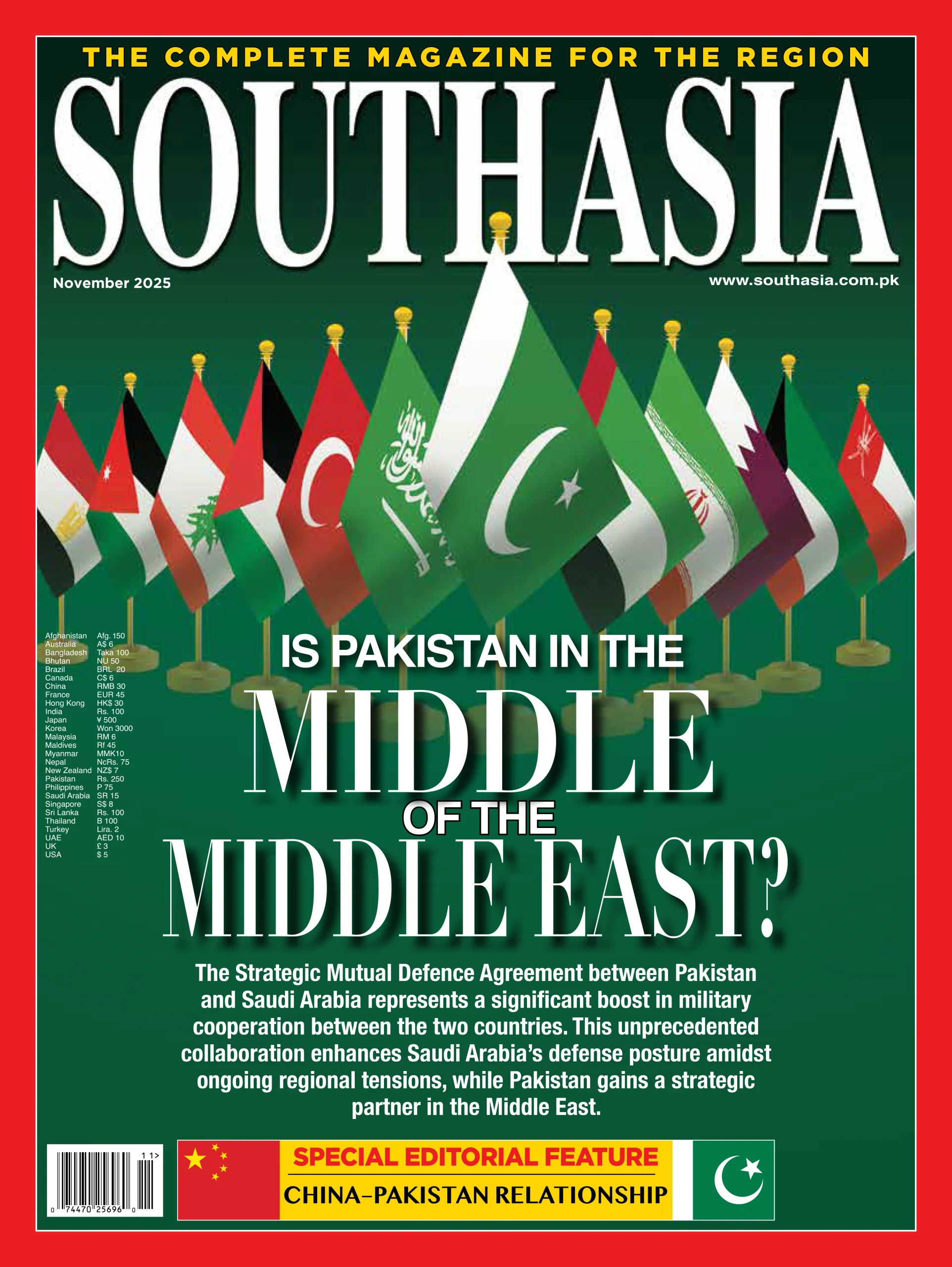
New Avenues of Cooperation
As covered by SouthAsia’s cover story, which appeared in the November 2025 edition, the signing of the defense agreement between Pakistan and Saudi Arabia is a significant development that has both short-term and long-term implications, particularly for Islamabad. Nevertheless, this has created numerous opportunities for Pakistan to recalibrate its diplomatic approach among the friendly Muslim nations, as their deep strategic ties with Pakistan cannot be taken for granted in a world where transactional relations reign supreme over religious bonds or historical attachments. The people in New Delhi who wanted to isolate Pakistan in the international fora must be disappointed with their flawed Chanakya’s approach. The credit goes to the masterminds who put Pakistan back at the centre of the geopolitical scene.
Dr. Rana Pervaiz,
Mardan, Pakistan.
Sugar, Power and Policy
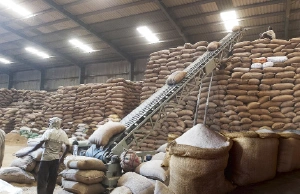 It is an open fact that sugar is not just a daily-use commodity but an essential weapon in the power game. As per Dr. Farrukh Saleem, “the issue of sugar is not just a commodity; it is a game of power and policy.” Once again, sugar is becoming out of reach for the common man. An increase of ten rupees per kilogram within a week suggests that there is no natural process behind this inflation spree, but rather a systematic plan. The price of sugar has reached 210 rupees per kg, while all the claims and measures taken by the government to reduce prices have become a spectacle. The question is, who are the people who earn from the blood and sweat of the people in every government, and why does the state appear helpless in front of them? This is not the first time the sugar crisis has resurfaced, as the same story is repeated every few years with new characters. The sugar mafia is not limited to the markets; its roots extend directly to government houses, political parties, and influential families.
Aftab Ahmed Awan,
Islamabad, Pakistan.
No End to Inflation
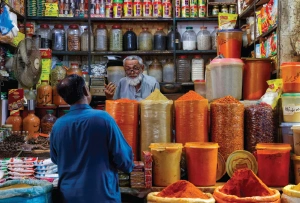 Pakistan has been struggling with political, economic, and social problems for a long time, but in recent years, the severity of inflation has made people’s lives unbearable. From daily expenses to basic necessities, the prices of everything are skyrocketing. The middle class, which was once considered the backbone of the country’s economy, has now joined the ranks of the downtrodden. Children’s education has become a dream, and healthcare facilities have become a rare blessing. Even basic commodities like vegetables, pulses, meat, milk, flour, and sugar have become out of reach of the common man. Prices increase every week, but income remains the same. The condition of the salaried class is even worse. The primary reasons for skyrocketing inflation include poor government policies, corruption, the devaluation of the rupee, and a reliance on imports. Inflation becomes inevitable when a country becomes dependent on foreign markets for its needs. This is also the case in Pakistan.
Shahab Uddin,
Karachi, Pakistan.
Afghanistan-Pakistan Conflict
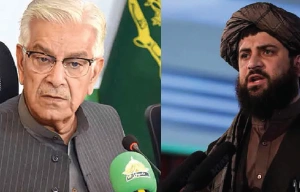 The truth has now become clear that the Afghan leadership is on the path of spoiling relations with Pakistan at the behest of India, which has been trying to use Afghan soil to harm Pakistan’s interests for a long time. The worrying thing is that despite the ceasefire agreement in Doha and the talks in Istanbul, attacks on Pakistani forces from Afghan soil are continuing. This incomprehensible situation shows the malice of the Afghan Taliban. This is why Islamabad only emphasizes eliminating terrorism in the talks. Realizing the seriousness of this situation, Pakistan’s Defense Minister Khawaja Asif has issued a blunt warning that if the negotiations are not successful, then we will have an open war with Afghanistan. The Afghan leadership should take this warning very seriously and, instead of prioritizing only its trade and economic interests, it should immediately take concrete action against terrorist groups to avoid this possible conflict.
Mujeeb Raza,
Kabul, Afghanistan.
Another Killing in Police Custody
 In October, the death of Muhammad Irfan, an 18-year-old boy, in the custody of the Special Investigation Unit (SIU) in Karachi, is a matter of utmost concern. According to reports, the Special Investigation Unit of the police had arrested Irfan along with three of his friends. After his arrest, he was taken to the SIU (CIA Center) in Saddar, where Irfan’s condition deteriorated, after which he was taken to the Jinnah Postgraduate Medical Center, where doctors declared him dead on arrival. The police claim that the boy died of a heart attack, while his relatives say that he was tortured to death. However, the post-mortem report has made it clear that the youth was tortured to death, and seven significant marks of torture were found on his body, including torture on his head, face, back, and sensitive organs. This is not a new incident of the killing of an innocent person in police custody, as the institution is prone to arresting innocent people on suspicion of any crime and torturing them in the worst way. Immediate judicial action must be taken to prevent such incidents in the future, a complete forensic investigation of the incident should be conducted, and the officials involved in the crime of murder must be brought to justice.
Zahida Bano,
Gujranwala, Pakistan.
Need for Reforms
Pakistan is currently going through a severe governance crisis, which is also being expressed repeatedly by the civil-military leadership. The economic situation is more serious, so we have not transferred powers to the grassroots level. The common man is not only suffering from economic problems at the local level, but his difficulties are also increasing due to the lack of employment opportunities, including the economic downturn. The World Bank and the International Monetary Fund repeatedly emphasize that Pakistan should focus on fundamental reforms. Without integrated reforms, Pakistan cannot become a politically and economically strong nation. However, the ruling classes still believe the country is going in the right direction. However, if the country’s affairs were running properly, the political and economic unrest among the people would not be seen today. The country’s future is closely tied to its youth, and only by transforming the political and economic conditions for the youth can Pakistan become a strong, welfare state. This should be our prime priority.
Mahmood Jilani,
Toronto, Canada.
Jaadu Ki Jhappi
 The article ‘Jaadu Ki Jhappi’ by Ambassador Sanaullah was very illuminating and instructive. The best takeaway for students for foreign affairs: personal gestures do matter, but they may yield results only when followed up with concrete actions, sustained policies, and sound structures. This macro-level, big-picture lesson also holds true at the micro and individual levels, in person-to-person relationships.
Akhtar Pathan,
Online.
Beginning of ‘Bure Din’
I‘‹Beginning of Bure Din’ by Lt Col Abrar Khan (Retd). The write-up provides a comprehensive overview of India’s current standing. However, it must be acknowledged that India remains a vast country with a resilient nation, a stronger economy, and a considerable military arsenal compared to its neighbours. In this context, it would be in India’s own interest to curtail its hegemonic ambitions and its desire to police the region and the world at large. Instead, greater focus should be placed on the welfare of its own citizens, particularly the poor, by investing in their well-being. Otherwise, as the writer rightly suggests, the “bure din” of India may indeed have begun, and if such policies continue, they could eventually diminish its stature.
Abdur Rehman Khan Yousafzai,
Online.