


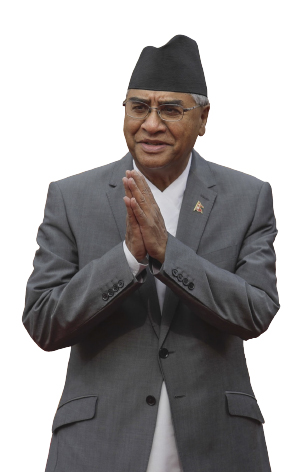
 Even after just half a year to its formation, Nepal’s coalition government seems to be hanging onto power by a thread and the incessant political turmoil is making the future of the government even more precarious. Whilst the various members of the coalition lay claim to the longevity of the government, Prime Minister Sher Bahadur Deuba remains reticent and the Nepali Congress – the main party forming the coalition – has lapsed into silence over the fate of the coalition. The difference in the attitudes of the ruling elite in Nepal coupled with various other factors makes the future of the government seem very bleak.
Perhaps the nail in the coffin to this coalition can most likely be the opposition to the Millennium Challenge Corporation’s (MCC) Nepal Compact, which offered the incumbent government 500 million dollars in grants for various road maintenance projects and setting up transmission lines.
The centrepiece of the coalition, the Nepali Congress, was hell-bent on endorsing the MCC and its Nepal Compact, however, the coalition partners, the CPN-Unified Socialist and CPN- Maoist Centre were sceptical about the deal and opposed Prime Minister Deuba for bidding for the MCC Nepal Compact. These differences within the rank and file of the five-party ruling coalition are likely to be the Achilles’ heel for the current government, creating rifts and disputes and widening the crevices of disagreement even more. This has also led the Prime Minister to go adrift towards the side of the opposition, the CPN-UML party, led by former prime minister KP Sharma Oli. Oli had stressed that he would provide support on the condition that PM Deuba is ready to cut ties with the coalition partners.
This further deteriorated the political scene for the government in general and for the country in particular as the Unified Socialist and Maoist Centre were only ready to MCC Nepal Compact only after amendments to the election law in order to make them compatible with the constitution.
At the time of writing this, PM Deuba was steadfast on moving the MCC Compact in the Parliament. As the Americans had set a deadline, Deuba has been under pressure ever since as this had also provided fuel to the fire. MCC had responded that the time period of five months sought by them would conclude by the end of February and it hoped for the compact ratification by then, otherwise a board meeting of the MCC would decide the future of the compact in March 2022.


Salis Malik is a freelance journalist and columnist based in Islamabad. He can be reached on Facebook @salismalik7777
Leave a Reply