

Region
Walking the Path
Since PTI came to power, CPEC slowed down drastically and Imran Khan had to face intense criticism.

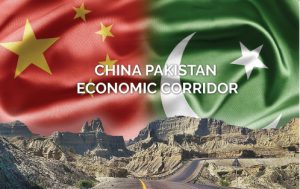
You never know what's around the corner. It could be everything. Or it could be nothing. But here come the calculated risks and educated analysis. The State of Pakistan must have minutely analyzed all pros and corns of CPEC (China Pakistan Economic Corridor). Though the meticulous planning provides a rudder to the ship but who knows the unforeseen tides. Something like the same happened to CPEC.
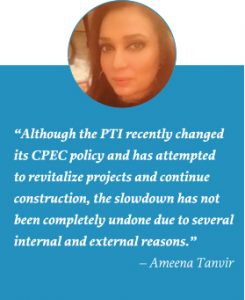
The apparent game changer project, as it is much-touted, has become a prey to a political fight between PTI and PML (N). Since PTI came to power, CPEC slowed down drastically and Imran Khan had to face intense criticism of the opposition. Although PTI lately made some changes int its CPEC policy and is trying to revive the pace of running projects but the slowdown is not difficult to undo due to numerous internal and external factors.
At the start of project, we witnessed a huge media hype which exponentially turned down since the PTI came to power. It appears that PTI did not take political ownership of CPEC as PML (N) did. This was likely because the PML (N) government had negotiated, launched, and steered CPEC projects.
Moreover, before coming to power, Prime Minister Imran Khan accused the PML (N) of financial corruption in the management of CPEC projects: PTI being more honest believes in better not doing anything that can attract any possible financial greed for its members. Jokes apart, in its electoral campaign PTI promised to conduct audit of all CPEC projects to bring forward the financial anomalies. But right after PTI assumed office in 2018, it faced the challenge of depleting foreign reserves and shrinking FDI (Foreign Direct Investment) so it focused all efforts to secure a bailout package from the IMF.
The harsh truth is that to obtain the loan, Pakistan was required to share details of Chinese investments in Pakistan with the IMF. Certain conditions attached to the IMF loan, such as fiscal consolidation, threatened to slow down CPEC projects and adversely impact China-Pakistan relations. Besides, the nine-member committee constituted by PM Imran Khan reviewed all CPEC contracts and criticized the economic deal for being too expensive for Pakistan and unfairly favouring China. The government slammed the outgoing PML (N) for incompetence in negotiating the deal and suggested placing everything on hold for a year.
PTI’s pre and post-election public criticisms of CPEC deals caused wrinkles in China-Pakistan friendship. The refusal by Beijing to offer a bailout package in 2018 can be seen as an open protest to PM Imran Khan’s anti-CPEC statements.
The recent turn of events when Saudi Arabia recalled USD $1 billion of a $3 billion loan and Pakistan faced a stoppage of a USD $3.2 billion oil credit, Beijing came in to rescue. Indeed such a gesture from China approves of the effort of present the government to re-strengthen relations. A friend in need is a friend indeed, so now the PTI government is convinced about diverting its focus on expediting CPEC projects and strengthening China-Pakistan ties. The tone of government officials, therefore, and even of the prime minister has become appreciative and admiring of CPEC, and the entire government team has now collectively started praising CPEC.
The refusal by Beijing to offer a bailout package in 2018 can be seen as an open protest to PM Imran Khan’s anti-CPEC statements.
Furthermore, Imran Khan has called the corridor ‘a manifestation of Pakistan-China friendship’, and has shown the intention to complete it at any cost. Through the CPEC Authority Ordinance, the government established the CPEC Authority, provided all needed administrative power, and engaged the Pakistan Army in formal role of administrative development. The Army had been providing security to CPEC earlier.
Last year, the launch of two hydroelectric projects in Pakistan-administered Kashmir worth USD $11 billion, development of a special economic zone in Faisalabad, and discussion on financing a USD $6.8 billion ( 90%) on mainline-1 (ML-1) railway project are some signs of hitting the gas paddle. Still there is a lot of effort required to counter the narrative of slowing down CPEC progress and the narrative has its grounds. For instance, the 10th review meeting of CPEC’s JCC (Joint Cooperation Committee), initially scheduled for October 2020, has not yet taken place.
CPEC projects are still receiving less media attention, i.e. in October 2020, inauguration of the Orange Line Metro Train, the country’s first electricity-run mass transit project completed under the CPEC banner, was miserable. Yes, COVID-19 could be blamed for the poor inauguration, but there is no variant of COVID-19 that sneaks into virtual branding, and we see a dismal effort there as well. CPEC offers Pakistan an opportunity to restore outdated infrastructure and lift economic activity. Though the prime minister is trying to refuel the CPEC projects, but due to countless domestic challenges, it is tough to regain lost momentum.
Rising political instability and the new wave of COVID-19 in Pakistan makes it difficult for PTI to meet CPEC deadlines in 2021. Buddha rightly said “No one saves us but ourselves”. No one can and no one may. We ourselves must walk the path.Now it is the choice of Imran Khan’s government how to walk the path to CPEC completion. ![]()

The writer is a columnist and broadcast journalist. He teaches at UVAS Business School in Lahore and can be reached at mali.hamza@yahoo.com


Leave a Reply