


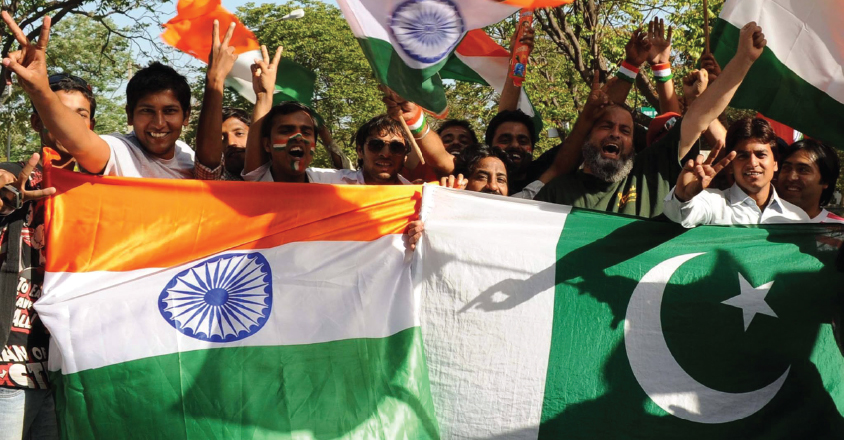
There was great media hype of the news of hotline contact between the Army DGMOs of Pakistan and India and announcement of ceasefire along the Line of Control and working boundary on 25th February 2021. These events were followed by Pakistan Army chief’s statement on 18th March “let’s bury the past and move forward”. The preceding and succeeding context of the speech -fully utilize economic potential of the region and resolve Kashmir issue peacefully was not highlighted by Indian media.
This gave birth to a lot of speculations and interpretations. The credit for this projected cooling off was given to backdoor diplomacy based on mediatory efforts by the UAE and most probably a push by the USA.
While the usual pointless denials about the secret meetings abroad were being offered, a letter from the Indian Prime Minister Narendra Modi was sent to his counterpart Mr. Imran Khan, wishing him and the people of Pakistan good wishes on the occasion of Pakistan Day on March 23; it was promptly reciprocated in adequate diplomatic parlance. Then came a meeting on the Indus Water Treaty in New Delhi, which was more cosmetic in nature. It was followed by conjectures about possible participation of Indian troops in joint drills of SCO countries organized by Pakistan and renewal of the SAARC Summit to be held in Islamabad that may even be attended by Mr. Modi. Then a surprising announcement was made by Pakistan to import cotton and sugar from India.
All these sudden and fast-paced developments were given wide media coverage both in the subcontinent and overseas. It looked like the tail wagging the dog. Sooner than later, Prime Minister Imran Khan and the Pakistan foreign office had to dispel the rumours created around Pakistan’s principled stance on the resolution of the Kashmir issue; obviously due to the political heat generated in the country. What could have caused the hasty events, especially in the backdrop of some significant developments in 2019, which was considered a pivotal year for Kashmir. In February, there were clashes between the two nations. On August 5, 2019, India took a decision to abrogate Articles 35A and 370. It then resorted to division of IIOJ&K (illegally Indian occupied Jammu and Kashmir) into two parts and declared it an integral part of India. It then launched the Citizenship Amendment Act and NRC, specifically targeting the Muslim majority in India and facilitated issuance of domicile to Indians to become citizens of IIOJ&K to change its demography. India established Sainaks - retired Indian military personnel colonies and handed over economic control of Kashmir to the Indian rich class by giving away industrial zones in Kashmir, and putting the valley under complete lockdown with heightened atrocities unleashed to suppress the freedom struggle. This compelled Prime Minister Imran Khan’s passionate UNGA speech. The rapidly evolving regional and extra-regional geo-strategic environment, drawing up of fresh battle lines in Eurasia, the CASA (Central Asia-South Asia) and Indo-Pacific regions, global economic and military realignments and some pressing domestic politico-economic compulsions of both Pakistan and India seem to have contributed towards the so-called Indo-Pakistan thaw.
 China considers the success of CPEC as a flagship project of BRI that essentially aims at regional and global economic integration. Therefore, any major conflict between Pakistan and India is bound to not only retard CPEC but may also dilute the chances of India and other regional countries to ultimately join BRI for mutual economic dividends. Hence, China would also like and support a rapprochement between Pakistan and India though with necessary safeguards to thwart the USA’s aims and objects. As regards its border dispute with India, China has just proven her resolve and capability to settle it on its own terms but without losing focus on BRI till it can attain the status of a leading global economic power.

The writer is a retired army officer with proficiency in military intelligence, diplomacy, strategic analyses, forecast and executive management. His special areas of interest include international relations, defence and warfare studies. He can be reached at sqbutt61@gmail.com |
|
Cover Story
|
|
News Buzz
|
Update |
Leave a Reply