
Cover Story
The Next Steps
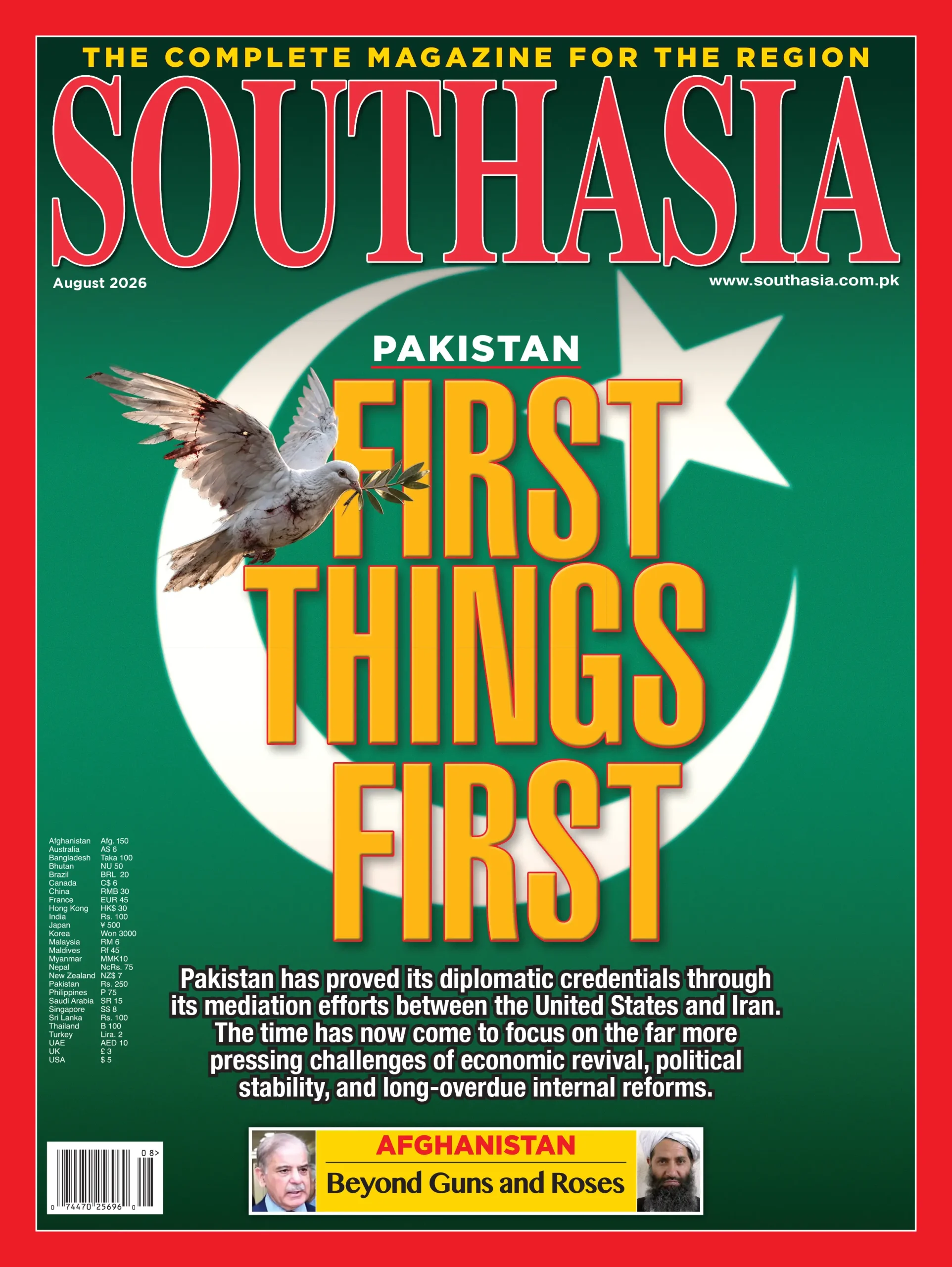
The ceasefire should be seen by Pakistan as an opportunity to set its own house in order and to give top priority to tapping its considerable economic potential.

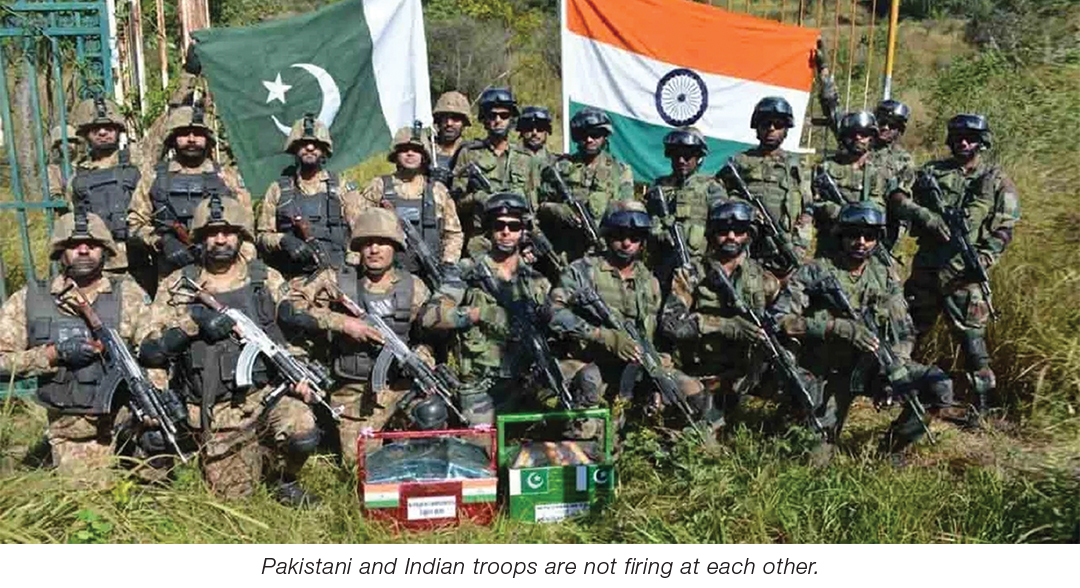
In many ways the ceasefire agreement announced on 25th February could be seen as being a replication of the ceasefire agreement between India and Pakistan of 2003 but there was a big difference. In 2003, both sides had separately, repeat separately, said that they would cease fire. These were unilateral declarations and did not therefore constitute a bilateral agreement. The present announcement says that “In the interest of achieving mutually beneficial and sustainable peace along the borders, the two [Directors General of Military Operations of India and Pakistan] agreed to address each other’s core issues and concerns which have the propensity to disturb peace and lead to violence,”. It is an agreement between DGMOs, but it is in legal terms an agreement between the two states.
On both sides, there have been statements, either official or in briefings to the media, that the agreement was reached after protracted secret negotiations, conducted by emissaries meeting in various locations outside the reach of the media but with assistance from “friends”. The UAE Crown Prince Mohammed bin Zayed, is mentioned most often as the intermediary who facilitated the meetings.
In the approximately 15 months - i.e. from 1st January, 2020 - preceding the agreement, there were some 6000 ceasefire violations and in each case compelled kinetic activity that brought loss of life and property on the LoC and the working boundary. This was in addition to the expense incurred on exchanges of artillery fire or other military activity. Given the large disparity between the defence budgets of the two states, the burden was disproportionately higher for Pakistan.
As part of the background, it is necessary to look at both the disinformation campaign India has been waging over the last 15 years and details of which were revealed some time ago. These created a furor in Pakistan and invited unfavourable media attention for India but died down with little adverse effect on Narendra Modi’s standing in India or with his “friends” in the West and East.
The second element is the case of Pulwama and the alleged responsibility of “Adil Ahmad Dar” for causing an explosion in Pulwama that killed 44 CRPF personnel. Little attention was paid to the fact that this man was in Indian custody and no explanation was offered of how he was released and how he escaped surveillance so that he could carry out the attack. Again, a part of the Indian disinformation campaign included what could be termed as unsubstantiated claims that Masood Azhar had said that Adil was a member of the Jaish-e-Mohammad and had carried out the attack on his orders. Again these allegations were accepted as fact and served as the justification for PM Narendra Modi’s decision to launch an attack on so-called Pakistan-based terrorist camps.
It was unfortunate that Pakistani authorities did not make more of an effort to unearth how Adil Ahmad Dar was released by the Indian authorities and how, despite being a person of concern, was allowed to acquire the explosives and the vehicle to carry out the so-called Pulwama attack.

On the other hand, it must be said to the credit of Pakistani authorities that the farcical so-called attack on anti-terrorist camps mounted by a formidable Indian Air Force phalanx and which destroyed nothing except a few trees, was fully exposed for all the world to know. Similarly, the measured and carefully modulated response by the Pakistani Air Force, the shooting down of an Indian aircraft and the panicked Indian shooting down of its own aircraft, redounded to the credit of Pakistan. The disinformation campaign which India has waged for the last 15 years, has now been somewhat muted, given the unfavourable publicity.
At this time, it is clear that India has reached this binding ceasefire agreement partly because of pressure from interested powers but largely because India’s own ambitious development plans require that it have durable peace in its neighbourhood. Even while Saudi Arabia has established its embassy in New Delhi as the largest embassy in the Indian capital’s diplomatic enclave, it has apparently also indicated that its plans for extensive investment in India would be facilitated if the investment was in a tension-free region. The other GCC countries towards whom India looks for investment and economic collaboration will adopt the same policy.
Does this reduce the value of the ceasefire? It does not even if it leaves unchanged the Indian position on Kashmir and the war of oppression waged against the Kashmiris by an occupation force. It is the resistance offered by the Kashmiri people that will determine how India is forced to reconsider what it has done or continues to attempt to do in IOJK. The ceasefire should be seen by Pakistan as an opportunity to set its own house in order and to give top priority to tapping its considerable economic potential.
It would be realistic to accept that the connectivity Pakistan is seeking may have only limited momentum till the Afghanistan imbroglio is resolved. This may take time but as Pakistan strengthens itself, it can make a substantive contribution to this end even while it completes the fencing of its borders and seeks the sort of relationship with Afghanistan that exists between any two sovereign countries. ![]()
The writer is a former foreign secretary of Pakistan and served as high commissioner to Canada, ambassador to Germany, US and Iran. |
|
Cover Story
|
|
News Buzz
|
Update |


Leave a Reply