


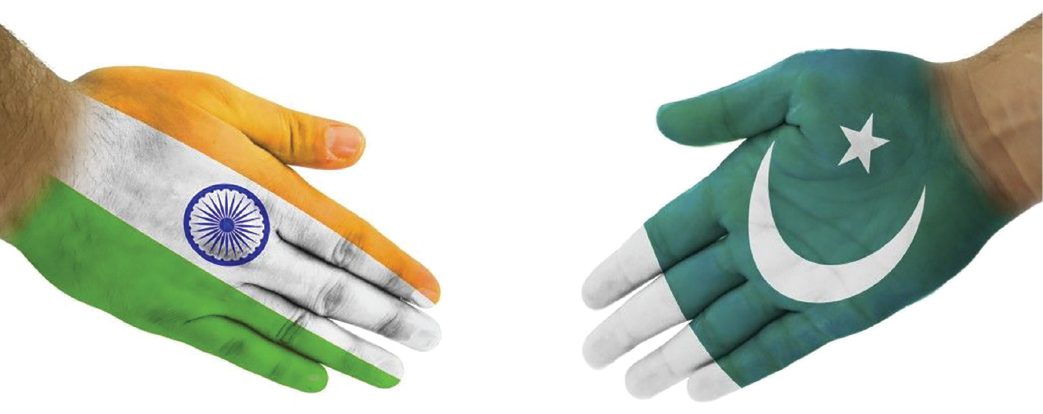
A recent interaction with Zebunissa Bangash, global youth icon and Coke Studio star rekindled memories of Pakistan for some of us, leaders of the 200 Billion US Dollar Global Information Technology industry in India. Zebunissa spoke fondly of her days in Lahore, even though her home is now in Baltimore, USA. Her singing enthralled all of us and in a conversation with me later, she spoke of her early days in Lahore when her teacher would encourage her to explore all forms of music. A recent testimony video for India’s nightingale Lata Mangeshkar bears testimony to the fondness with which artistes in Pakistan embrace art and music on both sides of the border.
And this willingness to engage is not just the result of a large heart that our cultural ambassadors have and the admiration for the Urdu language that many of our poets, notably Gulzar sahib, hold so dear. Just over a decade ago, there was an invitation form the “Aman ki Asha” initiative, supported jointly by the Jang Group and Times of India to lead a delegation to Pakistan, which I happily accepted. As is my practice, I sent the word around to colleagues from the industry and some young friends and a delegation of twelve people quickly agreed. Our host in Karachi, Amin Hashwani Sahib sent me reassuring messages though and well-meaning folks in India cautioned us not to leave the confines of large hotels or speak to the local press about our visit which I conveyed to our hosts and they gladly agreed.
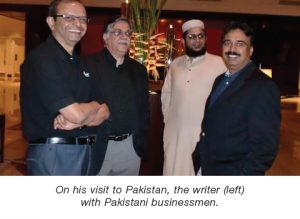 I would not be truthful if I did not confess to some feelings of trepidation as we boarded the PIA flight in Mumbai and waited for departure. Most of us who were born after independence and did not have family in Pakistan had concerns, reinforced by frequent skirmishes, a couple of wars and rhetoric flowing freely on television channels and in political discourses. Historical rivalry in cricket and hockey and a sense that India must beat Pakistan in every World Cup even if we did not win the Cup hid a secret admiration that many of us had for the batting prowess of Javed Miandad or the bowling artistry of Imran Khan. While we all had friends or business associates in various parts of the world whose origins were from Pakistan, it was still an unnerving experience to be actually airborne towards a country which we had grown up to be wary of.
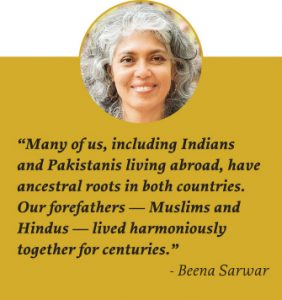 How do I, a reasonably successful business and social entrepreneur, see Pakistan and India-Pakistan relationship challenges and opportunities today? Our two countries have naturally, thanks to common origins, remarkably similar aspirations and attitudes. Whether in interacting with IT evangelist, Jehan Ara, journalist Beena Sarwar, Humayun Bashir and Amin and Faria in Karachi or some wonderful IT entrepreneur friends like Yusuf Jan who we recently met in New York or even the amazing singing my friend Pradeep Udhas and I did with a group of young tourists from Lahore in Moenjodaro, we knew that these were kindred souls, separated from us only by man-made tensions and possible military suspicions.

Ganesh Natarajan has a Masters’ degree in Industrial Engineering from NITIE Mumbai and a Ph.D. from IIT Bombay. He has done Advanced Management from the Harvard Business School. He is a member of the Central Board of Directors of the State Bank of India and Chairman of the Board of Honeywell Automation India Limited. |
|
Cover Story
|
|
News Buzz
|
Update |
Leave a Reply